We're loading the full news article for you. This includes the article content, images, author information, and related articles.
Inspector General of Police Douglas Kanja has issued a stern warning against escalating political vitriol, cautioning that state security agencies will aggressively crack down on hate speech.
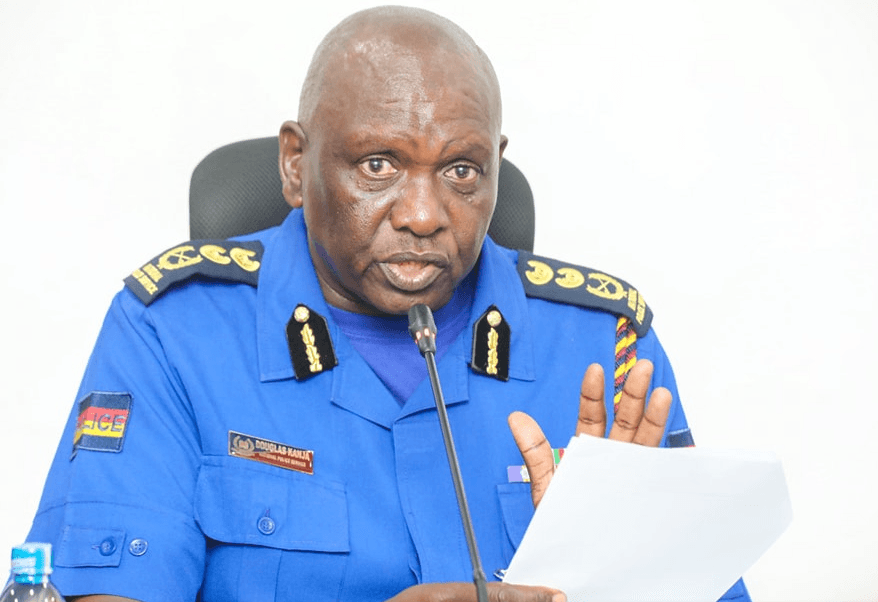
Inspector General of Police Douglas Kanja has issued a stern warning against escalating political vitriol, cautioning that state security agencies will aggressively crack down on hate speech.
The political temperature in Kenya is reaching a boiling point, prompting immediate and decisive intervention from the state's top security apparatus. Inspector General of Police Douglas Kanja has sounded the alarm over a dangerous surge in inflammatory political rhetoric that threatens to destabilize the nation's fragile cohesion.
With political realignments already taking shape well ahead of the 2027 general elections, the rhetoric on the campaign trail and across social media platforms has taken a dark turn. This matters profoundly right now because unchecked political vitriol in Kenya has historically been the primary catalyst for devastating inter-communal violence, economic disruption, and severe institutional crises that the country can ill afford.
The National Police Service, under Kanja's directive, is navigating a precarious regulatory tightrope. Balancing the constitutional right to freedom of speech with the absolute necessity of maintaining public order is no small feat in a highly polarized environment. Kanja's recent pronouncements signal a shift towards a zero-tolerance policy regarding utterances that incite ethnic hatred or political violence. This proactive stance is designed to nip potential conflicts in the bud before they escalate into uncontrollable nationwide unrest.
Collaborating closely with the National Cohesion and Integration Commission (NCIC) and the Directorate of Criminal Investigations (DCI), the police have established specialized monitoring units. These teams are tasked with tracking political rallies, analyzing social media broadcasts, and gathering actionable intelligence on individuals who consistently cross the line into hate speech. The goal is rapid apprehension and prosecution, serving as a deterrent to other political actors who might consider employing similar divisive tactics.
The recent spike in inflammatory remarks can be traced to deep-seated fractures within major political coalitions. Internal rebellions, such as the ongoing turmoil within the Orange Democratic Movement (ODM) surrounding the 'Linda Mwananchi' faction, have created a volatile atmosphere. Politicians, desperate to secure their bases and outmaneuver rivals, frequently resort to populist, aggressive language that directly challenges state authority and demonizes opposing communities.
These measures, while necessary for national security, have drawn sharp criticism from opposition figures who view them as an attempt to stifle dissent and curtail democratic freedoms. The police find themselves caught in the crossfire, accused of partisanship by whichever side feels the brunt of their enforcement actions. Maintaining strict neutrality and transparency in their operations will be crucial for Kanja's forces to retain public trust during this turbulent period.
The implications of Kenya's political stability extend far beyond its borders, deeply impacting the entire East African economic ecosystem. As the region's primary logistics hub and financial center, any hint of civil unrest in Nairobi sends immediate shockwaves through neighboring economies like Uganda, Rwanda, and South Sudan. Investors abhor uncertainty, and inflammatory political rhetoric directly contributes to capital flight, currency depreciation, and a slowdown in foreign direct investment.
Business leaders and civil society organizations have echoed Kanja's concerns, urging politicians to exercise restraint. The private sector understands that a peaceful political environment is the fundamental prerequisite for economic recovery and growth. The persistent threat of violence disrupts supply chains, halts infrastructure projects, and severely impacts the livelihoods of millions of ordinary Kenyans who depend on daily wages in the informal sector.
"The security of this nation supersedes any individual's political ambitions, and we will not hesitate to enforce the law without fear or favor," Kanja asserted, delivering a chilling reminder of the state's monopoly on force.
Keep the conversation in one place—threads here stay linked to the story and in the forums.
Sign in to start a discussion
Start a conversation about this story and keep it linked here.
Other hot threads
E-sports and Gaming Community in Kenya
Active 9 months ago
The Role of Technology in Modern Agriculture (AgriTech)
Active 9 months ago
Popular Recreational Activities Across Counties
Active 9 months ago
Investing in Youth Sports Development Programs
Active 9 months ago