We're loading the full news article for you. This includes the article content, images, author information, and related articles.
**Kenyans can now access official results for the 24 by-elections via the IEBC's online portal, following a day of voting marked by violent clashes in key constituencies and significant voter apathy, raising questions about the KES 1 billion cost.**
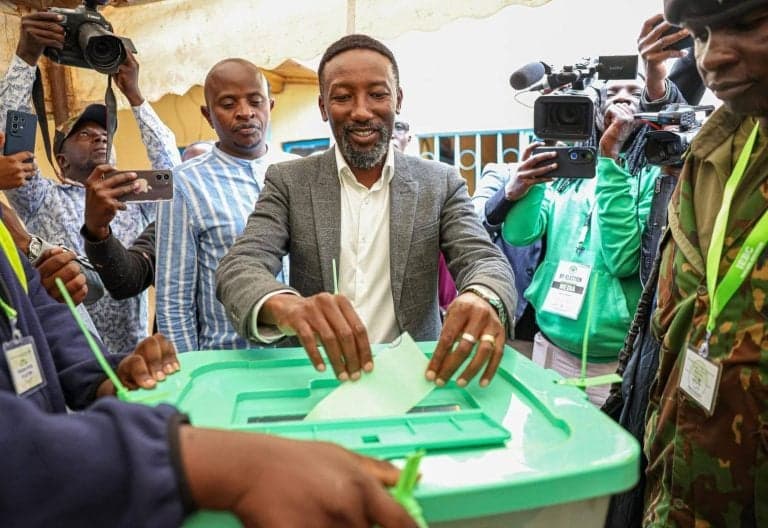
Kenyans can now track the final outcomes of the closely watched November 27th by-elections in real-time through the Independent Electoral and Boundaries Commission's (IEBC) official online portal. The digital platform offers a transparent, polling station-by-polling station view of the results, a measure intended to build public trust after a contentious day of voting.
These mini-polls, however, have become more than just a logistical exercise in democracy. They represent the first major electoral test for the newly constituted IEBC and are widely seen by analysts as a crucial political barometer for the 2027 General Election. The stakes were palpable, not just for the 181 candidates, but for national political titans using the local races as a proxy battleground for future influence.
The by-elections across one senatorial seat, six constituencies, and 17 county assembly wards came with a hefty price tag of approximately KES 1.046 billion ($7.5 million). This expenditure has reignited a fierce debate on the cost of politics in Kenya. For the average citizen grappling with the high cost of living, that figure is staggering. It raises the fundamental question: how does spending over a billion shillings on interim polls put food on the table? The cost per registered voter in the 2022 General Election was about KES 2,200, a figure that already dwarfs international benchmarks.
The promise of a smooth process was shattered by outbreaks of violence in several key areas. In Kasipul, Homa Bay County, the contest was particularly grim. Clashes in the weeks leading up to the vote resulted in the tragic deaths of two young men. On polling day, Homa Bay Town MP Peter Kaluma, serving as an agent for the ODM party, was attacked and sustained head injuries. The IEBC had earlier fined the two main candidates KES 1 million each for failing to control their supporters.
Similar scenes unfolded in Malava, Kakamega County, where a vehicle associated with DAP-K leader Eugene Wamalwa was torched. The IEBC Chairperson, Erastus Ethekon, condemned the incidents, stating, “Violence and intimidation have no place in our democracy. We are working closely with security agencies to ensure swift action against any perpetrators.”
Despite the high political stakes, a significant number of voters chose to stay away. Reports from various constituencies indicated markedly low turnout.
This widespread apathy suggests a growing disconnect between the political class and the everyday concerns of ordinary Kenyans, for whom the immediate priority is economic survival, not political contests.
As the IEBC's portal continues to update with verified forms, a picture of the political landscape is emerging. In the high-stakes Mbeere North race, UDA's Leo Wamuthende clinched the seat with 15,802 votes, narrowly defeating Newton Kariuki, who garnered 15,308 votes. This election was framed as a direct contest between Deputy President Kithure Kindiki and his predecessor Rigathi Gachagua.
In Kasipul, ODM's Boyd Were was declared the winner with a commanding 16,819 votes, reinforcing the party's dominance in the region. Meanwhile, ODM also retained the Ugunja seat, with Moses Omondi Okoth securing victory with 9,437 votes.
While the digital portal provides the numbers, the story of these by-elections is written in the violent clashes, the empty polling stations, and the billion-shilling bill. As the final results are confirmed, analysts will be closely watching what these outcomes signal for the political realignments heading towards 2027. For many Kenyans, however, the more pressing question remains what, if anything, will change for them. The IEBC has assured the public that any aggrieved parties should seek resolution through the courts, emphasizing a commitment to the rule of law to conclude the electoral process.
Keep the conversation in one place—threads here stay linked to the story and in the forums.
Sign in to start a discussion
Start a conversation about this story and keep it linked here.
Other hot threads
E-sports and Gaming Community in Kenya
Active 9 months ago
The Role of Technology in Modern Agriculture (AgriTech)
Active 9 months ago
Popular Recreational Activities Across Counties
Active 9 months ago
Investing in Youth Sports Development Programs
Active 9 months ago
Key figures and persons of interest featured in this article