We're loading the full news article for you. This includes the article content, images, author information, and related articles.
Devastating floods have swept through Migori County after the River Migori burst its banks, leaving hundreds homeless and exposing the severe infrastructural vulnerabilities of East Africa.
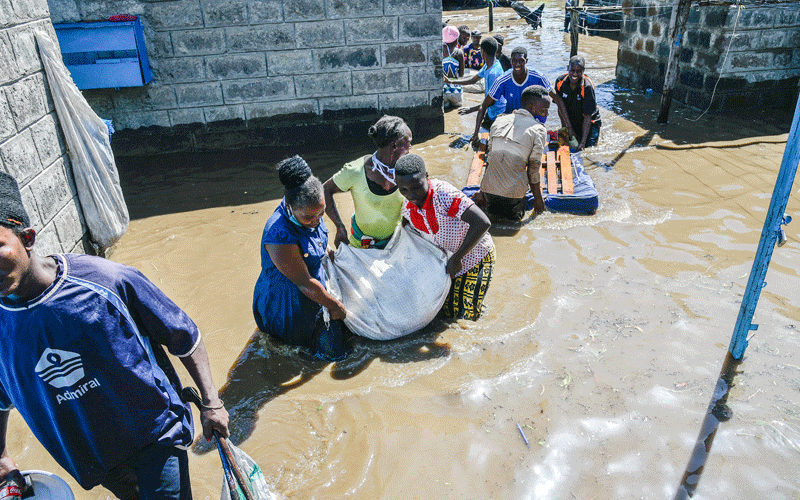
Devastating floods have swept through Migori County after the River Migori burst its banks, leaving hundreds homeless and exposing the severe infrastructural vulnerabilities of East Africa in the face of escalating extreme weather events.
Torrential downpours have triggered a massive humanitarian emergency in Migori County, with hundreds of families forced to flee their homes in the dead of night as the raging River Migori breached its natural confines.
The unfolding disaster highlights the brutal reality of climate change in the Lake Victoria basin. As unpredictable weather patterns intensify, the structural defenses of rural Kenyan communities are repeatedly overwhelmed. This latest inundation is not merely an act of nature, but a glaring reminder of the urgent need for robust, proactive disaster management and climate-resilient infrastructure in flood-prone regions.
The torrential rains, characteristic of the shifting climatic cycles affecting East Africa, swelled the River Migori far beyond its capacity. Downstream communities, particularly those in the lower Nyatike region, bore the brunt of the devastation. Floodwaters surged into homesteads, sweeping away livestock, destroying granaries filled with vital food reserves, and submerging vast tracts of agricultural land. The sudden displacement has left hundreds of residents seeking refuge in makeshift camps and higher ground.
Emergency response teams from the county disaster management office, working in tandem with the Kenya Red Cross Society, have been deployed to assess the catastrophic damage. Their immediate priority is conducting search and rescue operations, providing emergency medical care, and distributing essential relief items such as blankets, clean water, and high-energy biscuits to the displaced populations shivering in the cold.
Beyond the immediate physical danger of the rushing waters, health officials are sounding the alarm over the secondary crisis that inevitably follows severe flooding: the outbreak of waterborne diseases. The submersion of pit latrines and the contamination of shallow wells have severely compromised the region's sanitation infrastructure, creating a ticking time bomb for public health.
Medical personnel are scrambling to stockpile cholera kits, anti-malarial medication, and water purification tablets. The stagnant pools left behind by receding floodwaters provide ideal breeding grounds for mosquitoes, raising the specter of a massive malaria surge. The county health department has issued urgent advisories, pleading with residents to boil drinking water, but achieving this in camps devoid of dry firewood remains a Herculean task.
The tragedy in Migori is compounded by a history of unfulfilled promises regarding flood mitigation infrastructure. For decades, residents have pleaded for the construction of comprehensive dykes, retaining walls, and multi-purpose dams along the River Migori to regulate water flow during the rainy seasons.
The consequences of this infrastructural deficit are stark and recurring:
As the immediate rescue efforts continue, local leaders and environmental activists are demanding a paradigm shift in how Kenya handles natural disasters. The reliance on reactive, post-disaster relief is financially unsustainable and morally insufficient. There is a growing consensus that the national government must heavily invest in long-term mitigation strategies, including early warning systems, strategic afforestation along riverbanks, and the relocation of communities situated in historical flood plains.
The people of Migori cannot be left to simply wait for the waters to recede, only to rebuild in the path of the next inevitable deluge. It is a vicious cycle that demands definitive political will and substantial engineering interventions to finally break.
Until concrete barriers replace empty promises, the River Migori will remain a looming threat, capable of washing away the livelihoods of thousands in a single, terrifying night.
Keep the conversation in one place—threads here stay linked to the story and in the forums.
Sign in to start a discussion
Start a conversation about this story and keep it linked here.
Other hot threads
E-sports and Gaming Community in Kenya
Active 9 months ago
The Role of Technology in Modern Agriculture (AgriTech)
Active 9 months ago
Popular Recreational Activities Across Counties
Active 9 months ago
Investing in Youth Sports Development Programs
Active 9 months ago