We're loading the full news article for you. This includes the article content, images, author information, and related articles.
The escalating US-Israel-Iran conflict severely tests Kenya's diplomacy, threatening the economy with rising oil prices and endangering thousands of diaspora workers.
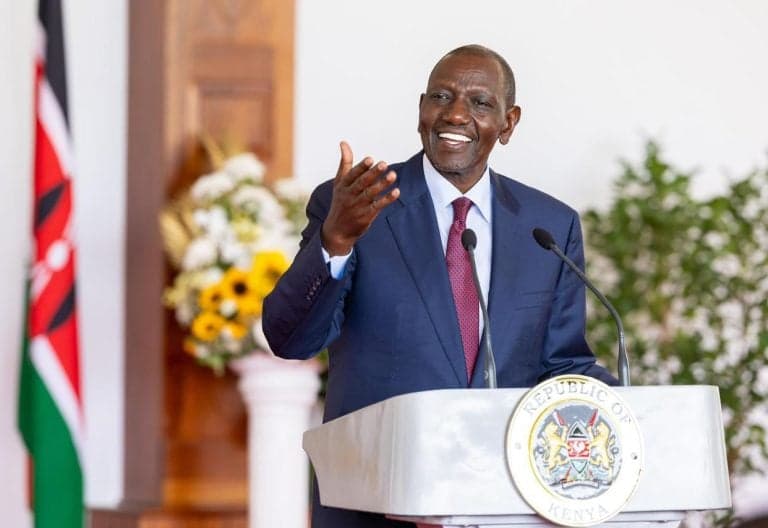
The escalating military conflict between the United States, Israel, and Iran has plunged Kenya into a severe diplomatic and economic dilemma, testing President William Ruto’s foreign policy alignment while threatening thousands of Kenyans stranded in the Middle East.
Kenya finds itself navigating a perilous diplomatic minefield as the catastrophic war between the United States, Israel, and Iran violently reshapes the geopolitical landscape of the Middle East. The escalating conflict, which has already claimed nearly 800 lives—including the seismic assassination of Iran's Supreme Leader Ayatollah Ali Khamenei—has sent shockwaves that are intimately felt in the corridors of State House, Nairobi, and in the homes of thousands of Kenyan families.
President William Ruto’s administration is facing an unprecedented acid test, forced to balance its historically robust strategic alliances with Western powers against the immediate economic survival of the nation and the safety of a massive diaspora workforce. The crisis lays bare the vulnerabilities of an interconnected global economy and exposes the stark limitations of regional diplomacy when superpowers clash.
The initial response from Nairobi highlighted the immense pressure on President Ruto. In a statement addressing the crisis, Ruto appeared to strongly back Kenya's long-standing strategic allies, the United States and Israel, explicitly condemning Iranian retaliatory strikes on multiple Gulf states including the United Arab Emirates, Qatar, Saudi Arabia, and Bahrain. Notably, the presidential statement omitted any direct condemnation of the initial joint US-Israeli attack on Tehran that sparked the current inferno.
This nuanced, seemingly partisan stance immediately drew domestic and international scrutiny, forcing the Ministry of Foreign and Diaspora Affairs into rapid damage control. The ministry subsequently clarified that Kenya's official position was anchored in a profound opposition to the further escalation of hostilities and the regionalization of the war, rather than a blank check of support for any specific belligerent. Nairobi Woman Representative Esther Passaris strongly defended the President, asserting, "Kenya is not living in isolation; we are part of the New World Order. When something happens on a global scale, it affects us, and we have an opinion."
This diplomatic recalibration reflects the harsh reality: Kenya simply cannot afford to alienate either side. The US is a critical security partner and a major economic benefactor. Simultaneously, the Gulf states are vital economic partners, hosting a vast Kenyan workforce and serving as primary sources of foreign direct investment. Furthermore, the conflict directly threatens the lucrative Kenya-Iran tea deal, a crucial export avenue for thousands of Kenyan farmers.
Beyond the high-level diplomatic posturing, a very human tragedy is unfolding. Thousands of Kenyan citizens, primarily migrant workers driving the economies of the Gulf states, are trapped in a war zone. With international airspace rapidly shutting down, commercial flights suspended, and missile exchanges threatening major cities and vital shipping lanes, evacuation options remain terrifyingly uncertain. The government has mobilized its Middle East ambassadors and urged Kenyans in the region to register urgently, but the logistics of a mass repatriation amidst active hostilities are daunting.
The economic ramifications at home are already biting hard, threatening to derail Kenya's fragile economic recovery. The conflict has severely disrupted maritime trade in the Strait of Hormuz, stranding over 3,000 ships. Consequently, global oil prices have spiked viciously, climbing 13 percent from $71 (approx. KES 9,403) to over $80 (approx. KES 10,588) a barrel.
Treasury Cabinet Secretary John Mbadi delivered a grim assessment to the National Assembly, warning that a prolonged conflict will inflict massive damage on the Kenyan economy. The immediate threat is a fuel-driven cost-of-living spike mirroring the devastating inflation triggered by the Russia-Ukraine war in 2022. Higher fuel costs will invariably cascade through the economy, inflating the price of food, transportation, and basic manufactured goods, hammering the purchasing power of the average Kenyan.
Kenya is learning a bitter lesson in geopolitical vulnerability. As global powers duel in the Middle East, the collateral damage is landing squarely on the doorsteps of emerging economies. President Ruto’s administration must now execute a masterclass in economic maneuvering and non-aligned diplomacy to shield the nation from the worst impacts of a war it had no hand in starting.
"If the war is going to extend longer than anticipated, it will obviously have a hit on our economy, and we must think on how to manoeuvre, just like during Covid-19," CS Mbadi gravely concluded, signaling the magnitude of the impending crisis.
Keep the conversation in one place—threads here stay linked to the story and in the forums.
Sign in to start a discussion
Start a conversation about this story and keep it linked here.
Other hot threads
E-sports and Gaming Community in Kenya
Active 9 months ago
The Role of Technology in Modern Agriculture (AgriTech)
Active 9 months ago
Popular Recreational Activities Across Counties
Active 9 months ago
Investing in Youth Sports Development Programs
Active 9 months ago
Key figures and persons of interest featured in this article