We're loading the full news article for you. This includes the article content, images, author information, and related articles.
The Trans Nzoia Governor says independence celebrations are meaningless when security is weaponized to silence critics, warning that Kenya’s democratic space is rapidly shrinking.
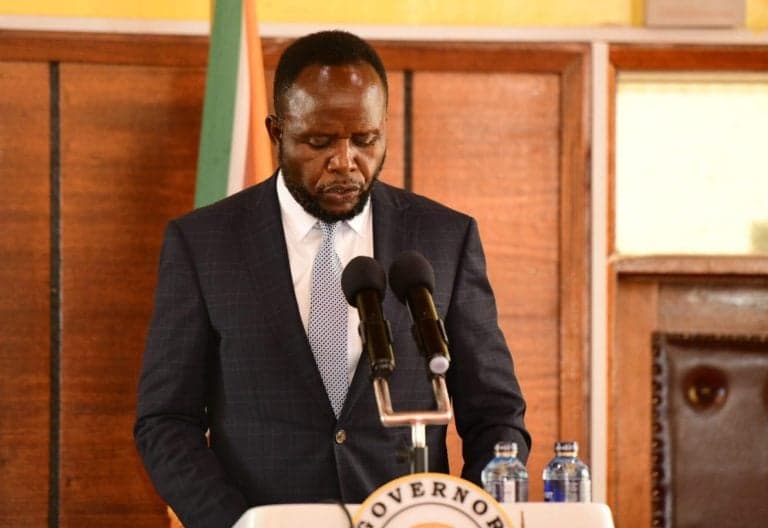
Trans Nzoia Governor George Natembeya has torn into the government’s handling of civil liberties, declaring this year’s Jamhuri Day celebrations a charade masking a systematic campaign of state-sponsored intimidation. In a blistering statement issued Friday, the county boss argued that the very freedoms celebrated on December 12 are being dismantled by an administration that treats dissent as a crime rather than a constitutional right.
The governor’s rebuke comes at a pivotal moment for the Kenya Kwanza administration, which is facing mounting pressure over governance and accountability. For Natembeya, the issue is personal and immediate: the sudden withdrawal of his security detail—including his driver—which he characterizes not as a routine administrative move, but as a calculated tactic to gag him. His message to the state is clear: if the goal was silence, the strategy has backfired.
Natembeya revealed that his official protection unit was recalled without explanation, a move he links directly to his recent outspoken stance on national governance and the marginalization of Western Kenya. By stripping a sitting governor of his security, the state sends a chilling message to lesser-known critics.
“Differences in opinion and the mere act of raising legitimate concerns have been met with unconstitutional actions,” Natembeya noted. “The prevailing atmosphere of intimidation and victimisation by State machinery has cast a dark shadow over our democratic space.”
The governor’s sentiments strike a chord with many Kenyans who feel the disconnect between the pomp of national holidays and the reality of their daily struggles. While President William Ruto led the official fetes at Nyayo Stadium, outlining infrastructure milestones, Natembeya’s critique suggests a government out of touch with the software of democracy—human rights and freedom of speech.
“They erode the very spirit of our democracy and undermine the constitutional freedoms that generations before us fought so hard to secure,” he emphasized. The governor warned that when the state turns its security apparatus against its own leaders, it is the common mwananchi—the mama mboga in Kitale or the jua kali artisan in Nairobi—who eventually pays the price for a silenced opposition.
Natembeya, known for his ‘Tawe’ (No) movement which challenges the status quo in Western Kenya politics, remains defiant. He framed the withdrawal of his security not as a vulnerability, but as a liberation, pivoting his reliance from state guns to public goodwill.
“My safety now lies with the people of Western and with Kenyans. They will stand with me,” he asserted. This populist stance reinforces his image as a leader willing to bypass the establishment to speak directly to the electorate, a strategy that is increasingly isolating him from the central government but endearing him to a frustrated base.
As the dust settles on the 62nd Jamhuri Day, the contrast is stark: a government celebrating historical freedom, and a governor claiming that, for the vocal few, that freedom is currently under siege.
Keep the conversation in one place—threads here stay linked to the story and in the forums.
Sign in to start a discussion
Start a conversation about this story and keep it linked here.
Other hot threads
E-sports and Gaming Community in Kenya
Active 9 months ago
The Role of Technology in Modern Agriculture (AgriTech)
Active 9 months ago
Popular Recreational Activities Across Counties
Active 9 months ago
Investing in Youth Sports Development Programs
Active 9 months ago
Key figures and persons of interest featured in this article