We're loading the full news article for you. This includes the article content, images, author information, and related articles.
Former Deputy President Rigathi Gachagua has mounted a scathing attack on President William Ruto, sensationally claiming that the Head of State has abandoned his loyal Kalenjin voting bloc in favor of the Nyanza region.
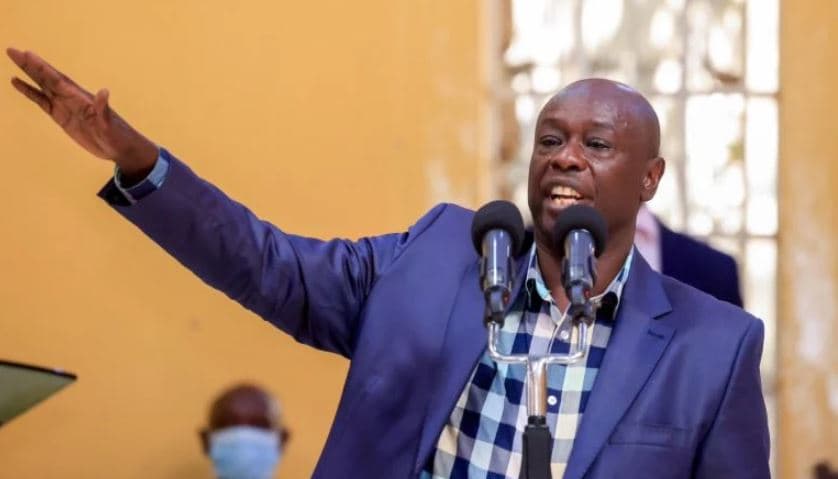
Former Deputy President Rigathi Gachagua has mounted a scathing attack on President William Ruto, sensationally claiming that the Head of State has abandoned his loyal Kalenjin voting bloc in favor of the Nyanza region.
In a dramatic escalation of Kenya's ongoing political civil war, ousted Deputy President Rigathi Gachagua has trained his rhetorical guns directly on President William Ruto, accusing him of a profound political betrayal. However, in a surprising strategic pivot, Gachagua is not merely lamenting the marginalization of his own Mt. Kenya base; he is actively championing the grievances of the President's own ethnic stronghold—the Kalenjin community.
This aggressive narrative, broadcasted to the nation with Gachagua's trademark populist flair, represents a highly calculated attempt to fracture the foundation of the Kenya Kwanza administration. By highlighting perceived resource misallocation and political neglect within the Rift Valley, Gachagua is actively seeking to foment internal rebellion within the ruling coalition ahead of the pivotal 2027 General Election.
Gachagua’s critique was laser-focused on the geopolitics of infrastructure and state patronage. He painted a picture of a Kalenjin electorate that endured immense political hardship to secure the presidency for one of their own, only to be left shivering in the cold. According to the former Deputy President, the tangible dividends of victory have been inexplicably diverted to the Nyanza region—the historical bastion of the political opposition.
“Wewe umechukua kila kitu ukapelekea Nyanza, hutembelei hawa watu,” Gachagua declared, challenging the President's recent developmental itinerary. He pointedly questioned why major presidential tours to critical Rift Valley economic hubs like Kericho and Bomet have been heavily dominated by interdenominational church services rather than the commissioning of transformative, multi-billion-shilling infrastructure projects.
In a masterful display of political jujitsu, Gachagua meticulously separated the Kalenjin citizenry from the actions of the President. Acknowledging the deep, highly publicized rift that led to his dramatic impeachment, he insisted that his personal battle is exclusively with William Ruto, not the community that birthed him.
“There is no one who will discriminate against the Kalenjins. They have not wronged anyone,” Gachagua emphasized. “We have a problem with one person, whom we will remove from power when the time comes. Kalenjins are good people.” This rhetoric is explicitly designed to preempt any narrative that a future government—potentially involving Gachagua—would engage in retaliatory economic marginalization against the Rift Valley.
Perhaps the most damning aspect of Gachagua’s diatribe was his indictment of the current crop of Rift Valley leaders. He portrayed a region suffering from an acute crisis of political representation, asserting that local Members of Parliament and Senators have been cowed into a submissive silence, utterly failing in their constitutional mandate to advocate for their constituents.
“Hawa wakalenjin hawana mtetezi; wabunge wamenyamaza, masenator pia wamenyamaza, nani atatetea hao?” he posed. By positioning himself as the defacto defender of a supposedly voiceless Kalenjin populace, Gachagua is boldly attempting to annex political territory deep within the President's backyard.
To back up his rhetoric with grassroots action, Gachagua has announced a comprehensive itinerary that will see him traverse the Kalenjin heartland in the coming weeks en route to Kisii. This tour will serve as a critical litmus test for his audacious strategy.
If his message of betrayal resonates with the tea and dairy farmers of the Rift Valley—who are currently grappling with severe economic headwinds—President Ruto will be forced to fight a bruising, multi-front war for political survival. The battle lines for 2027 are no longer just drawn across the ridges of Mt. Kenya; they are now being aggressively etched into the very soil of the Rift Valley.
Keep the conversation in one place—threads here stay linked to the story and in the forums.
Sign in to start a discussion
Start a conversation about this story and keep it linked here.
Other hot threads
E-sports and Gaming Community in Kenya
Active 9 months ago
The Role of Technology in Modern Agriculture (AgriTech)
Active 9 months ago
Popular Recreational Activities Across Counties
Active 9 months ago
Investing in Youth Sports Development Programs
Active 9 months ago
Key figures and persons of interest featured in this article