We're loading the full news article for you. This includes the article content, images, author information, and related articles.
The dissolution of 40 political parties signals a definitive move by Guinea's junta to cement a one-party state, effectively silencing the country's main opposition forces.

The military junta in Conakry has taken its most drastic step yet to consolidate power, issuing a late-night decree that dissolves 40 political parties, including the nation's three primary opposition groups.
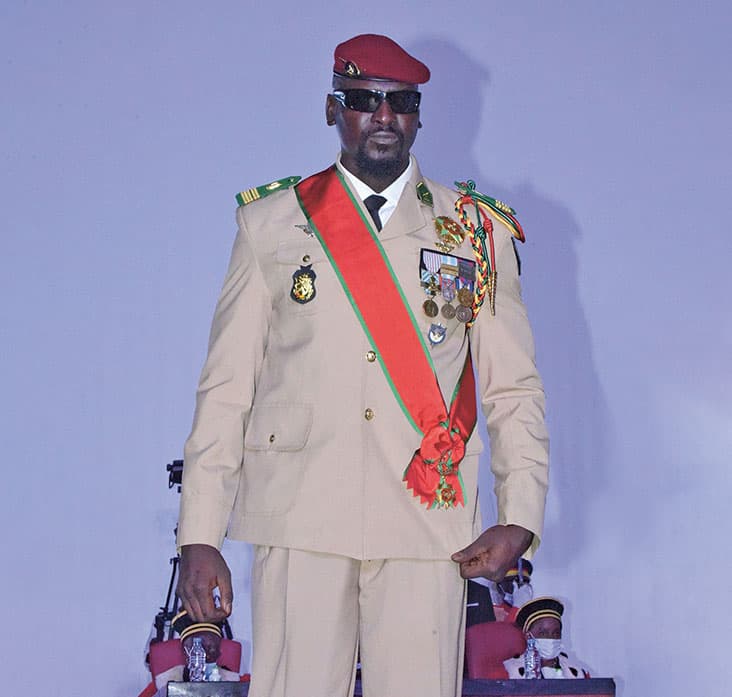
In a move that has sent shockwaves through West Africa's fragile democratic landscape, the military administration of President Mamady Doumbouya has systematically dismantled the legal framework of political pluralism. The Ministry of Territorial Administration and Decentralisation announced the dissolution late Friday, citing a failure of the organizations to meet legal obligations such as financial reporting and administrative compliance. For observers, this is less about bureaucracy and more about the calculated erasure of dissent.
This development is the latest chapter in the deepening crisis of governance in the Sahel and broader West African region. As military coups become an increasingly common mechanism for regime change, the situation in Guinea serves as a stark case study on the speed with which civil liberties can be revoked once a junta establishes a foothold.
The dissolution specifically targets the most potent threats to the current regime, including the Union of Democratic Forces of Guinea (UFDG), led by the exiled Cellou Dalein Diallo; the Rally of the Guinean People (RPG), the party of ousted former President Alpha Condé; and the Union of Republican Forces (UFR). By stripping these organizations of their legal status, the state has effectively rendered their political activities illegal. The decree goes further, sequestering assets and banning the use of party symbols, effectively forcing the opposition into total invisibility.
The regime justifies these actions through the lens of legal compliance, suggesting that parties failed to adhere to statutory requirements. However, critics argue this is a pretextual administrative maneuver designed to clear the path for the Doumbouya administration to cement its authority ahead of upcoming legislative cycles.
The impact of this decision extends far beyond Conakry. Guinea, a nation rich in bauxite and iron ore, is a critical player in the regional economy. The political instability has direct implications for investors and international partners who look to the region for stability. The move has prompted a sharp rebuke from exiled opposition leader Cellou Dalein Diallo, who declared that "direct resistance" is now the only remaining path to change, signaling a potential shift from parliamentary opposition to more radicalized forms of civil disobedience.
For East African observers watching the continental trend, the Guinean situation is a grim reminder of the "coup belt" phenomenon. From the Sahel to the Red Sea, the consolidation of military rule often follows a predictable pattern: constitutional manipulation, the exclusion of opposition figures, and finally, the wholesale dismantling of the political apparatus that allows for peaceful power transition.
As the government prepares for legislative elections, the total exclusion of mainstream opposition groups leaves a vacuum in the political marketplace. Whether this will lead to a period of enforced stability or ignite widespread civil unrest remains to be seen. However, the international community, including the African Union and ECOWAS, faces mounting pressure to define its stance on this latest escalation. The question for Guinea is no longer about the return to civilian rule, but whether the very concept of a multi-party state can survive this latest institutional assault.
"The head of the junta and his malevolent clique want to rewrite the country's history by erasing from the political landscape all forces likely to overshadow his nascent one-party state," noted Diallo in a statement released shortly after the decree.
Keep the conversation in one place—threads here stay linked to the story and in the forums.
Sign in to start a discussion
Start a conversation about this story and keep it linked here.
Other hot threads
E-sports and Gaming Community in Kenya
Active 9 months ago
The Role of Technology in Modern Agriculture (AgriTech)
Active 9 months ago
Popular Recreational Activities Across Counties
Active 9 months ago
Investing in Youth Sports Development Programs
Active 9 months ago
Key figures and persons of interest featured in this article