We're loading the full news article for you. This includes the article content, images, author information, and related articles.
Colonel Mamady Doumbouya’s decision to contest December elections deepens concerns over democratic backsliding in West Africa, a trend Kenyan officials have condemned as a threat to continental stability.
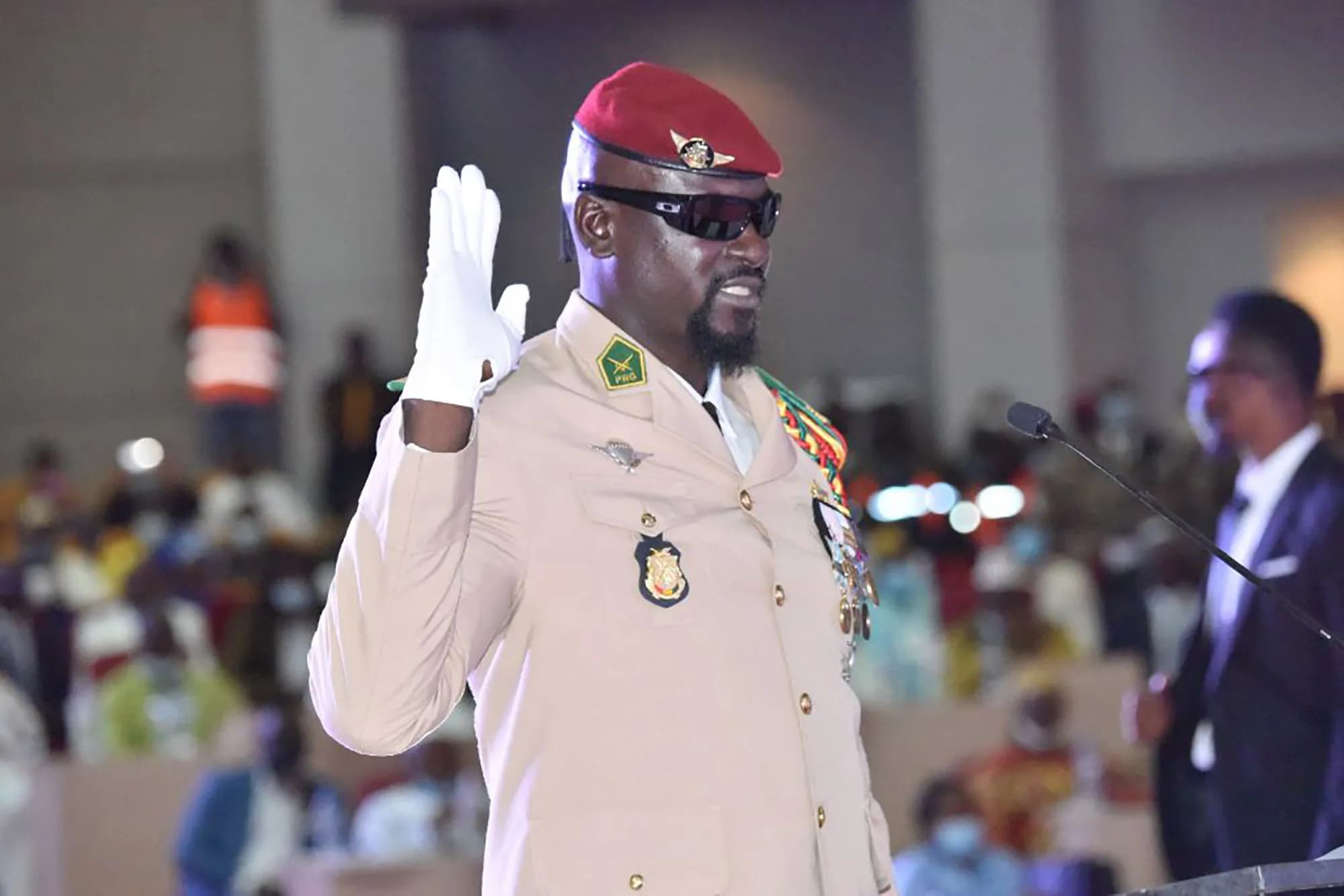
CONAKRY, GUINEA – Colonel Mamady Doumbouya, the military officer who seized power in Guinea in a 2021 coup, officially submitted his candidacy on Monday, November 3, 2025, for the upcoming presidential election scheduled for December 28, 2025. The move, widely anticipated yet heavily criticized, marks a definitive reversal of his public pledge made four years ago to transition the West African nation to civilian rule without his participation.
Flanked by soldiers, Col. Doumbouya filed his papers at the Supreme Court in the capital, Conakry, without making a public statement. His candidacy is enabled by a new constitution, which was approved in a controversial referendum on September 21, 2025, with a reported 89% of the vote. This new charter replaced a transitional framework that had explicitly barred any member of the junta from contesting elections.
When he overthrew President Alpha Condé in September 2021, Col. Doumbouya had assured Guineans and the international community, stating, "Neither I nor any member of this transition will be a candidate for anything... As soldiers, we value our word very much." His decision to run has been labeled a betrayal by opposition groups. The Living Forces of Guinea (FVG), an opposition alliance, condemned the candidacy as a “disastrous turning point in our country's history” and accused the junta leader of trampling on his “solemn commitments”.
The credibility of the December 28 election is under intense scrutiny. The path to Col. Doumbouya's candidacy has been marked by a systematic crackdown on dissent. The junta has banned public demonstrations since 2022 and has arrested, prosecuted, or forced into exile several key opposition figures. Two of the country's largest opposition parties, the Rally of the Guinean People (RPG) of former President Condé and the Union of Democratic Forces of Guinea (UFDG), have been suspended and effectively excluded from the contest.
Prominent political figures, including former Prime Minister Cellou Dalein Diallo and former President Condé himself, are barred from running due to new eligibility requirements in the constitution, such as age limits and residency, which critics say were designed to eliminate formidable challengers. Furthermore, presidential candidates are required to pay a deposit of 875 million Guinean francs (approximately $100,000), a fee that many consider prohibitive and designed to limit participation.
While the political crisis in Guinea has no direct, discernible impact on Kenya—trade between the two nations is minimal, with Kenyan exports to Guinea totaling just over $821,000 in 2023—the trend of democratic erosion in West Africa is a significant concern for the entire continent. The events in Guinea are part of a broader pattern in the Sahel region, where military juntas in Mali, Burkina Faso, and Niger have also reneged on promises of swift returns to civilian rule, creating a "coup belt" that challenges the continent's democratic norms.
Kenyan officials have previously voiced strong opposition to this trend. In August 2023, Foreign Affairs Principal Secretary Korir Sing'oei condemned the series of military takeovers, stating that the "normalization and dignifying of military takeovers must trouble our great continent" and viewing it as a "major rollback to the democratic gains so far made." President William Ruto has also described recent coups as a "serious setback for Africa's democratic gains." This perspective frames the events in Guinea not as an isolated incident, but as a continental issue that threatens the principles of governance championed by bodies like the East African Community (EAC).
The EAC has a treaty framework that emphasizes good governance and the rule of law, but it has struggled with enforcement among its member states. In contrast, the Economic Community of West African States (ECOWAS) has been more assertive, suspending Guinea's membership after the 2021 coup and imposing sanctions. However, its influence has been limited, and as of Tuesday, November 4, 2025, neither ECOWAS nor the African Union had issued a formal statement specifically condemning Col. Doumbouya's official candidacy. FURTHER INVESTIGATION REQUIRED.
Col. Doumbouya's transition from coup leader to presidential candidate places Guinea at a critical juncture. The upcoming election, rather than being the culmination of a democratic transition, is now viewed by many observers as a move to legitimize and extend military rule, posing a significant challenge to the democratic aspirations of the Guinean people and the stability of the wider West African region.
Keep the conversation in one place—threads here stay linked to the story and in the forums.
Sign in to start a discussion
Start a conversation about this story and keep it linked here.
Other hot threads
E-sports and Gaming Community in Kenya
Active 9 months ago
The Role of Technology in Modern Agriculture (AgriTech)
Active 9 months ago
Popular Recreational Activities Across Counties
Active 9 months ago
Investing in Youth Sports Development Programs
Active 9 months ago
Key figures and persons of interest featured in this article