We're loading the full news article for you. This includes the article content, images, author information, and related articles.
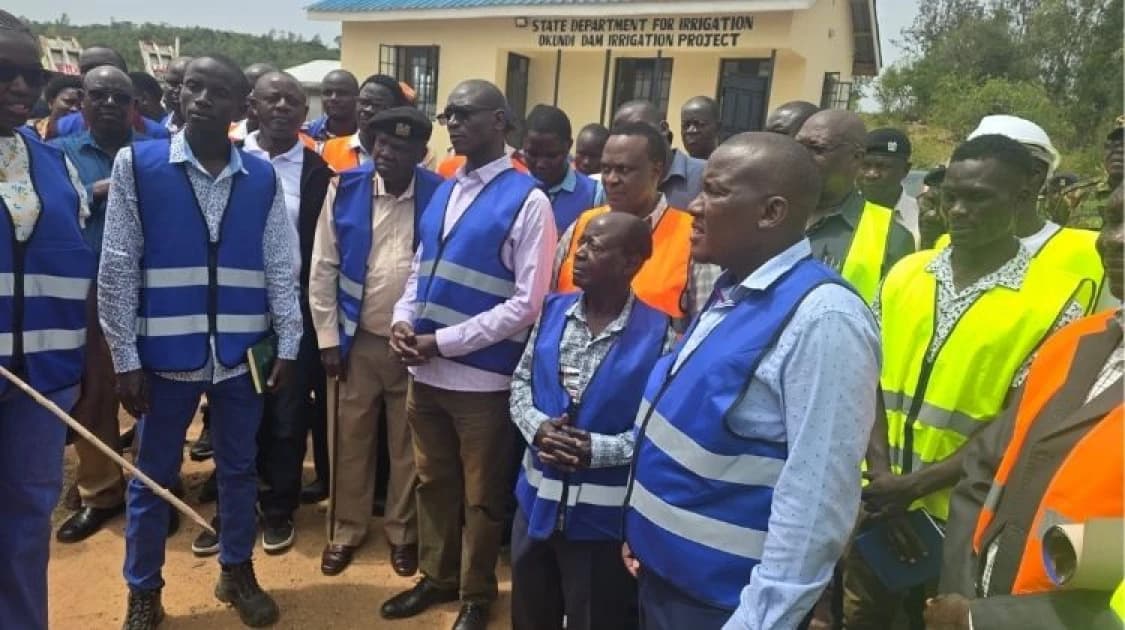
Irrigation PS Ephantus Kimotho inspects the Ksh164 million Okundi Dam project in Homa Bay, which promises to irrigate 300 acres and support 600 households, ending years of water scarcity.
The arid landscapes of Karachuonyo are set for a green revolution as the government fast-tracks the construction of the Ksh164 million Okundi Dam, a project aimed at breaking the cycle of perennial food insecurity in Homa Bay County.
Principal Secretary for Irrigation Ephantus Kimotho, during an inspection tour of the facility in Kamser Seka sub-location, confirmed that the project is on course to serve over 600 households. This infrastructure is not just a reservoir of water; it is a reservoir of hope for a region that has historically relied on rain-fed agriculture, leaving it vulnerable to the vagaries of climate change.
The project’s significance cannot be overstated. By bringing 300 acres of land under irrigation, the Okundi Dam effectively de-risks farming for the local community. It shifts the narrative from survival farming to agribusiness, empowering locals to grow high-value crops year-round regardless of the weather patterns. This aligns perfectly with the national agenda of bottom-up economic transformation.
The scope of the project extends beyond simple water storage. It involves a network of distribution pipes and canals designed to deliver water directly to the farms. PS Kimotho emphasized that the government is keen on value for money, warning contractors against shoddy workmanship that has plagued similar projects in the past.
"We are not just building a dam; we are building an economic ecosystem," Kimotho stated. The dam will also provide water for domestic use and livestock, addressing a tripartite of needs—crops, animals, and humans—in one stroke. This holistic approach is key to ensuring the sustainability of the investment.
Homa Bay County has huge agricultural potential that remains largely untapped due to water scarcity. Projects like Okundi Dam serve as a blueprint for how devolved units and the national government can collaborate to unlock this potential. Local leaders have hailed the project, noting that it will reduce the dependency on food imports from neighboring counties.
As the earth movers continue their work in Kamser Seka, the anticipation among the farmers is palpable. For them, this water is not just a resource; it is money in the bank. It represents the freedom to plant when they want and harvest when the market is ready, finally putting the power of production back in their hands.
The completion of Okundi Dam will be a testament that with the right investment, even the driest lands can feed the nation.
Keep the conversation in one place—threads here stay linked to the story and in the forums.
Sign in to start a discussion
Start a conversation about this story and keep it linked here.
Other hot threads
E-sports and Gaming Community in Kenya
Active 9 months ago
The Role of Technology in Modern Agriculture (AgriTech)
Active 9 months ago
Popular Recreational Activities Across Counties
Active 9 months ago
Investing in Youth Sports Development Programs
Active 9 months ago