We're loading the full news article for you. This includes the article content, images, author information, and related articles.
Former Deputy President Rigathi Gachagua alleges orchestrated threats against his life, raising alarms about political intolerance ahead of 2027 polls.
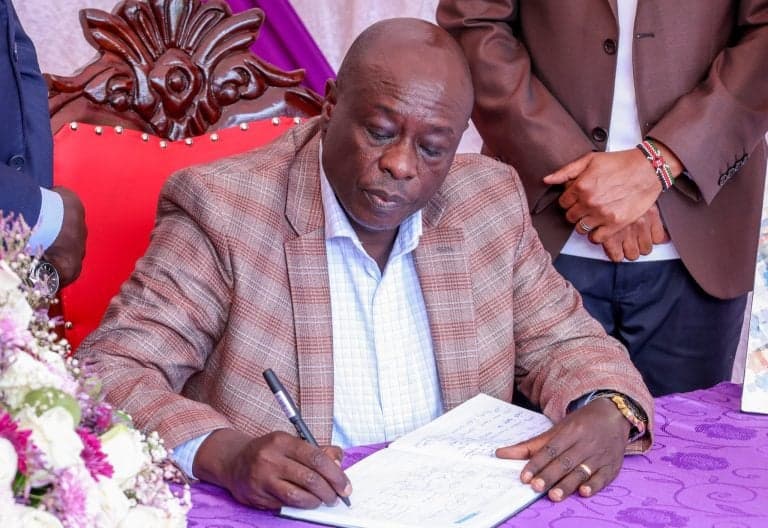
The political temperature in Nairobi has shifted from debate to dread, following chilling claims by former Deputy President Rigathi Gachagua that his life is under direct, orchestrated threat. Standing before a crowd of supporters and local press on Wednesday, the former vice-president alleged a pattern of surveillance, harassment, and explicit intimidation tactics that he contends are designed to silence his opposition to the current administration. This development marks a significant escalation in the tensions that have simmered since his removal from office, signaling a volatile period ahead of the 2027 general election.
For the average Kenyan, this rhetoric is more than just a clash of elites it represents a destabilizing moment for the nation’s democratic architecture. At stake is not only the personal safety of a high-profile political figure but the broader institutional health of a country struggling to maintain economic stability while navigating a fractured political landscape. With the shilling facing fluctuating pressure and foreign direct investment sensitive to internal friction, the escalation of political paranoia threatens to erode investor confidence and stall critical governance reforms.
Gachagua’s assertions, detailed during a press briefing in Nairobi, paint a picture of a systematic campaign of fear. He cited instances of unmarked vehicles tailing his motorcade, unauthorized attempts to access his private residence, and a sophisticated digital smear campaign aimed at isolating him from his power base in the Mt. Kenya region. While he stopped short of naming specific individuals within the current security apparatus, he explicitly linked these activities to state actors, characterizing the intimidation as a state-sponsored attempt to neutralize his political influence.
Political analysts at the University of Nairobi suggest that such claims, regardless of their forensic validity, function as a strategic mobilization tool. By positioning himself as a target of the state, Gachagua seeks to galvanize his grassroots supporters, shifting the narrative from his parliamentary impeachment in 2024 to his role as a champion of the people against perceived authoritarian overreach. However, the gravity of his language—specifically the mention of threats to his life—has forced the national security council to issue a standard, albeit brief, commitment to investigating any credible reports of danger to public figures.
The origins of the current friction trace back to the seismic political shift of 2024, when Gachagua was removed from the second-highest office in the land. His departure did not lead to the expected consolidation of political power instead, it created a vacuum that has been filled by competing interests and an increasingly fragmented coalition. As the 2027 election cycle approaches, the political math is becoming increasingly complex.
Kenya is not an outlier in experiencing this brand of political theater. Across the emerging markets of the Global South, from Latin America to Southeast Asia, the "threat to life" narrative is a recurring motif in high-stakes political contests. International observers note that while some of these claims are substantiated by verifiable intelligence and credible police reports, others are deployed as defensive strategies to shield politicians from corruption investigations or to garner international sympathy.
In comparable democratic transitions, the legitimacy of the state often rests on its ability to provide security for its fiercest critics. If the administration fails to provide a transparent, impartial investigation into Gachagua’s claims, it risks feeding the international narrative of democratic backsliding. Conversely, if these threats are proven to be politically manufactured, the damage to Gachagua’s long-term credibility could be terminal, rendering his 2027 ambitions untenable.
In Nyeri, where Gachagua maintains his strongest constituency, the atmosphere is one of anxious solidarity. Local traders and farmers, many of whom are already grappling with the rising cost of fertilizer and farm inputs, view the former Deputy President’s plight through a lens of economic anxiety. For them, the political drama is a distraction from the KES 500 billion shortfall in projected revenue that has crippled infrastructure spending across the counties.
Business leaders in the capital are taking a more measured approach. Chambers of Commerce have quietly called for de-escalation, noting that the KES 1.3 trillion (approximately $10 billion) in planned foreign investment slated for 2026 relies heavily on a stable, predictable political environment. The intersection of Gachagua’s personal security concerns and the broader national economic trajectory remains the most critical flashpoint for the coming quarter.
As the dust settles on these latest allegations, the fundamental question remains unanswered: Is this the prologue to a genuine security crisis, or is it merely the first salvo in the long, bruising campaign for the 2027 polls? For now, the nation waits to see whether the institutions of state—the police, the judiciary, and the security council—can rise above the political fray to offer a verifiable, objective reality, or if the country will remain trapped in a cycle of suspicion and fear.
Keep the conversation in one place—threads here stay linked to the story and in the forums.
Sign in to start a discussion
Start a conversation about this story and keep it linked here.
Other hot threads
E-sports and Gaming Community in Kenya
Active 10 months ago
The Role of Technology in Modern Agriculture (AgriTech)
Active 10 months ago
Popular Recreational Activities Across Counties
Active 10 months ago
Investing in Youth Sports Development Programs
Active 10 months ago
Key figures and persons of interest featured in this article