We're loading the full news article for you. This includes the article content, images, author information, and related articles.
Ruiru family seeks answers after son allegedly killed in Russia-Ukraine war. Simon Wahome Gititu left for a job and returned as a digital statistic in a foreign war.
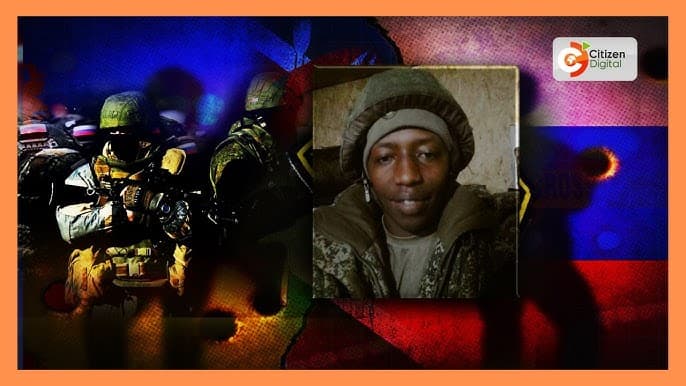
In Mugutha, Ruiru, a mother clutches a phone that will never ring again. The death of Simon Wahome Gititu on the Russian frontlines has exposed the deadly cost of economic desperation, as families demand answers from a government caught between diplomacy and tragedy.
The tent is up in Mugutha. Plastic chairs are arranged in rows, and the air is thick with the murmur of condolences. But this is not a normal funeral. There is no body. There is only a notification from social media and a silence from the government that is deafening. Simon Wahome Gititu, a son of Ruiru, has become the latest casualty of a war that is being fought 5,000 miles away.
Simon left Kenya in August 2023, seeking the promise of Qatar. He worked there until October 2025, when the whispers of "better pay" in Russia lured him north. He did not go to fight; he went to survive. He went to build a future for the family that now mourns him.
"I received a call while at work," says Loice Wangari, Simon's mother, her voice trembling with a grief that has nowhere to go. "I was told that Simon, who had been missing in Russia, had died and that the news was on social media."
It is a modern horror story. No official telegram, no visit from a ministry official. Just a post on the internet. The Defence Intelligence of Ukraine released information on "two Kenyan bodies," alleging they were mercenaries. For the family in Ruiru, Simon was not a mercenary; he was a provider. He was a young man navigating a global economy that offers few safety nets for the African youth.
Reports from the frontline suggest a grim reality. African recruits, often with minimal training, are being thrown into what military analysts call "meat assaults"—high-casualty waves designed to exhaust Ukrainian ammunition. Dennis Bagaka Ombwori and Clinton Nyapara Mogesa are other names that have surfaced in this tragic roll call. They were promised security jobs; they were handed rifles and sent to die.
The family's last contact with Simon was November 16, 2025. Then, silence. Now, the confirmation of death without the dignity of a burial. "We just want his body," a relative pleads. "We want to bury our son."
This tragedy places the Kenyan government in a precarious diplomatic bind. While Nairobi maintains official neutrality, the flow of its citizens into the Russian military machine is a humanitarian crisis. The family in Ruiru is not asking for geopolitics; they are asking for consular support. They are asking why their son was allowed to be trafficked into a war zone.
As the sun sets over Kiambu, the empty grave of Simon Wahome Gititu stands as a monument to a global failure. It is a stark warning to the thousands of other young Kenyans looking outwards: not every opportunity abroad is a lifeline; some are death sentences disguised as jobs.
Keep the conversation in one place—threads here stay linked to the story and in the forums.
Sign in to start a discussion
Start a conversation about this story and keep it linked here.
Other hot threads
E-sports and Gaming Community in Kenya
Active 9 months ago
The Role of Technology in Modern Agriculture (AgriTech)
Active 9 months ago
Popular Recreational Activities Across Counties
Active 9 months ago
Investing in Youth Sports Development Programs
Active 9 months ago