We're loading the full news article for you. This includes the article content, images, author information, and related articles.
Dahbia Benkired becomes the first woman in French history to receive a whole-life prison term for the 2022 rape and murder of a 12-year-old girl, a case that ignited a fierce national debate on immigration and justice.
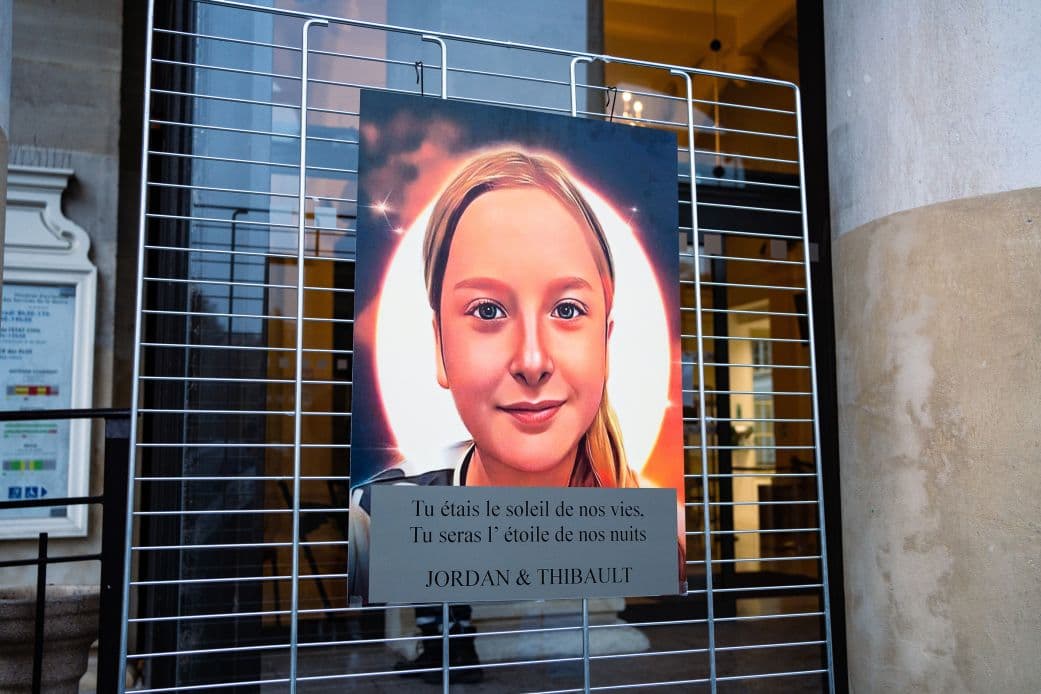
PARIS, FRANCE – A French court on Friday, October 24, 2025, handed down the nation's most severe penalty to Dahbia Benkired for the rape, torture, and murder of 12-year-old Lola Daviet in a case that profoundly shocked the country. The 27-year-old Algerian national was sentenced to a “perpétuité incompressible,” or a whole-life term, meaning she is ineligible for parole, a first for a woman in France. The verdict was delivered in a Paris court, where Lola's mother and brother were present.
The crime occurred on Friday, October 14, 2022, when Lola’s body was discovered in a plastic storage box in the courtyard of her family's apartment building in northeastern Paris, where her parents worked as caretakers. Surveillance footage showed Benkired, who was staying with her sister in the same building, meeting Lola in the afternoon after she returned from school. Benkired was arrested shortly after the discovery.
The whole-life sentence is exceptionally rare in the French justice system, which abolished capital punishment in 1981. This sentence, established in 1994, is reserved for the most egregious crimes, such as the murder of a minor preceded by rape or torture, and terrorism resulting in death. While a review of the sentence is possible after 30 years, it is seldom granted.
Benkired joins a small group of criminals who have received this sentence, including notorious serial killer Michel Fourniret and Salah Abdeslam, the sole surviving member of the jihadist cell that killed 130 people in the 2015 Paris attacks. Psychiatric experts who examined Benkired found her to be criminally responsible, noting “psychopathic” traits and a high risk of reoffending, but no signs of mental illness that would have diminished her responsibility.
The case quickly became a political flashpoint after it was revealed that Benkired, who arrived in France legally on a student visa in 2016, was under an order to leave the country (OQTF) issued two months before the murder. Right-wing and far-right politicians seized on her immigration status to criticize President Emmanuel Macron's government for what they termed lax immigration enforcement. Marine Le Pen of the National Rally and Éric Pauget of The Republicans were among those who argued the state had failed to protect its citizens.
The victim's family, however, repeatedly urged politicians to stop using their daughter's image and death for political purposes. The government condemned the political exploitation, with then-Justice Minister Éric Dupond-Moretti accusing critics of using “the coffin of a 12-year-old girl” for political gain.
The murder sent waves of grief and horror across France. President Macron met with Lola's parents, describing the killing as an act of “extreme evil.” The tragedy had a devastating impact on Lola's family. Her father, Johan Daviet, died in February 2024 at the age of 49, with family lawyers stating he was overcome by grief.
While this case has no direct link to Kenya, it highlights a global debate on appropriate sentencing for extreme violent crimes. In Kenya, the question of capital punishment versus life imprisonment remains a subject of legal and public discourse. The Supreme Court of Kenya in 2017 declared the mandatory death penalty unconstitutional, giving judges discretion in sentencing for capital offenses. This French verdict underscores a different approach, retaining life imprisonment as the ultimate penalty but applying an exceptionally stringent, non-parole version for crimes that cause profound societal shock.
The case also serves as a stark reminder of how high-profile crimes involving immigrants can be politicized, fueling anti-immigration sentiment and diverting focus from the core issues of criminal justice and victim support—a phenomenon observed in various political contexts worldwide. During the trial, Benkired apologized for her “horrible” actions, but remained largely emotionless as the verdict was read.
Keep the conversation in one place—threads here stay linked to the story and in the forums.
Sign in to start a discussion
Start a conversation about this story and keep it linked here.
Other hot threads
E-sports and Gaming Community in Kenya
Active 9 months ago
The Role of Technology in Modern Agriculture (AgriTech)
Active 9 months ago
Popular Recreational Activities Across Counties
Active 9 months ago
Investing in Youth Sports Development Programs
Active 9 months ago