We're loading the full news article for you. This includes the article content, images, author information, and related articles.
Ford Kenya rejects pressure to dissolve into President Ruto’s UDA, signaling rising friction within the Kenya Kwanza alliance over political autonomy.

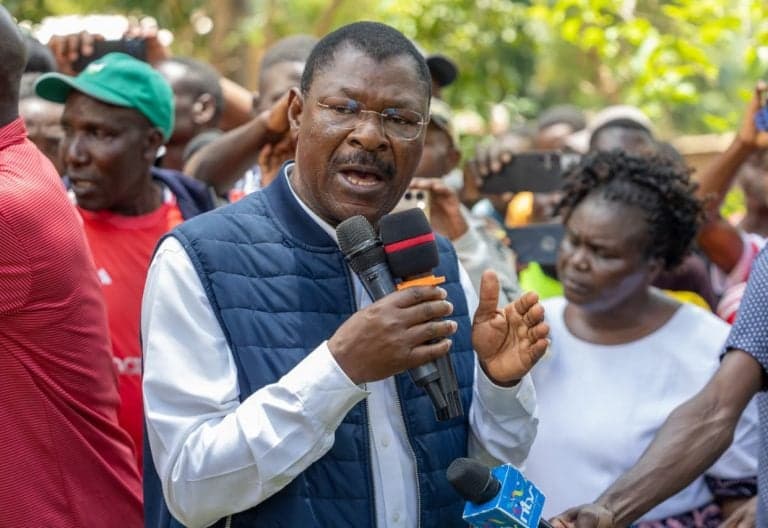
The political architecture of Kenya’s ruling coalition is currently under intense scrutiny as Ford Kenya, one of the nation’s oldest and most historically significant political outfits, publicly rejected pressure to dissolve its identity into the United Democratic Alliance. The resistance, articulated by senior party officials this week, marks a sharp departure from the consolidation narrative often pushed by the ruling alliance, casting a spotlight on the friction between political dominance and the preservation of party autonomy.
This development is not merely a localized dispute it signifies a critical juncture for the Kenya Kwanza administration. As the country moves closer to the next electoral cycle, the ambition of the United Democratic Alliance (UDA) to centralize power within a singular, behemoth political vehicle is colliding with the survival instincts of smaller partner parties. The stakes are immense: at risk is the cohesion of a governing coalition that was built on the premise of a "bottom-up" economic model and diverse regional representation. For Ford Kenya, a party with deep roots in Western Kenya, merging is seen not as a tactical upgrade, but as an existential threat.
Ford Kenya’s leadership has leveled serious allegations against the UDA, accusing the ruling party of employing double standards and heavy-handed tactics to force constituent parties into compliance. The party’s Secretary General, in recent briefings, warned that the continued intimidation of partners to dissolve into the ruling alliance undermines the very democratic principles the coalition was elected to uphold. The sentiment among Ford Kenya’s rank and file is clear: the party, which has weathered decades of political shifts, refuses to be subsumed.
Observers of the Kenyan political scene note that this rejection is a calculated risk. By standing their ground, Ford Kenya is attempting to leverage its regional influence to maintain negotiating power. If the party were to dissolve, it would lose the platform—and the legislative leverage—that allows it to advocate for specific regional interests, particularly concerning infrastructure and agricultural policy in the Bungoma and Trans-Nzoia regions. The tension highlights a growing divide between those who believe that a single, unified party is necessary for governance efficiency and those who argue that multi-party democracy requires distinct, independent entities.
The push for a merger is rooted in the UDA’s desire to consolidate its electoral footprint ahead of 2027. Political analysts, including those at the University of Nairobi’s Department of Political Science, have long monitored the ruling party’s strategy to transition from a coalition-based structure to a singular, dominant party framework. The logic, according to UDA strategists, is to eliminate the unpredictability of coalition agreements and create a streamlined, centralized legislative agenda.
However, this strategy faces significant hurdles. The Kenyan electorate has historically been wary of "mega-parties," which are often viewed as vehicles for personal power rather than ideological movements. Data from past electoral cycles suggests that forced mergers often lead to internal disenfranchisement. When parties are coerced, voter enthusiasm frequently wanes, and party loyalty is replaced by tactical voting, which can destabilize the very electoral base the party seeks to strengthen.
The shadow of the Jubilee era looms large over these negotiations. During the 2017–2022 period, the attempt to fuse diverse political interests into one party created a rigid structure that struggled to accommodate dissent. When policy differences emerged—as they inevitably did—there was no mechanism for parties to exit the alliance without essentially ceasing to exist. Ford Kenya’s leadership is clearly determined to avoid this fate, recognizing that their relevance is inextricably linked to their independence.
Furthermore, the economic implications are palpable. A consolidated political environment, if it leads to disenfranchisement, could suppress voter turnout in critical regions. For a government already grappling with the economic pressures of debt servicing and inflation, the support of regional kingpins is non-negotiable. Alienating a long-term partner like Ford Kenya could have downstream effects on the parliamentary vote count, making it significantly harder to pass contentious fiscal legislation in the future.
As the dialogue continues, the focus will remain on whether the UDA can find a middle ground that respects the autonomy of its partners while achieving its goal of stability. The resistance from Ford Kenya suggests that the "one-party" vision is far from a consensus. Whether this friction will lead to a realignment within the coalition or a public fracturing of the alliance remains the central question facing Kenya’s political class as the 2027 clock continues to tick.
In the coming weeks, all eyes will be on the high-level meetings between party principals. If an amicable settlement is not reached, the Kenya Kwanza coalition may face its most significant test of unity since taking office. The question is no longer just about merging parties it is about the cost of power and whether the current administration is willing to pay the price of isolation to achieve total control.
Keep the conversation in one place—threads here stay linked to the story and in the forums.
Sign in to start a discussion
Start a conversation about this story and keep it linked here.
Other hot threads
E-sports and Gaming Community in Kenya
Active 10 months ago
The Role of Technology in Modern Agriculture (AgriTech)
Active 10 months ago
Popular Recreational Activities Across Counties
Active 10 months ago
Investing in Youth Sports Development Programs
Active 10 months ago