We're loading the full news article for you. This includes the article content, images, author information, and related articles.
Major General Bemgha Koughna narrowly survives a heavily armed assault by the Lakurawa Terrorist Group in Kebbi State, underscoring the relentless security volatility.
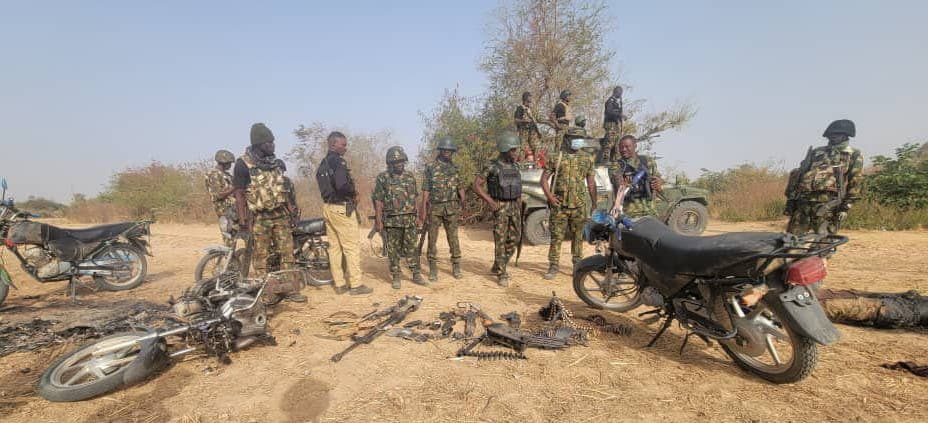
The treacherous forested corridors of Kebbi State transformed into a deadly battleground as suspected extremists launched a brazen attack on a high-ranking military convoy. The ensuing firefight resulted in the elimination of five insurgents, showcasing the lethal readiness of the Nigerian Armed Forces.
This audacious assassination attempt on Major General Bemgha Koughna, the General Officer Commanding (GOC) 8 Division, serves as a grim reminder of the asymmetric warfare threatening regional stability. The convoy was ambushed while en route to inspect frontline troops, a scenario that highlights the inherent perils faced by military leadership in conflict zones.
For East African observers monitoring the spread of violent extremism, the incident provides critical intelligence. The tactics employed by the insurgents mirror the operational strategies of terror cells operating within the Horn of Africa, emphasizing the universal necessity for impenetrable convoy security and rapid counter-insurgency responses.
The operational theater was the volatile terrain near Mayama Hill. Intelligence reports indicate that the Lakurawa Terrorist Group (LTG) had meticulously laid in wait, exploiting the dense geographical cover to mask their presence. As the General's convoy advanced, it was subjected to sudden, overwhelming, and highly coordinated hostile fire.
Such ambushes are designed to induce panic and paralyze command structures. However, the military's reaction was immediate and devastating. The troops transitioned from a defensive posture to a full-scale counter-offensive in a matter of seconds, neutralizing the element of surprise that the insurgents had heavily relied upon.
The swift engagement secured the perimeter, ensuring that no military casualties were recorded during the violent exchange. This zero-casualty outcome for the armed forces stands as a testament to their rigorous combat training and superior tactical discipline.
Demonstrating exceptional leadership under fire, Major General Koughna directed a coordinated counter-attack. The troops laid down a suppressive barrage of overwhelming firepower that effectively dismantled the terrorist formation. Five militants were confirmed killed in the immediate aftermath of the firefight.
Following the repulsion of the ambush, the military initiated an aggressive clearance operation. This secondary phase was crucial for sanitizing the sector and preventing any insurgent regrouping. The operation yielded significant logistical and financial dividends, severing a vital artery of the terror group's supply chain.
Among the items recovered from the fleeing extremists were several high-calibre weapons, including an OJC gun, a PKT machine gun, and multiple AK-47 rifles. Additionally, troops seized a camel bag containing NGN 840,000 (approximately KES 70,000), communication devices, and five motorcycles used for rapid, untraceable transit.
The Lakurawa Terrorist Group represents a relatively newer, yet highly lethal, faction operating within the complex web of West African insurgencies. Unlike traditional localized militias, the LTG has demonstrated an alarming capacity for sophisticated tactical planning and resource acquisition.
Their modus operandi involves exploiting porous regional borders and capitalizing on ungoverned rural expanses. By targeting high-value military assets, the group seeks to undermine state authority and project a disproportionate aura of strength to terrorize local populations.
The financial seizure during this operation points to a well-funded syndicate, likely heavily involved in illicit taxation, kidnapping for ransom, and regional smuggling networks. Neutralizing their financial conduits is as critical as engaging them on the battlefield.
While geographically distant, the operational dynamics of the LTG ambush resonate deeply within the East African security establishment. The Kenya Defence Forces (KDF) have continually faced similar asymmetric threats from Al-Shabaab militants, particularly within the Boni Forest enclave and along the porous Kenya-Somalia border.
The use of dense foliage for concealment, the deployment of improvised explosive devices (IEDs) alongside small arms fire, and the reliance on mobile hit-and-run tactics are universal hallmarks of modern terrorism. The Nigerian military's successful counter-ambush provides a blueprint for resilience and tactical superiority.
Ultimately, the survival of Major General Koughna and the decisive neutralization of the attackers serve as a potent deterrent. It reaffirms the uncompromising resolve of state security apparatuses across the continent to dismantle terror networks and enforce regional stability, one operation at a time.
Keep the conversation in one place—threads here stay linked to the story and in the forums.
Sign in to start a discussion
Start a conversation about this story and keep it linked here.
Other hot threads
E-sports and Gaming Community in Kenya
Active 9 months ago
The Role of Technology in Modern Agriculture (AgriTech)
Active 9 months ago
Popular Recreational Activities Across Counties
Active 9 months ago
Investing in Youth Sports Development Programs
Active 9 months ago