We're loading the full news article for you. This includes the article content, images, author information, and related articles.
The Federal Reserve’s decision to hold rates steady amid the Iran conflict reflects a paralyzed global economy grappling with soaring energy costs.

The red lines on trading screens from New York to Nairobi are glowing with the same hue of uncertainty. As the conflict between the United States, Israel, and Iran enters its third grueling week, the global economic order is bracing for a shock that has rendered traditional monetary policy tools almost entirely ineffective. When the U.S. Federal Reserve concluded its meeting yesterday, the signal was not one of action, but of a calculated, perhaps forced, paralysis.
For the informed global citizen, this is not merely a story about distant interest rates it is a direct narrative about the price of fuel, the stability of the Kenyan Shilling, and the cost of living. The Federal Reserve, acting under the heavy weight of an escalating energy crisis, has chosen to hold interest rates steady at 3.5%–3.75%, opting for silence over stimulus as oil prices flirt with $120 a barrel. The decision leaves the world’s largest economy—and by extension, the global financial system—in a precarious holding pattern, caught between the hammer of soaring inflation and the anvil of a potential recession.
The conflict, which ignited on February 28, has fundamentally altered the global energy landscape. With major infrastructure, including Iran’s South Pars gas field, coming under fire and retaliatory strikes disrupting supply chains in the Persian Gulf, the market’s worst fears have materialized. Brent crude, the international benchmark, has surged past $116 per barrel, a stark contrast to the sub-$75 range seen just weeks ago. This is not just a localized geopolitical clash it is an attack on the plumbing of the global energy system.
The closure of the Strait of Hormuz—the world’s most critical maritime chokepoint—has forced vessels to idle at sea, creating a supply bottleneck that no amount of central bank rhetoric can unclog. Analysts at major financial houses warn that should these disruptions persist into the second quarter, the "transitory" inflation narrative that once offered policymakers comfort will be discarded in favor of a much harsher reality.
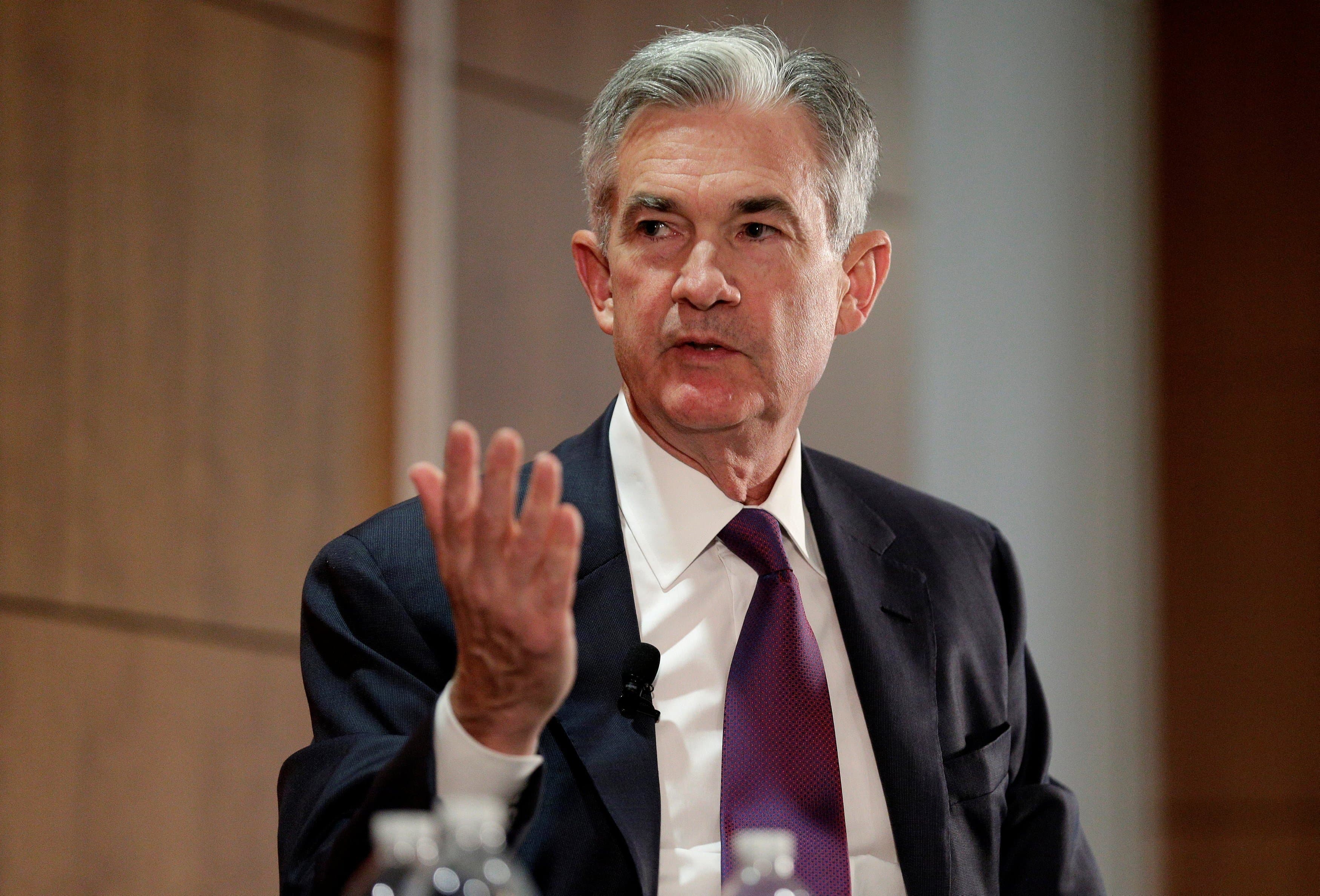
Federal Reserve Chair Jerome Powell, in his press conference following the decision, emphasized that the economic outlook remains deeply opaque. The dual mandate of the Fed—to maintain stable prices and maximum employment—has fractured. Hiking rates to combat the energy-driven inflation risks crushing a domestic labor market that is already showing signs of stabilization at a fragile equilibrium. Conversely, cutting rates could inadvertently signal weakness or, worse, fuel the very inflationary fire that the energy shock has already ignited.
The "dot plot" of projections released alongside the decision shows committee members remain split, with a thin majority clinging to the hope of a single rate cut later in 2026. Yet, this forecast is widely viewed by institutional investors as a placeholder. The Fed is, in effect, waiting to see if the conflict de-escalates before it commits to any definitive path. It is a dangerous game of watch-and-wait, where every day of fighting in the Middle East chips away at the Fed’s ability to act decisively.
For a reader in Nairobi, the distance between the Federal Reserve Board in Washington, D.C., and the pump at a local petrol station has never felt smaller. Kenya, as a net importer of energy, is acutely vulnerable to these global shifts. The strengthening of the U.S. dollar, fueled by its status as a "safe-haven" asset during times of geopolitical strife, creates an immediate and painful depreciation pressure on the Kenyan Shilling.
When the Fed keeps rates high, global capital often retreats to the safety of U.S. Treasuries, draining liquidity from emerging markets. For the Central Bank of Kenya, this necessitates a difficult balancing act. To defend the shilling and curb imported inflation, the Monetary Policy Committee may be forced to maintain or even hike the Central Bank Rate (CBR), further tightening credit conditions for local businesses already struggling with the high costs of production. The ripple effect is inevitable: higher transport costs, inflated prices for imported consumer goods, and a slower pace of industrial expansion.
Ultimately, the markets are pricing in the risk of a "stagnation" scenario—where growth stalls while prices continue to climb. Experts note that previous oil shocks have historically precipitated recessions, and while the U.S. economy remains relatively insulated compared to past cycles, the cumulative effect of tariffs, supply chain reshuffling, and now a kinetic war in the energy heartlands is a compounding stressor that few models can fully account for.
As the world watches the Strait of Hormuz, the message from the Federal Reserve is clear: there are no easy answers. The "best we should hope for" may indeed be the stillness of the current policy pause, but that stillness is deceptive. Beneath the surface, the global economy is bracing for a wave of volatility that will test the resilience of governments and households alike. The question now is not when the Fed will move, but whether the global economy can hold its breath long enough for the storm to pass.
Keep the conversation in one place—threads here stay linked to the story and in the forums.
Sign in to start a discussion
Start a conversation about this story and keep it linked here.
Other hot threads
E-sports and Gaming Community in Kenya
Active 10 months ago
The Role of Technology in Modern Agriculture (AgriTech)
Active 10 months ago
Popular Recreational Activities Across Counties
Active 10 months ago
Investing in Youth Sports Development Programs
Active 10 months ago
Key figures and persons of interest featured in this article