We're loading the full news article for you. This includes the article content, images, author information, and related articles.
A State Street strategist insists on three 2026 rate cuts, creating a high-stakes standoff with markets that are currently pricing in a holding pattern.

In the high-stakes corridors of global finance, a widening chasm has opened between institutional optimism and the hard realities of geopolitical instability. While the United States Federal Reserve—and the broader financial market—have retreated from expectations of aggressive interest rate cuts in 2026, strategists at State Street Global Advisors are holding their ground, predicting that as many as three rate cuts remain on the table before the year ends.
This dissonance is not merely a theoretical debate for Wall Street analysts it represents a significant risk for the global economy, including the frontier markets of East Africa. As the U.S. central bank navigates a murky landscape of persistent inflation and geopolitical shocks—most notably the ongoing volatility in the Middle East and its subsequent impact on energy prices—the argument for “higher for longer” interest rates has gained overwhelming momentum. Yet, the State Street outlook offers a contrarian beacon for those hoping that a shift in monetary policy might finally provide relief to dollar-indebted nations.
The core of the disagreement lies in divergent interpretations of future economic pressures. State Street’s strategy is built on the belief that a combination of political pressure—specifically regarding the transition in leadership at the Federal Reserve—and the inherent costs of currency hedging will eventually force the Fed’s hand. Strategists at the firm, including Lee Ferridge, have pointed to the potential for a new Federal Reserve chair to adopt a more accommodative stance, thereby narrowing the interest rate differential between the United States and other regions.
For investors, the hedging of currency risk remains a heavy burden. When U.S. rates are high, the dollar remains strong, and the cost for foreign investors to protect their U.S.-based assets against currency fluctuation becomes prohibitive. State Street argues that if the Fed delivers three cuts, it would fundamentally lower these hedging costs, thereby incentivizing capital flows. However, this view clashes directly with the market reality observed immediately following the Federal Reserve’s March 2026 meeting, where policymakers left rates unchanged, acknowledging that inflation remains uncomfortably sticky above their 2% target.
The current market consensus has hardened significantly, with most traders now pricing in a mere single rate cut for the remainder of 2026, or in some optimistic scenarios, two. This hawkish shift is driven by a trifecta of concerns that have effectively neutralized the optimism held by outlier firms:
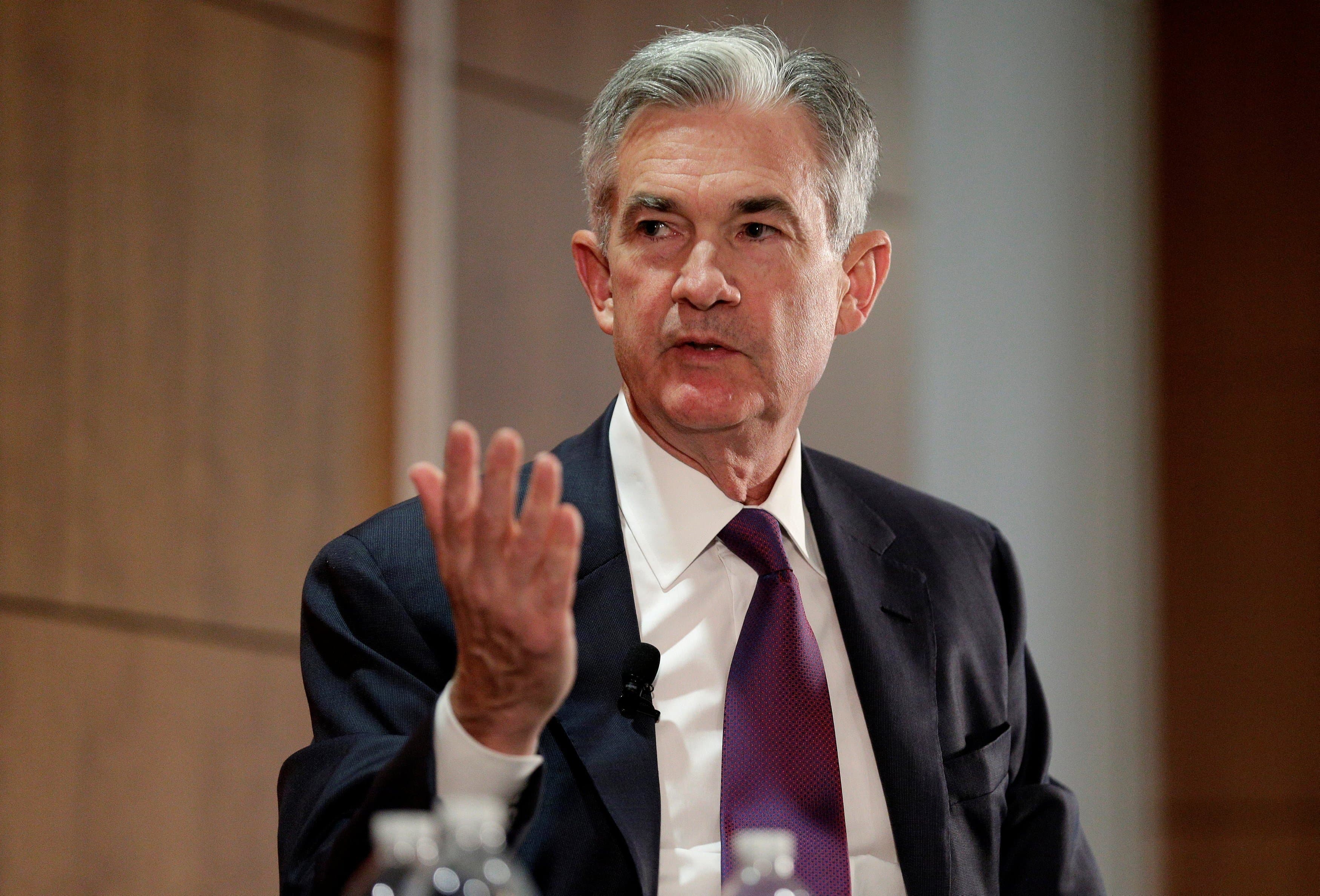
As Chair Jerome Powell noted during his March press conference, the Fed is essentially choosing to look through the fog of current conflicts. Policymakers are unwilling to rock the interest rate boat while the primary economic indicators remain clouded by supply-side shocks. For investors betting on the State Street scenario, this represents a significant challenge: to be right, they must see the Federal Reserve pivot from a position of extreme caution to one of proactive easing, an unlikely maneuver in the face of rising energy prices.
For a reader in Nairobi, the distance between the U.S. Federal Reserve and the Central Bank of Kenya (CBK) is shrinking. The U.S. dollar is the primary instrument of global trade, and when the Federal Reserve holds rates high to combat domestic inflation, it draws global capital toward U.S. Treasuries, effectively strengthening the dollar and punishing emerging market currencies like the Kenyan Shilling.
The implications for Kenya are profound:
While State Street’s forecast for three rate cuts offers a glimmer of hope for debt relief and a more manageable exchange rate, the current evidence suggests that Kenya must prepare for a prolonged period of high-cost capital. Policymakers in Nairobi are currently focusing on building economic resilience through regional trade and local value addition, recognizing that reliance on the ebb and flow of U.S. monetary policy is a strategy fraught with peril.
Ultimately, the rift between State Street’s model and the broader market signals a deeper uncertainty regarding the year ahead. If State Street is correct, the dollar could see a depreciation of up to 10%, a development that would provide a lifeline to developing economies struggling with dollar-denominated liabilities. If the market is correct, the world should brace for a continuation of the current restrictive regime, where the cost of borrowing remains high and the dollar’s dominance continues to exert pressure on global growth.
For now, the Federal Reserve remains the immovable object, and the market, the irresistible force. The coming months, dominated by quarterly economic data and further developments in the Middle East, will act as the ultimate arbiter, revealing whether State Street’s contrarian bet was a stroke of strategic genius or a testament to the dangers of ignoring the cooling reality of a tightening cycle.
Keep the conversation in one place—threads here stay linked to the story and in the forums.
Sign in to start a discussion
Start a conversation about this story and keep it linked here.
Other hot threads
E-sports and Gaming Community in Kenya
Active 10 months ago
The Role of Technology in Modern Agriculture (AgriTech)
Active 10 months ago
Popular Recreational Activities Across Counties
Active 10 months ago
Investing in Youth Sports Development Programs
Active 10 months ago
Key figures and persons of interest featured in this article