We're loading the full news article for you. This includes the article content, images, author information, and related articles.
Rodrigo Duterte faces the International Criminal Court over his bloody and controversial war on drugs.
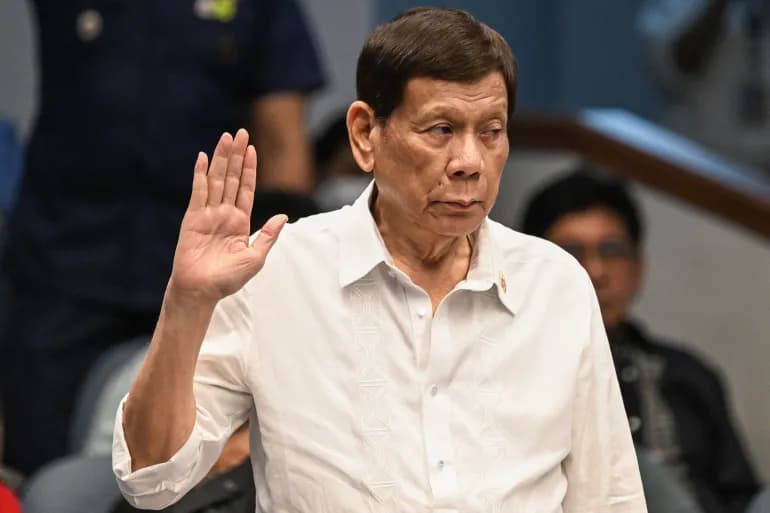
The legacy of a ruthless, blood-soaked political era is finally facing international scrutiny as former Philippine President Rodrigo Duterte goes on trial at the International Criminal Court (ICC) for alleged crimes against humanity.
The halls of justice in The Hague are currently the focal point of a massive international reckoning. The ICC has formally commenced hearings to determine the extent of Rodrigo Duterte's culpability in the extrajudicial slaughter of tens of thousands of citizens during his infamous, multi-year "war on drugs." The proceedings mark a critical juncture in global human rights enforcement.
Duterte, now 80 years old, weaponised the state apparatus during his tenure as mayor of Davao and subsequently as president from 2016. His campaign explicitly encouraged the summary execution of alleged drug dealers and users by police forces and vigilante death squads. Human rights organisations have meticulously documented the systematic, state-sanctioned murder of civilians, including numerous children.
ICC prosecutors are mounting a formidable case, directly linking Duterte to the orchestration of the violence. Prosecutor Mame Niang forcefully articulated to the panel of judges that the former strongman cannot hide behind sovereign immunity. The prosecution alleges Duterte's direct involvement in at least 76 specific murders, charging him with three distinct counts of crimes against humanity.
Unfazed by the international condemnation, Duterte has remained aggressively defiant. He has opted to waive his right to be physically present in the courtroom, publicly rejecting the ICC's authority and jurisdiction over his actions. His legal team vehemently maintains his innocence, despite years of his own public rhetoric encouraging mass slaughter.
Duterte's political ascension was built on a foundation of raw, populist violence. He successfully portrayed himself as the ultimate anti-establishment enforcer, willing to bypass the sluggish judicial system to deliver immediate, bloody results. This rhetoric resonated deeply with a populace exhausted by rampant crime, yet the human cost was catastrophic.
The outcome of this ICC hearing holds monumental implications far beyond the Philippines. It serves as a stark, institutional warning to authoritarian leaders worldwide that the orchestrators of state violence will eventually face the mechanisms of international justice.
"These proceedings are a profound reminder that those in power are not above the law, no matter how aggressively they wielded it," declared Prosecutor Niang, setting the stage for a historic legal confrontation.
Keep the conversation in one place—threads here stay linked to the story and in the forums.
Sign in to start a discussion
Start a conversation about this story and keep it linked here.
Other hot threads
E-sports and Gaming Community in Kenya
Active 9 months ago
The Role of Technology in Modern Agriculture (AgriTech)
Active 9 months ago
Popular Recreational Activities Across Counties
Active 9 months ago
Investing in Youth Sports Development Programs
Active 9 months ago