We're loading the full news article for you. This includes the article content, images, author information, and related articles.
Shipping agents warn that chronic delays at the Port of Mombasa are costing operators $60,000 a day and threatening Kenya's regional dominance, as cargo volumes surge to 45.5 million tonnes.
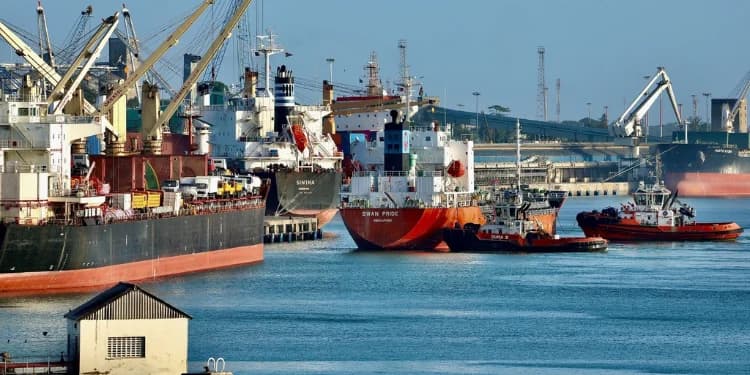
The patience of the global maritime industry has snapped. In a blistering critique of current operations, shipping lines and agents have issued an urgent call for a "speedy end" to the chronic vessel delays plaguing the Port of Mombasa, warning that the inefficiency is costing the economy millions and threatening Kenya's status as the regional logistics hub.
The Kenya Ships Agents Association (KSAA) has raised the red flag, citing data that paints a picture of a facility struggling to cope with its own success. With cargo volumes hitting a record 45.5 million tonnes last year, the infrastructure and clearing processes have failed to keep pace, leading to a bottleneck that is literally burning money in the harbor.
The cost of inaction is staggering. According to industry figures released by the KSAA, a single ship delayed at the anchorage outside Mombasa costs the operator approximately $60,000 (KES 7.74 million) per day in charter fees, fuel, and crew costs. When multiple vessels are forced to queue for days waiting for a berth, these costs spiral into the millions of dollars—costs that are inevitably passed down to the Kenyan consumer in the form of higher prices for imported goods.
"These are not just numbers on a spreadsheet; this is an economic hemorrhage," said a representative for the shippers. "Every hour a ship sits idle is a tax on our efficiency. We are calling for an immediate streamlining of the clearing processes and better coordination between the Kenya Ports Authority (KPA) and other state agencies."
The root cause appears to be a perfect storm of rising global trade volumes and stagnant processing speeds. While the physical infrastructure of the port has been upgraded—including the new Kipevu Oil Terminal and expanded container berths—the "soft infrastructure" of bureaucracy remains clogged. Vessels are waiting offshore because yards are full; yards are full because inland depots are choking; and depots are choking because cargo uptake is sluggish.
Shippers are demanding a "super single window" system—a fully integrated digital platform linking KPA, the Kenya Revenue Authority (KRA), and standards bodies—to eliminate the human delays that define the current process. They argue that without rapid digitization and 24/7 efficiency, Mombasa risks becoming a bottleneck rather than a gateway. As the queues of ships lengthen on the horizon, the pressure is now squarely on the KPA to prove that Mombasa can handle the weight of the region’s commerce.
Keep the conversation in one place—threads here stay linked to the story and in the forums.
Sign in to start a discussion
Start a conversation about this story and keep it linked here.
Other hot threads
E-sports and Gaming Community in Kenya
Active 9 months ago
The Role of Technology in Modern Agriculture (AgriTech)
Active 9 months ago
Popular Recreational Activities Across Counties
Active 9 months ago
Investing in Youth Sports Development Programs
Active 9 months ago