We're loading the full news article for you. This includes the article content, images, author information, and related articles.
Four years after the commencement of the full-scale invasion of Ukraine, the socio-economic and demographic reverberations are profoundly reshaping Russian society, as seen in provincial towns where lucrative military recruitment drives mask a deepening domestic crisis.
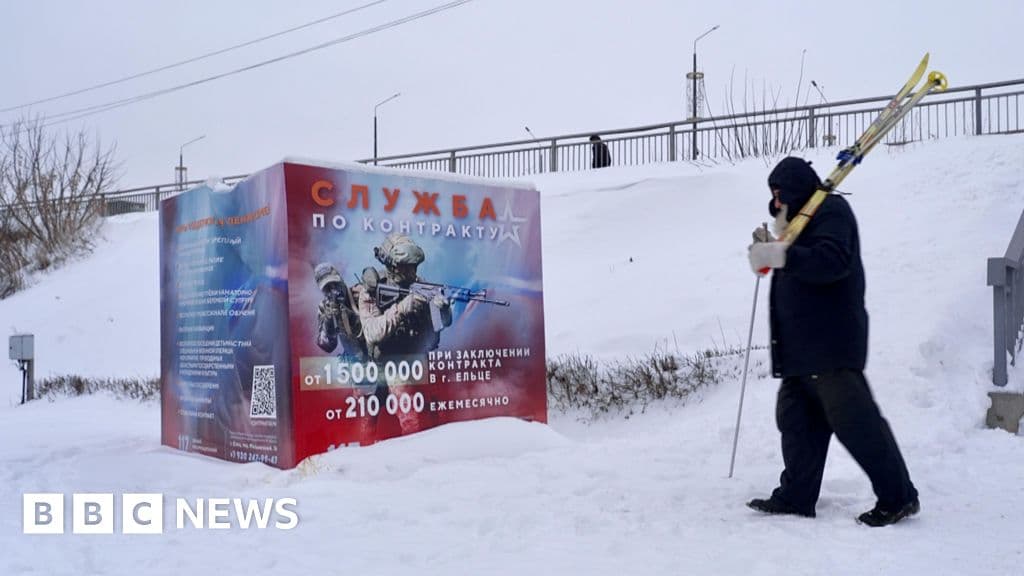
Four years after the commencement of the full-scale invasion of Ukraine, the socio-economic and demographic reverberations are profoundly reshaping Russian society, as seen in provincial towns where lucrative military recruitment drives mask a deepening domestic crisis.
In the quiet, snowy town of Yelets, located 350 kilometers south of Moscow, the visual landscape is dominated not by its historic golden domes, but by aggressive military recruitment billboards. The Kremlin's initial promise of a brief, decisive military operation has evaporated into a grinding war of attrition.
This prolonged conflict, now surpassing the duration of the Soviet Union's brutal engagement in the Great Patriotic War, is sending shockwaves globally. For African nations, including Kenya, the geopolitical fallout continues to severely disrupt critical agricultural supply chains, directly impacting domestic food security and inflating the cost of basic commodities.
The human cost of the war is glaringly visible on the streets of Yelets. Giant murals adorning massive apartment blocks depict the stoic faces of local men who have perished on the Ukrainian frontlines. To replenish its heavily depleted ranks, the Russian Ministry of Defense is relying on extraordinary financial incentives rather than politically sensitive mandatory conscription.
Billboards prominently advertise a staggering one-off signing bonus equivalent to £15,000 (approximately KES 2.4 million) for citizens willing to enlist. In economically depressed provincial regions where average salaries are remarkably low, this unprecedented financial package represents a desperate, yet highly effective, mechanism for state recruitment. It is an infusion of blood money that temporarily boosts local economies while simultaneously draining them of their prime working-age male population.
The slogan accompanying the imagery of soldiers clutching Kalashnikovs boldly declares, "We're there where we need to be." Yet, beneath the veneer of manufactured patriotic bravado, the silent, mounting toll of casualties is breeding an undercurrent of unspoken grief and severe societal anxiety that the state propaganda apparatus struggles to contain.
Russia's economy has heavily pivoted to a wartime footing, creating a bizarre, localized economic paradox. Massive state investment in the military-industrial complex has driven unemployment to historic lows and fueled a temporary surge in industrial manufacturing. Factories operate around the clock producing artillery shells and armored vehicles.
While the infusion of military salaries and substantial death compensations has created a localized consumer boom in poorer regions, economists warn this model is fundamentally unsustainable. The long-term destruction of human capital and the technological isolation imposed by the West guarantee a bleak, stagnant economic future once the wartime spending inevitably contracts.
The reverberations of this distant conflict are acutely felt across the African continent. Russia and Ukraine were historically the primary breadbaskets for East Africa, supplying a vast majority of the region's imported wheat and crucial agricultural fertilizers. The prolonged disruption of these vital supply chains has been catastrophic.
In Kenya, the skyrocketing cost of fertilizer has directly depressed domestic agricultural yields, driving up the price of staple foods like maize meal. The geopolitical instability has also heavily contributed to global fuel price volatility, further straining the foreign exchange reserves of developing nations and accelerating inflation.
African diplomatic efforts to broker a peace agreement have largely stalled, leaving nations vulnerable to the continuing economic fallout. The war has vividly underscored the immense danger of relying on volatile foreign jurisdictions for fundamental food security, prompting urgent calls for increased investment in domestic agricultural resilience and regional self-sufficiency.
As the conflict enters its fifth year, the prospect of a negotiated settlement remains frustratingly elusive. Both Moscow and Kyiv appear locked in an uncompromising maximalist stance, heavily backed by their respective geopolitical allies.
For the citizens of Yelets, and indeed the broader global community, the continuation of hostilities signifies more casualties, deeper economic distortions, and sustained geopolitical instability. The fairy-tale winter landscape of the Russian provinces starkly belies the grim, exhausting reality of a nation fundamentally transformed by endless warfare.
"The war has consumed the fabric of daily life; the financial bonuses cannot erase the faces of the lost young men staring down from our buildings," noted an anonymous international correspondent reporting from the region.
Keep the conversation in one place—threads here stay linked to the story and in the forums.
Sign in to start a discussion
Start a conversation about this story and keep it linked here.
Other hot threads
E-sports and Gaming Community in Kenya
Active 9 months ago
The Role of Technology in Modern Agriculture (AgriTech)
Active 9 months ago
Popular Recreational Activities Across Counties
Active 9 months ago
Investing in Youth Sports Development Programs
Active 9 months ago