We're loading the full news article for you. This includes the article content, images, author information, and related articles.
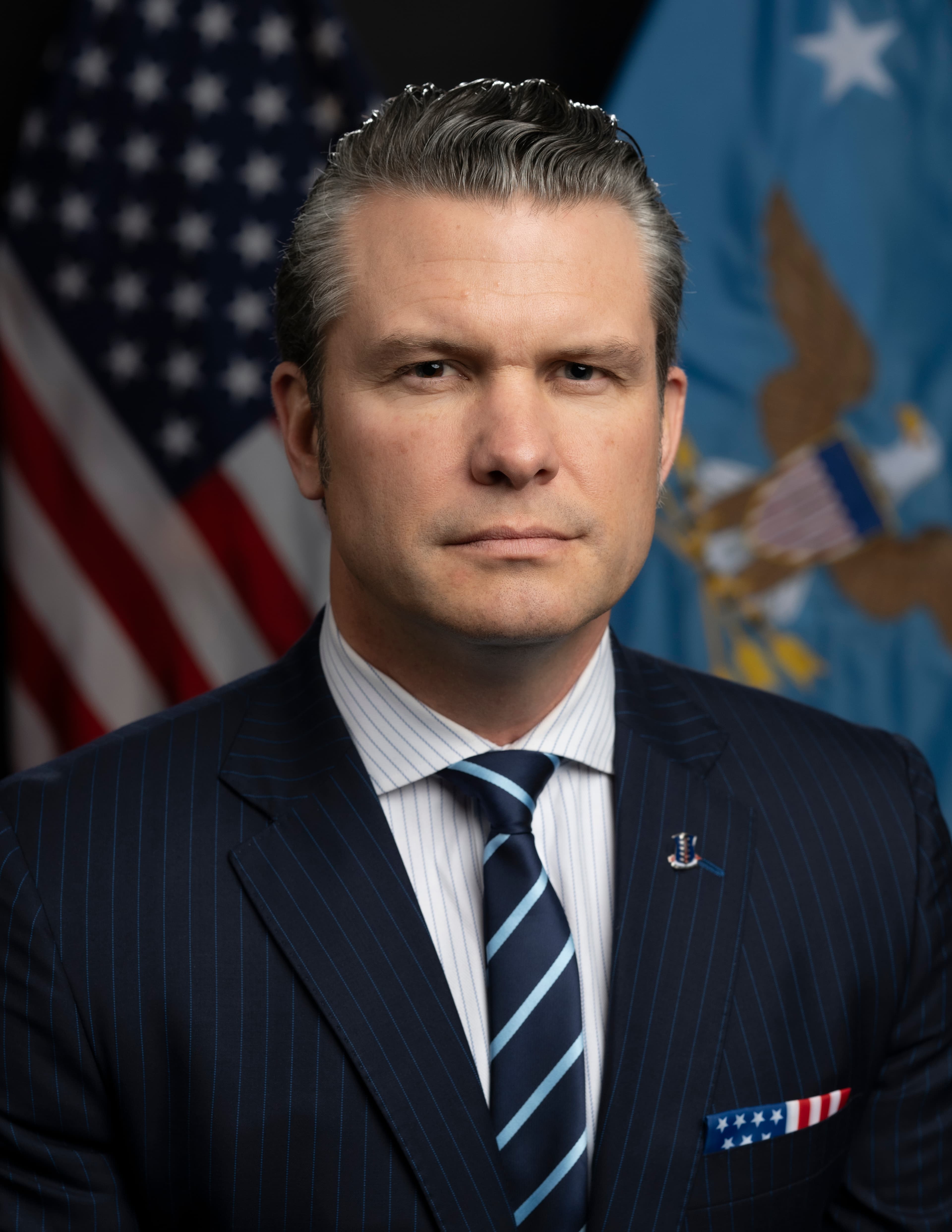
Defense Secretary Pete Hegseth faces intense condemnation from lawmakers and legal experts after declaring a ‘no quarter’ policy against US enemies.

Inside the high-security briefing room at the Pentagon on Friday, Defense Secretary Pete Hegseth issued a directive that has sent shockwaves through the international legal community and the halls of Congress. In a sharp departure from standard diplomatic and military protocol, Hegseth declared that the United States would maintain a policy of “no quarter” and “no mercy” toward its enemies. The inflammatory rhetoric, intended to project strength, has instead triggered an immediate crisis of legitimacy, with critics warning that the doctrine effectively encourages war crimes and jeopardizes the safety of American personnel worldwide.
This is not merely a matter of semantics or aggressive posturing it is a fundamental challenge to the established order of international humanitarian law. By advocating for a policy that explicitly rejects the taking of prisoners, Hegseth has placed the United States at odds with the Hague Convention, the bedrock of the rules of war. The incident has turned the spotlight onto the Pentagon’s current operational philosophy, raising urgent questions about whether the American military leadership is drifting away from the legal frameworks that have governed global conflict for over a century.
In the lexicon of military history, the term “no quarter” is synonymous with total annihilation. It signifies an explicit order to refuse surrender, effectively demanding that soldiers execute anyone they defeat, including those who attempt to lay down their weapons. This practice was historically common in pre-modern warfare, but it was codified as a war crime over a century ago to prevent the senseless slaughter of combatants who are no longer capable of fighting. For the United States to adopt such a posture is an unprecedented shift that threatens to dismantle the moral authority the nation relies upon in its global alliances.
Legal experts note that the prohibition against such directives is absolute. Under the Hague Convention of 1899 and its subsequent 1907 amendment, declaring that no quarter will be given is strictly forbidden. The International Committee of the Red Cross maintains that such orders constitute a clear violation of international humanitarian law. When a high-ranking official like the Defense Secretary ignores these statutes, it creates a dangerous precedent that can be weaponized by adversaries to justify their own atrocities against American troops. The risks are not merely theoretical they are a matter of life and death for service members in the field who may now face reciprocal brutality from hostile forces.
The swift condemnation from within the American political establishment highlights the depth of the concern. Senator Mark Kelly, an Arizona Democrat with a distinguished background as a naval pilot and astronaut, led the charge against the Secretary’s comments. In a direct rebuke issued via social media, Kelly warned that such language is not a “tough guy line” but a dangerous policy direction. The Senator emphasized that an order to give no quarter is, by definition, an illegal order. His intervention underscores a growing chasm between the executive branch’s aggressive, often performative, nationalist rhetoric and the nuanced, legally bound reality of modern military operations.
The criticism from figures like Kelly reflects a broader anxiety within the halls of Congress. There is a palpable fear that the current administration is willing to sacrifice decades of established international norms for short-term political posturing. The implications for the United States’ standing in the world are significant. As the nation grapples with complex security environments, from the Middle East to the Indo-Pacific, maintaining the perception of a disciplined, law-abiding force is a strategic asset. By discarding that asset in favor of belligerent rhetoric, the administration may be undermining its own long-term security goals.
For nations like Kenya, which maintain critical security partnerships with the United States, these developments are profoundly unsettling. The US presence in East Africa, spanning from counter-terrorism operations to regional stability training, relies on a framework of shared democratic values and adherence to the rule of law. When the Pentagon adopts language that flirts with war crimes, it places regional partners in a difficult diplomatic position. Nairobi and other East African capitals depend on the United States to act as a stabilizing, lawful force in a region often plagued by conflict. If that perception of American moral leadership crumbles, the strategic partnership becomes a liability rather than a pillar of security.
Furthermore, the budgetary and economic ramifications of such a shift in policy cannot be ignored. A departure from international norms could lead to a reassessment of aid packages and security cooperation agreements. While the immediate financial impact might not be measured in billions of shillings, the loss of trust is an intangible cost that is far harder to recover. Kenyan policymakers and military leadership are now forced to navigate a landscape where their primary security partner is engaging in rhetoric that contradicts their own domestic constitutional commitments to human rights and the Geneva Conventions.
As the controversy intensifies, the Pentagon faces mounting pressure to clarify whether Hegseth’s comments represent a shift in formal military doctrine or simply poorly chosen rhetoric. The ambiguity itself is corrosive. Until a definitive retraction or explanation is issued, the uncertainty will linger over the heads of every American service member currently deployed. The global community is watching, not just for an apology, but for a reaffirmation of the rules that prevent the total collapse of civilized conflict. Whether the Defense Secretary can navigate this self-inflicted crisis without further eroding the foundations of American influence remains the defining challenge of his tenure.
The world waits to see if the United States will double down on this aggressive posture, or if the checks and balances of its legislative system will force a return to the long-standing norms that have prevented the world from spiraling into unchecked, lawless warfare. In the final analysis, words spoken at a Pentagon podium echo around the world when those words reject the basic tenets of humanity, the cost is borne by everyone.
Keep the conversation in one place—threads here stay linked to the story and in the forums.
Sign in to start a discussion
Start a conversation about this story and keep it linked here.
Other hot threads
E-sports and Gaming Community in Kenya
Active 10 months ago
Popular Recreational Activities Across Counties
Active 10 months ago
The Role of Technology in Modern Agriculture (AgriTech)
Active 10 months ago
Investing in Youth Sports Development Programs
Active 10 months ago
Key figures and persons of interest featured in this article