We're loading the full news article for you. This includes the article content, images, author information, and related articles.
Senator Oburu Oginga frames the ODM`s 10-point agenda as a moral imperative, signaling a renewed political offensive as the 2027 election cycle looms.
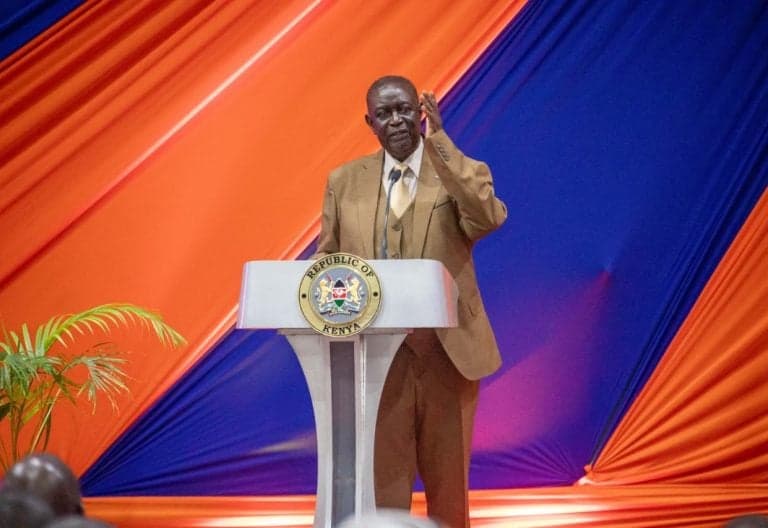
Senator Oburu Oginga has reframed the Orange Democratic Movement's 10-point agenda, casting the ambitious reform framework as a binding moral debt to the Kenyan electorate rather than a mere political convenience.
The declaration, made as the party navigates a complex transition of leadership and coalition dynamics, signals a renewed effort to solidify the party's relevance in the run-up to the 2027 General Election. With the country approaching a 17-month countdown to the polls, the agenda stands at the center of a deepening rift between the party’s traditional base and its new cooperative alignment with the ruling United Democratic Alliance.
The 10-point agenda—a collection of commitments spanning economic recovery, governance reform, and social protection—was born from the intense national discourse of 2024 and 2025. Following the late Raila Odinga’s agreement with President William Ruto, the framework was intended to act as a stabilizing bridge for a nation grappling with the aftershocks of anti-tax protests and severe fiscal constraints. Oburu, assuming the mantle of party leadership, has sought to insulate this initiative from the rising tide of internal skepticism.
Critics within the party, particularly the vocal Linda Mwananchi faction, have long argued that the broad-based government arrangement risks diluting ODM’s foundational role as the vanguard of the opposition. They have pointed to March 7, 2026, as a pivotal milestone—one they claim should have signaled a reassessment, or even dissolution, of the pact. Oburu’s intervention, however, shifts the goalposts significantly, characterizing that date as a simple anniversary rather than an expiration clause.
Data from the National Assembly archives underscores the legislative efficiency this alliance has produced. Since the integration of opposition figures into the broad-based administration, government-sponsored motions have seen an unprecedented 94 percent approval rate. While proponents view this as administrative efficiency, constitutional scholars argue it signals a contraction in the oversight mechanisms essential to a healthy multiparty democracy.
The rhetoric coming from the new ODM nerve center on Riverside Drive in Nairobi suggests a calculated strategy to maintain continuity. For many in the party’s traditional strongholds, however, the disconnect between policy milestones and the cost of living remains acute. Oburu faces the Herculean task of translating high-level macroeconomic wins—such as stabilized interest rates and modest GDP growth—into tangible relief for households currently battling inflation.
Analysts at local economic think tanks warn that the "10-point debt" is becoming a double-edged sword. If the ODM leadership fails to secure visible, immediate impacts by the 2027 cycle, the agenda will likely become the primary target of opposition challengers. The political risk is high: should the electorate perceive the broad-based government as a marriage of convenience for the elite, the party risks losing the very demographic—the urban youth—that defined the intensity of the 2024 protest era.
As Oburu Oginga consolidates his influence and prepares for the upcoming National Delegates Convention, the 10-point agenda serves as a vital anchor for the party’s identity. The decision to define the cooperation with the ruling coalition as a "debt to the people" rather than a political handshake provides a convenient narrative to fend off accusations of co-optation. Yet, the history of Kenyan coalition politics suggests that intent often crumbles under the pressure of electoral exigencies.
Whether this framework can truly evolve into a legacy-defining achievement or fade into the annals of political rhetoric remains to be seen. What is certain is that in the corridors of power, the battle for the narrative of 2027 has begun in earnest, and every policy commitment is now a chip on a high-stakes bargaining table. For Oburu, the debt must be paid with performance for his critics, the currency of political loyalty is increasingly devalued.
Keep the conversation in one place—threads here stay linked to the story and in the forums.
Sign in to start a discussion
Start a conversation about this story and keep it linked here.
Other hot threads
E-sports and Gaming Community in Kenya
Active 10 months ago
Popular Recreational Activities Across Counties
Active 10 months ago
The Role of Technology in Modern Agriculture (AgriTech)
Active 10 months ago
Investing in Youth Sports Development Programs
Active 10 months ago
Key figures and persons of interest featured in this article