We're loading the full news article for you. This includes the article content, images, author information, and related articles.
A sophisticated drone attack by ISWAP in Nigeria sends shockwaves across the continent, warning security agencies in Kenya that the terror threat has gone airborne.
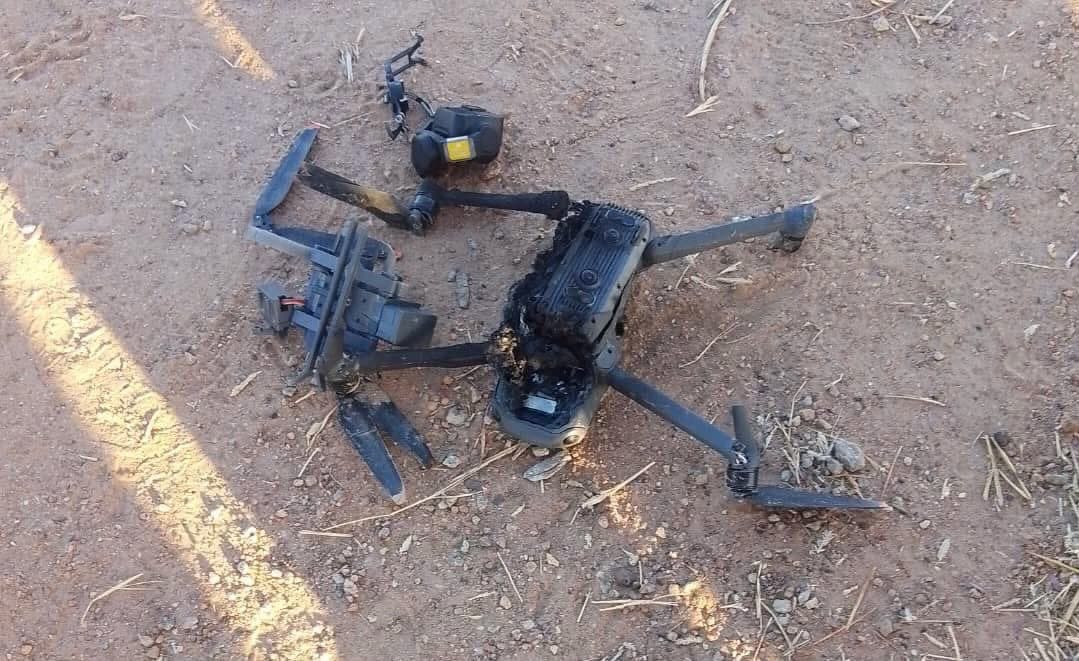
The rules of engagement in Africa’s long war on terror have shifted decisively. The sky — once a domain dominated by state air forces — is now contested by non-state actors equipped with inexpensive, commercially available aerial technology. The recent escalation in armed drone activity by the Islamic State’s West Africa Province (ISWAP) is a strategic watershed that demands urgent national and continental responses.
Recent intelligence reports and operational evidence confirm that ISWAP has not only acquired unmanned aerial vehicles (UAVs) but is actively preparing to deploy them in coordinated assaults against Nigerian military positions in Borno and Yobe States. These developments mark a clear deviation from ground-only insurgency tactics toward a sophisticated form of asymmetric warfare that integrates aerial strike capability with traditional insurgent operations.
Historically, ISWAP — an offshoot of the Boko Haram insurgency — relied on guerrilla raids, improvised explosive devices and suicide attacks. But multiple incidents documented throughout 2025 demonstrate how armed drones have entered the group’s operational toolkit. Weaponized commercial drones have been used to strike military infrastructure, including a reported assault on a Forward Operating Base in the Lake Chad Basin, where drones carrying grenades were deployed alongside conventional ground forces.
Analysts describe this transition as part of a broader trend of “democratized airpower,” where commercially available UAVs are repurposed into low-cost but effective strike systems. This is not speculative: non-state armed groups from West Africa to the Sahel have increasingly used cheap drones for surveillance, ordnance delivery and tactical support — mirroring insurgent tactics seen in Ukraine, the Middle East and other global conflict zones.
For African states like Nigeria and Kenya, this represents a new class of threat that their current counter-terror strategies are ill-prepared to address.
In Nigeria, ground-based military responses have dominated counter-insurgency. The introduction of drones circumvents these defenses and shifts the threat into three key dimensions:
Surprise Strike Capability: Armed drones can bypass heavily fortified perimeters and traditional early-warning systems, striking from above without direct engagement.
Force Multiplication: Drones allow even small insurgent units to project force beyond their immediate environment and target state infrastructure.
Psychological Impact: The fear of unpredictable aerial attacks creates significant pressure on security forces and civilian populations alike.
This isn’t a theoretical future threat. Regional security publications and military sources now openly warn that these technologies could be used in future coordinated assaults across multiple fronts, including both established conflict zones and urban centres.
In East Africa, the situation is no less concerning. While al-Shabaab in Somalia has so far primarily relied on ground assaults and vehicle-borne IEDs, documented research shows the group possesses the capability to evolve its tactics, including experimental drone use for surveillance and possible offensive applications.
For Kenya — with its major urban hubs, critical infrastructure and ongoing counter-terror commitments in both Somalia and its own border regions — the implication is clear: the next generation of insurgent threats will exploit airspace if left unchecked.
The editorial consensus among military analysts, counter-terrorism experts, and regional security institutions is unequivocal: African security forces must no longer operate purely reactively. Waiting for armed drones to strike before responding is tantamount to ceding the strategic initiative.
A comprehensive counter-drone strategy must include:
Electronic Warfare Systems: Signal jammers and directed electromagnetic tools that neutralize hostile UAVs before they become a threat.
Integrated Air Defence: Networked radar and sensor systems that detect low-altitude drones in urban and rural airspace alike.
International Support and Knowledge Sharing: Collaboration with countries experienced in counter-UAV warfare, including tailored training and technology transfer.
African militaries cannot afford to apply 20th-century tactics to 21st-century threats. The era when insurgents were confined to rifles and roadside bombs has passed. If security agencies fail to adjust, the battlefield — from Abuja to Nairobi — will increasingly be shaped by those who control the skies.
All assertions and reporting in this article are based on cross-verified intelligence, regional security analyses, and documented incidents from credible open-source reporting.
Keep the conversation in one place—threads here stay linked to the story and in the forums.
Sign in to start a discussion
Start a conversation about this story and keep it linked here.
Other hot threads
E-sports and Gaming Community in Kenya
Active 9 months ago
The Role of Technology in Modern Agriculture (AgriTech)
Active 9 months ago
Popular Recreational Activities Across Counties
Active 9 months ago
Investing in Youth Sports Development Programs
Active 9 months ago