We're loading the full news article for you. This includes the article content, images, author information, and related articles.
Detectives have launched a comprehensive investigation following the brutal mob justice killing of a boda boda rider at a highly charged political rally in Vihiga, laying bare the escalating volatility of regional politics.
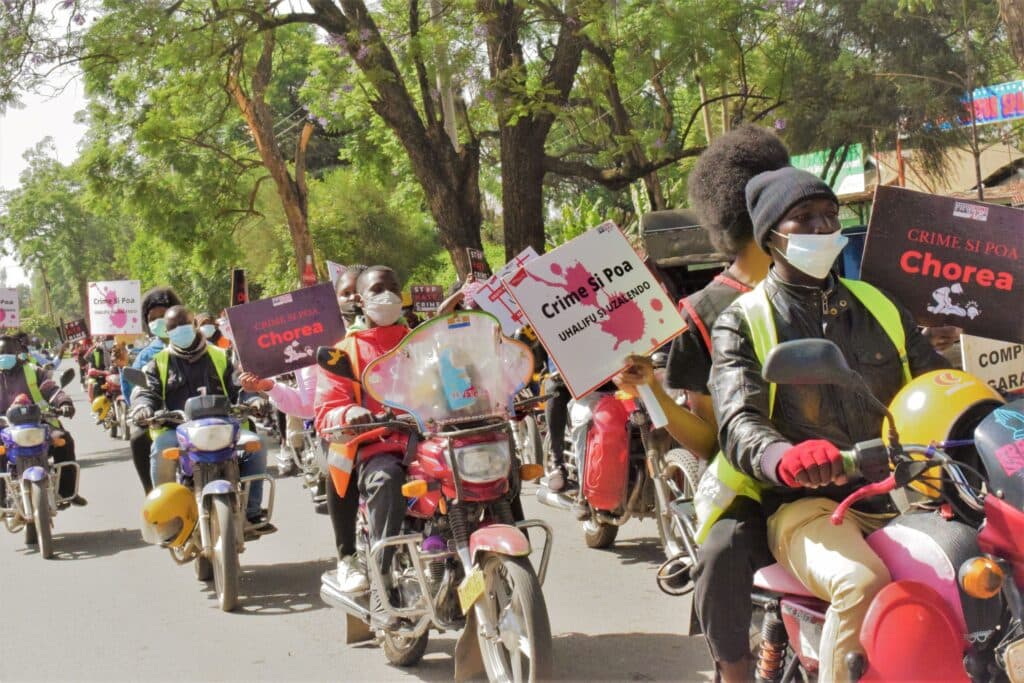
Detectives have launched a comprehensive investigation following the brutal mob justice killing of a boda boda rider at a highly charged political rally in Vihiga, laying bare the escalating volatility of regional politics.
The tragic lynching of George Olande Otobe, a local boda boda rider, amidst the chaotic fervor of a political rally in Vihiga County has sent shockwaves through Western Kenya. As the Directorate of Criminal Investigations (DCI) intensifies its probe into the deadly incident, the gruesome event serves as a stark, horrifying reminder of the lethal intersection between mob justice and toxic political mobilization in East Africa.
What began as a routine political gathering rapidly devolved into a theater of bloodshed, highlighting systemic vulnerabilities in crowd control, local security apparatuses, and the deep-seated societal frustrations that frequently boil over into lethal vigilantism.
The fatal incident unfolded when political tensions at the rally inexplicably spilled over into physical violence. According to preliminary reports, the chaos was ignited by an alleged stabbing incident, which immediately triggered a catastrophic chain reaction among the highly agitated crowd.
In the absence of immediate and overwhelming police intervention, the crowd summarily transformed into judge, jury, and executioner. Otobe was targeted, pursued, and subjected to horrific mob violence, ultimately losing his life before any medical or law enforcement assistance could be rendered. His body was subsequently transferred to the Jaramogi Oginga Odinga Teaching and Referral Hospital (JOOTRH) mortuary, pending a comprehensive autopsy.
The death of a boda boda rider in a political setting is not an isolated anomaly; it is symptomatic of a broader, deeply concerning trend across Kenya. The boda boda sector, comprising millions of young, often economically marginalized men, has increasingly been co-opted by political actors.
Politicians frequently utilize these riders as mobilized crowds, convoy escorts, and, in more sinister scenarios, as hired muscle to intimidate rivals. This instrumentalization places the riders at the absolute frontline of political conflict, exposing them to extreme physical risk while providing minimal economic reward. When violence erupts, they are invariably the first casualties in a proxy war orchestrated by elite political figures.
The Vihiga incident also casts a glaring spotlight on the persistent scourge of mob justice in rural and peri-urban Kenya. When citizens lack faith in the formal criminal justice system—perceiving it as corrupt, sluggish, or inaccessible—they tragically resort to primal violence to settle scores.
The DCI's current mandate is to systematically dismantle the narrative that mob violence provides a legitimate avenue for justice. Investigators are actively pursuing individuals captured in the melee, particularly those identified as armed supporters who incited or participated in the lynching. The successful prosecution of these perpetrators is absolutely critical to re-establishing the authority of the state and deterring future acts of vigilantism.
As the political temperature steadily rises ahead of the 2027 General Elections, the bloodshed in Vihiga must serve as a definitive wake-up call for the Ministry of Interior and National Administration.
The tragic loss of George Olande Otobe demands an immediate, fundamental reassessment of how political rallies are policed. Rigorous crowd control protocols, strict enforcement against the carrying of crude weapons at public gatherings, and the rapid deployment of anti-riot units must be prioritized. If the political elite continue to treat the electorate as cannon fodder for their ambitions, the democratic process risks being entirely delegitimized by violence.
True justice for Otobe will require more than just the arrest of his immediate attackers; it necessitates a complete systemic overhaul of how politics is practiced in the grassroots of Kenya.
Keep the conversation in one place—threads here stay linked to the story and in the forums.
Sign in to start a discussion
Start a conversation about this story and keep it linked here.
Other hot threads
E-sports and Gaming Community in Kenya
Active 9 months ago
The Role of Technology in Modern Agriculture (AgriTech)
Active 9 months ago
Popular Recreational Activities Across Counties
Active 9 months ago
Investing in Youth Sports Development Programs
Active 9 months ago