We're loading the full news article for you. This includes the article content, images, author information, and related articles.
NACADA and police seize thousands of liters of counterfeit alcohol and narcotics in Murang’a and Taita Taveta, exposing a sophisticated syndicate using fake KRA stamps.
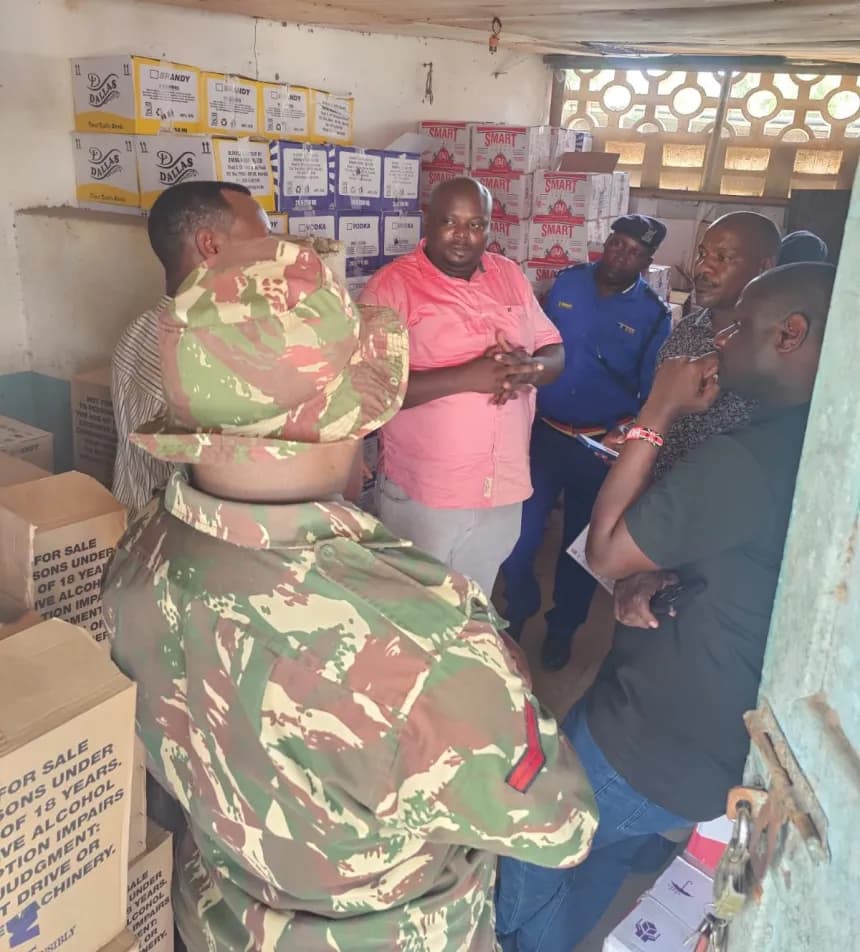
In a dawn raid that has sent shockwaves through the central region, NACADA agents have dismantled a sprawling counterfeit alcohol syndicate, seizing thousands of liters of lethal brew.
This operation exposes the rotting underbelly of Kenya’s illicit liquor trade, coming just months after the government vowed to eradicate the "poison in the bottle" that has claimed countless lives and blinded a generation. The seizure of over 216 crates of fake spirits and the destruction of the notorious "Mpasho" brew is not just a law enforcement statistic; it is a grim reminder that despite the tough talk from Nairobi, the merchants of death are still operating with impunity in the villages.
The operation, executed with military precision over the weekend, was a coordinated strike involving the National Police Service and National Government Administration Officers. It began in Kahuro Sub-County, Murang’a, a region that has long borne the scars of alcoholism. Acting on intelligence that had been gathered for weeks, officers descended on outlets that had been masquerading as legitimate businesses.
In Murarandia Market Centre, the scale of the operation became apparent. Behind the facade of a standard liquor store, officers uncovered a warehouse of death: 216 crates and four cartons of spirits, all bearing forged Kenya Revenue Authority (KRA) stamps. These were not just tax-evading products; they were potential chemical weapons, likely laced with methanol to boost potency at a fraction of the cost.
Simultaneously, in Taita Taveta County, the dragnet tightened around a different kind of poison. In the sprawling Tanzania slums of Voi and the Shakahola area of Mwatate, authorities destroyed 500 liters of "Mpasho," a toxic local brew that has ravaged the youth. The raid also netted 29 rolls of cannabis, exposing the nexus between illicit alcohol and narcotics trafficking.
While the sight of poured liquor makes for good television, the reality on the ground is grim. For every crate seized in Murang’a, three more are likely being bottled in clandestine labs in Kirinyaga or Kiambu. The economics of desperation drive this trade; with legitimate alcohol taxed out of reach for the common man, the Sh50 "killer brew" becomes the only escape.
Residents in Kahatia Market, where 115 bottles were confiscated, watched with a mix of relief and cynicism. "They pour it today, but the supplier will be back tomorrow," one local elder remarked, capturing the Sisyphean nature of this war. Unless the supply chain is cut at the source—the ethanol importers and the stamp printers—this crackdown will be nothing more than a temporary inconvenience for the cartels.
As the suspects await arraignment and the KRA verifies the seized stamps, the message from the government is clear: the war is on. But for the mothers in Murang’a burying sons lost to the bottle, the victory feels hollow. The poison is still flowing.
Keep the conversation in one place—threads here stay linked to the story and in the forums.
Sign in to start a discussion
Start a conversation about this story and keep it linked here.
Other hot threads
E-sports and Gaming Community in Kenya
Active 9 months ago
The Role of Technology in Modern Agriculture (AgriTech)
Active 9 months ago
Popular Recreational Activities Across Counties
Active 9 months ago
Investing in Youth Sports Development Programs
Active 9 months ago