We're loading the full news article for you. This includes the article content, images, author information, and related articles.
New analysis confirms former President Uhuru Kenyatta’s first-term infrastructure achievements vastly outstrip the current administration’s output, highlighting a shift from construction to austerity.
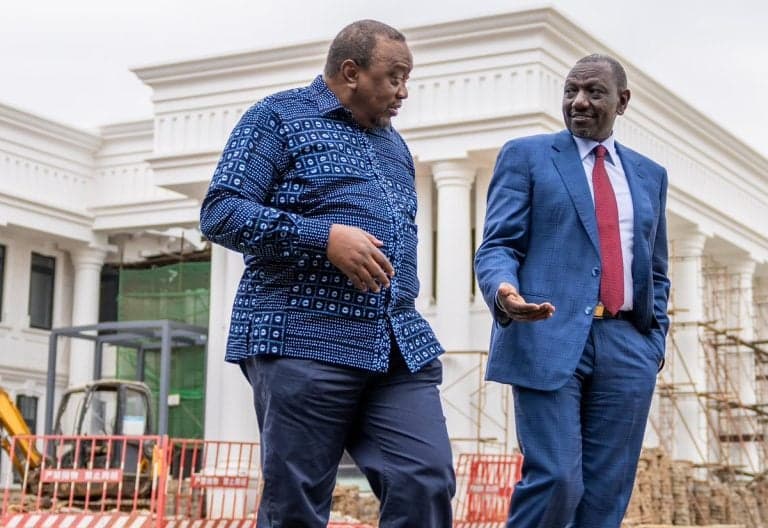
A damning new data-driven analysis has settled the fiercest debate in Kenyan politics, revealing a stark infrastructure deficit in the current administration compared to its predecessor.
The numbers are in, and they tell a story that political rhetoric cannot spin. A comprehensive analysis comparing the first-term infrastructure output of former President Uhuru Kenyatta and current President William Ruto has delivered a verdict of "unmatched dominance" for the former. The study, leveraging data on completed kilometers of tarmac, mega-project initiation, and capital absorption rates, exposes a widening gap between the "Concrete Era" of Kenyatta and the "Austerity Era" of Ruto.
For years, the debate has raged in bars and boardrooms: who truly built Kenya? The analysis cuts through the noise, showing that by this point in his first term, Uhuru Kenyatta had already set in motion the Standard Gauge Railway (SGR), the Nairobi Expressway framework, and thousands of kilometers of rural roads. In sharp contrast, the current administration’s infrastructure scorecard is defined more by pauses, cancellations, and maintenance than by new steel and cement.
The disparity is not just in volume; it is in vision. The analysis highlights key metrics where the previous regime established an unassailable lead:
This report is a reality check for the Kenya Kwanza administration. While the economic logic of pausing debt-funded projects is sound, the political cost is rising. Kenyans were conditioned to a decade of visible development—the "Uhuru Standard." The sudden halt has created a perception of stagnation. The analysis suggests that unless the current government can unlock a new model of financing, perhaps through Public-Private Partnerships that actually break ground, they risk being remembered as the administration that stopped the paving machines.
The ghost of the past is haunting the present. Every time a Kenyan drives on the Expressway or rides the SGR, they are navigating Uhuru’s legacy. President Ruto’s challenge is no longer just to fix the economy, but to pour some concrete of his own before the 2027 whistle blows.
“You cannot live in a house painted with good intentions,” the report concludes metaphorically. The foundation was laid by Uhuru; the question is whether Ruto will build the walls or just pay the mortgage.
Keep the conversation in one place—threads here stay linked to the story and in the forums.
Sign in to start a discussion
Start a conversation about this story and keep it linked here.
Other hot threads
E-sports and Gaming Community in Kenya
Active 9 months ago
The Role of Technology in Modern Agriculture (AgriTech)
Active 9 months ago
Popular Recreational Activities Across Counties
Active 9 months ago
Investing in Youth Sports Development Programs
Active 9 months ago