We're loading the full news article for you. This includes the article content, images, author information, and related articles.
A train derailment at Selhurst depot and signalling faults force a "do not travel" warning, crippling the UK’s largest rail franchise and stranding thousands.
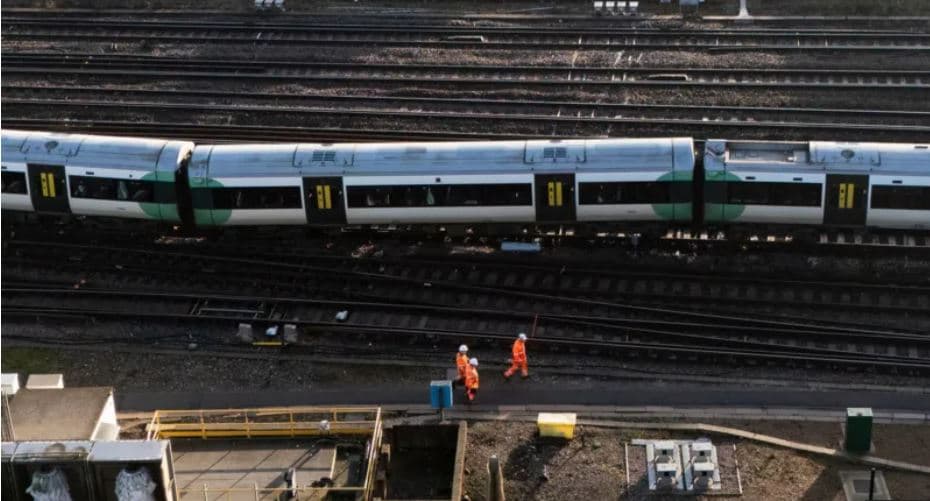
Millions of commuters faced travel misery today as a train derailment and signalling failures triggered a "do not travel" alert across the UK's busiest rail network.
The rush hour grind ground to a complete halt for passengers on Govia Thameslink Railway (GTR)—the UK’s largest franchise—following a derailment at the critical Selhurst depot in south-east London. The incident, coupled with a major signalling fault between London Blackfriars and Norwood Junction, created a perfect storm of disruption, forcing operators to issue the rare and drastic advice for passengers to stay home.
Images from the scene showed engineers swarming the track where an empty train had jumped the rails, blocking the exit for countless other services trapped in the depot. While no injuries were reported, the operational paralysis was immediate and severe. Services on Southern, Thameslink, and Gatwick Express were slashed, cancelled, or delayed by up to an hour, leaving platforms overcrowded and tempers fraying.
The chaos was not confined to a single line; it radiated outward, affecting key arteries connecting London to Brighton, Cambridge, and Bedford. For a network that carries 18% of all UK rail journeys, a failure at this choke point is catastrophic. "It’s not just a delay; it’s a shutdown," vented one stranded passenger at London Bridge. "We pay the highest fares in Europe for a service that crumbles at the first sign of trouble."
Network Rail and GTR issued a joint apology, but for many, the words rang hollow. The incident highlights the fragility of Britain's aging rail infrastructure, where a single localized failure can cascade into a network-wide collapse. The signalling fault, forcing trains to run at reduced speeds on the few available lines, compounded the misery, effectively strangling the capacity of the capital's commuter belt.
The "do not travel" warning was lifted later in the morning, but the backlog of displaced trains and crews meant disruption persisted throughout the day. This incident comes amidst a broader conversation about the reliability of the privatized rail model and the urgent need for modernization. When a depot derailment can paralyze the economic engine of the southeast, questions about resilience and contingency planning become unavoidable.
As evening approached, engineers were still working to re-rail the stricken carriage and repair the signals. For thousands of workers trying to get home, the advice remained to check before travelling and expect delays. Today’s chaos serves as a stark reminder: for all the talk of high-speed futures, the current reality of UK rail is one where a single slipped wheel can still bring the country to a standstill.
Keep the conversation in one place—threads here stay linked to the story and in the forums.
Sign in to start a discussion
Start a conversation about this story and keep it linked here.
Other hot threads
E-sports and Gaming Community in Kenya
Active 10 months ago
Popular Recreational Activities Across Counties
Active 10 months ago
The Role of Technology in Modern Agriculture (AgriTech)
Active 10 months ago
Investing in Youth Sports Development Programs
Active 10 months ago



