We're loading the full news article for you. This includes the article content, images, author information, and related articles.
New data reveals a disturbing link between failed rains and rising domestic abuse, with Embu and arid counties bearing the brunt of a ‘security crisis’ disguised as a weather pattern.
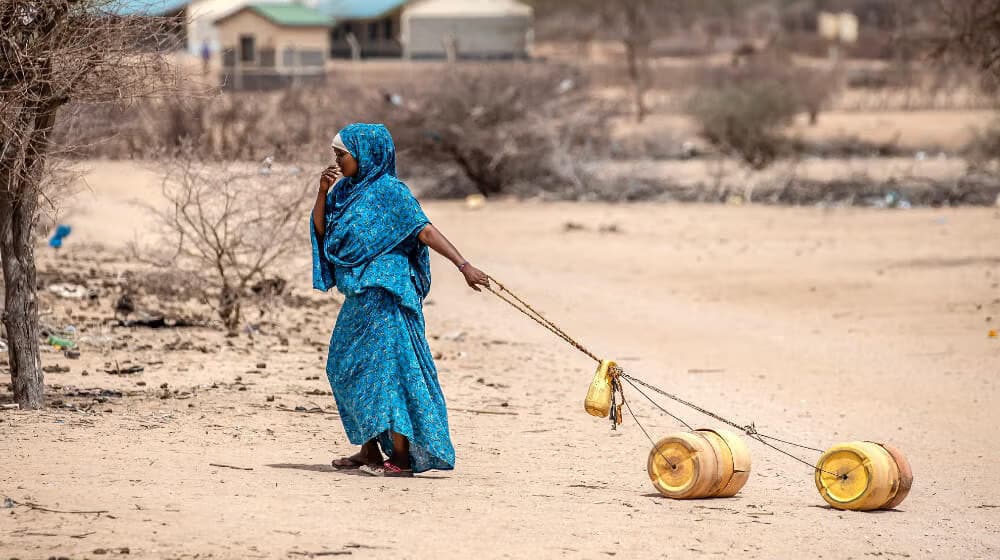
In the parched expanses of Northern Kenya, the cracking earth is breaking more than just the soil—it is breaking homes. For years, the correlation was anecdotal: as water pans dried up, tempers flared, and fists flew. But today, a landmark report has turned those whispers into a screaming statistic, confirming that climate change is no longer just an environmental challenge—it is a primary driver of Gender-Based Violence (GBV) in Kenya.
The study, released this week by the UN Global Compact Network Kenya and IDH, paints a grim picture of the "climate-violence nexus." It reveals that as families grapple with resource scarcity, the incidence of domestic abuse has surged by nearly 50 percent in drought-hit counties. The economic fallout is just as devastating, with the taskforce estimating that GBV now bleeds the Kenyan economy of a staggering KES 41 billion (approx. $315 million) annually in medical costs, legal fees, and lost productivity.
The mechanism of this violence is brutally simple. As climate shocks intensify, men in pastoralist communities are forced to migrate further afield with livestock, leaving women and girls behind to fend for themselves. "These shocks deepen women's economic dependency," the report notes, exposing them to exploitation and assault as they trek longer distances for water and firewood.
But the violence is not confined to the arid north. New homicide data released alongside the climate report exposes a disturbing trend in agricultural hubs as well. A breakdown of homicide cases across 47 counties identifies Embu and Kitui as unexpected hotspots:
This data presents a tragic paradox for Embu, where a massive economic empowerment drive was launched just this Sunday targeting over 100 women’s groups. While initiatives like the Embu Industrial Revolution – Vision 2035 aim to put money in women's pockets, the rising homicide rate suggests that financial independence without social protection may be exposing women to backlash in volatile households.
The financial toll of this violence is a figure that should keep policymakers awake at night. The KES 41 billion annual loss is equivalent to the budget of several county governments combined. This is money diverted from development to manage trauma.
"Failing to address GBV carries immense economic and social consequences," warned the report authors. They emphasized that unless violence prevention is integrated into Kenya's National Gender and Climate Change Action Plan (2025–2027), the country’s resilience agenda will fail. You cannot build a climate-resilient economy on the backs of battered women.
Despite the clarity of the data, the response on the ground remains sluggish. The National Coroners Service Act, enacted in 2017 to investigate unexplained deaths, has yet to be fully operationalized. Without it, many of these "climate-induced" homicides and assaults go unrecorded, buried under the guise of traditional disputes or natural accidents.
As the rains continue to fail, the message from the data is clear: climate adaptation that ignores gender is not just incomplete—it is dangerous. Until the government treats the safety of women with the same urgency as the preservation of water towers, the cost of climate change will continue to be paid in blood.
Keep the conversation in one place—threads here stay linked to the story and in the forums.
Sign in to start a discussion
Start a conversation about this story and keep it linked here.
Other hot threads
E-sports and Gaming Community in Kenya
Active 10 months ago
Popular Recreational Activities Across Counties
Active 10 months ago
The Role of Technology in Modern Agriculture (AgriTech)
Active 10 months ago
Investing in Youth Sports Development Programs
Active 10 months ago



