We're loading the full news article for you. This includes the article content, images, author information, and related articles.
As Kenya prepares to co-host AFCON 2027 with Uganda and Tanzania, the Harambee Stars face a defining chance to reach the knockout stage and reshape their place in African football.
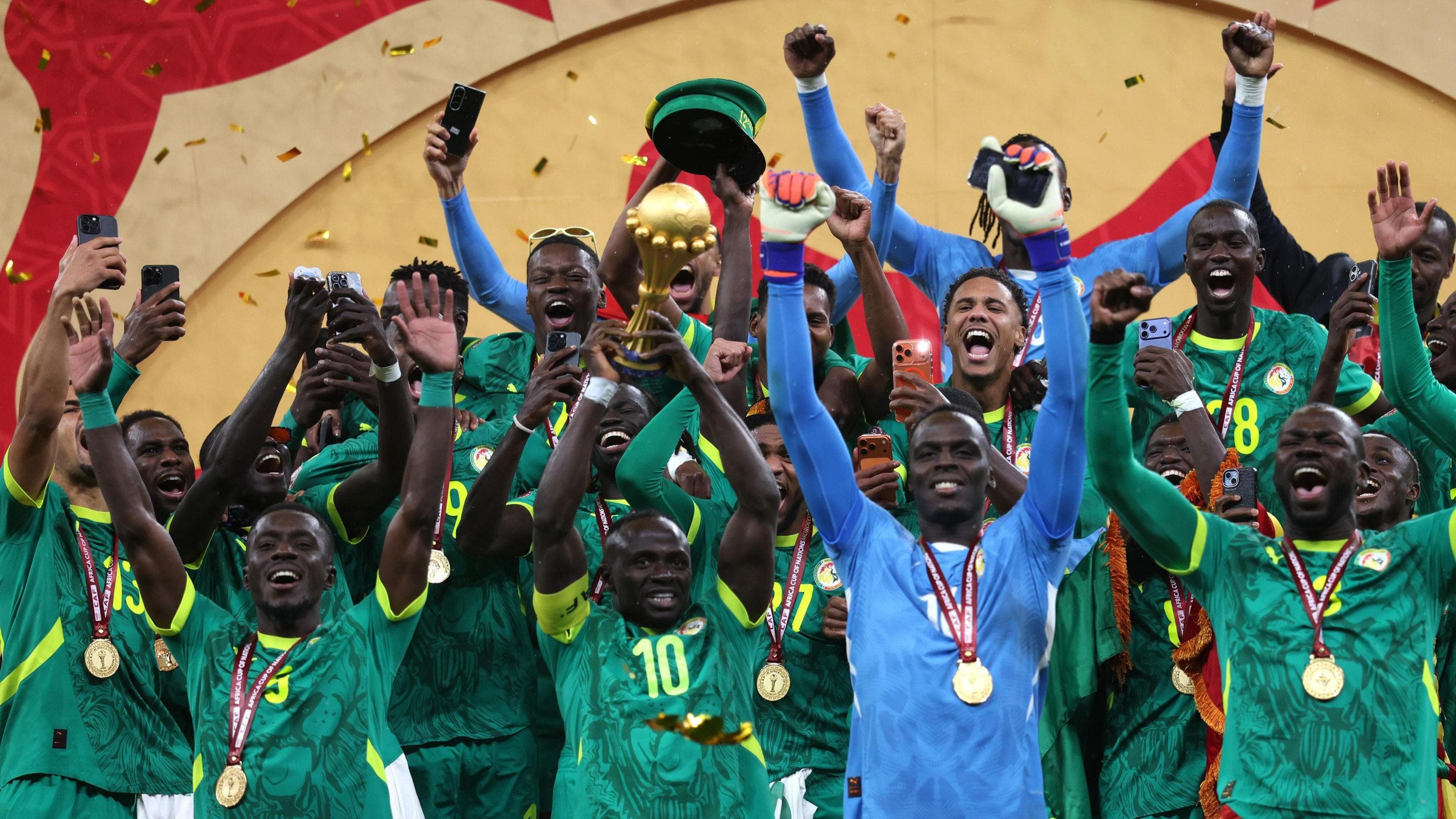
The countdown to the 2027 Africa Cup of Nations has already begun, and for Kenya, this tournament means far more than another appearance on the continental football calendar. It presents a rare and potentially defining chance to reshape the country’s football story.
Kenya will co-host AFCON 2027 alongside East African neighbours Tanzania and Uganda. As one of the host nations, the Harambee Stars have automatically qualified. That alone makes this edition different. Kenya will not have to battle through a difficult qualification campaign. Instead, the national team has the unusual advantage of preparing for a major tournament with certainty, time, and the added energy of playing on home soil.
That, however, leads to the central question: can Kenya finally make a meaningful impact at AFCON 2027?
Not many would be putting their money on the Harambee Stars becoming African champions, but quite a few may be willing to wager a few shillings on Kenya getting to the knock-out stages for the first time. That would be the least expectation from the demanding public. Trust Kenya’s best betting sites to come up with all sorts of promotions around how far the team can go when AFCON 2027 comes around!
For most Kenyan fans, realism matters. Few would seriously argue that the Harambee Stars are favourites to win the tournament. Africa’s football landscape is too competitive, too deep, and too unforgiving for such claims to carry much weight.
But success does not have to mean lifting the trophy.
For Kenya, a meaningful campaign would likely mean reaching the knockout stage for the first time in the country’s history. That would already mark a major step forward and would probably stand as the minimum standard many supporters expect from a host nation playing before its own fans.
Anything beyond that would be historic.
To understand the magnitude of the opportunity ahead, one must first confront Kenya’s record at AFCON.
The country has only appeared at the tournament six times: 1972, 1988, 1990, 1992, 2004, and 2019. In every one of those appearances, Kenya failed to progress beyond the group stage.
That record has weighed heavily on the national football psyche. For decades, Kenyan supporters have watched the Harambee Stars struggle to impose themselves against the continent’s strongest sides. AFCON appearances have often ended in disappointment, reinforcing the idea that Kenya can qualify, but not truly compete.
Whether it is Burkina Faso in 1998, Mali in 2002, or more recently Cote d’Ivoire in 2023, the impact of home support on a nation’s performance cannot be underestimated. Packed stadiums filled with local fans can create an electrifying atmosphere, with the psychological boost from thousands of supporters cheering every pass, tackle, and goal potentially inspiring players to elevate their performances.
AFCON 2027 offers the possibility of changing that narrative.
History shows that host nations often outperform expectations. The reasons are not difficult to understand.
Home support can alter the emotional rhythm of a tournament. A packed stadium, a partisan crowd, and a nation emotionally invested in every moment can create the kind of atmosphere that lifts performance levels. Players run harder, recover faster, and often play with greater belief when backed by thousands of voices demanding more.
There is also the practical advantage of familiarity. Kenya will know the climate, the pitches, and the wider environment better than many visiting teams. Just as importantly, the burden of qualification is gone. That allows for longer-term planning, better squad building, and more focused preparation.
These are not minor advantages. For a team trying to bridge the gap between participation and competitiveness, they could prove decisive.
Still, sentiment alone will not carry Kenya into the latter stages.
African football has grown more competitive in recent years. Traditional powers such as Senegal, Nigeria, and Morocco remain formidable, while other nations once seen as outsiders are improving quickly. Teams like Cape Verde and Mozambique have shown growing ambition and structure, while co-host Tanzania will also view the tournament as a moment to prove its own progress.
That means Kenya cannot rely on home support alone. The Harambee Stars will need quality, discipline, and tactical clarity.
Experienced figures such as Michael Olunga and Joseph Okumu will be expected to lead from the front. But AFCON 2027 will not be shaped by senior players alone. Younger members of the squad must rise to the occasion, embrace the pressure, and show that Kenya’s future is not built only on hope, but on genuine depth.
The significance of AFCON 2027 for Kenya extends well beyond football.
Preparations have already revived memories of past disappointments. Kenya previously lost hosting rights for major tournaments, including the 1996 AFCON and the 2018 African Nations Championship, largely because of infrastructure and organisational shortcomings. That history has made this moment especially sensitive.
The pressure now falls on both government and football authorities to ensure that this time is different.
This is not simply about building stadiums or meeting deadlines. It is about proving that Kenya can stage a tournament of continental importance with competence, credibility, and ambition. In that sense, AFCON 2027 is both a football test and a national test.
Winning AFCON 2027 would be one of the great shocks in African football history. But that should not be the only lens through which this tournament is judged.
For Kenya, success could mean reaching the knockout rounds, pushing elite sides deep into difficult matches, and leaving behind the image of a team that merely turns up. It could mean inspiring a new generation of players and supporters. It could mean using the tournament to improve infrastructure, strengthen football systems, and build belief that the national team belongs on this stage.
Above all, it could mean finally replacing a history of early exits with a story of progress.
If Kenya can combine serious preparation, intelligent coaching, committed leadership, and the force of passionate home support, AFCON 2027 may become the tournament where the Harambee Stars finally announce themselves to the continent.
After decades of frustration and fleeting appearances, the opportunity is now in front of them. On home soil, before their own people, Kenya has a chance not just to participate, but to matter.
That is what will make AFCON 2027 truly historic.
Keep the conversation in one place—threads here stay linked to the story and in the forums.
Sign in to start a discussion
Start a conversation about this story and keep it linked here.
Other hot threads
E-sports and Gaming Community in Kenya
Active 10 months ago
The Role of Technology in Modern Agriculture (AgriTech)
Active 10 months ago
Popular Recreational Activities Across Counties
Active 10 months ago
Investing in Youth Sports Development Programs
Active 10 months ago
Key figures and persons of interest featured in this article