We're loading the full news article for you. This includes the article content, images, author information, and related articles.
The detention of key opposition members in Cameroon following the October 12 presidential election raises significant concerns for regional stability and democratic processes, echoing political tensions previously seen across the African continent.

Cameroonian authorities have detained approximately 30 opposition politicians and activists in the days following the contentious October 12, 2025, presidential election, escalating tensions as the nation awaits the official results. The arrests, primarily targeting supporters of opposition candidate Issa Tchiroma Bakary, have drawn condemnation and sparked protests in several cities, signaling a deepening political crisis in the Central African nation.
Among those detained late on Friday, October 24, in the economic hub of Douala, are prominent figures Anicet Ekane, leader of the African Movement for New Independence and Democracy (MANIDEM), and Djeukam Tchameni of the Union for Change movement. Both are key backers of Tchiroma, a former government minister who has claimed victory over incumbent President Paul Biya. The Union for Change 2025 opposition coalition stated that Ekane and Tchameni were apprehended by “hooded and armed” members of an elite military unit and taken to an undisclosed location.
The government has confirmed the arrests, with Minister of Territorial Administration Paul Atanga Nji stating on Saturday, October 25, that several people suspected of plotting violent attacks under the guise of protests had been detained. Nji accused certain politicians of fostering an "insurrectional movement" but did not disclose the identities or the total number of individuals arrested. In response, Tchiroma's campaign has rejected accusations of insurrection and called for nationwide protests.
The detentions follow a week of sporadic protests and clashes between security forces and opposition supporters. Tchiroma, who once served as an ally to President Biya, has preemptively declared himself the winner of the election and stated he will not accept a different outcome. His claim is based on results collated by his party, the Cameroon National Salvation Front (FSNC). This has been dismissed by Biya's ruling Cameroon People's Democratic Movement (CPDM) as a “grotesque hoax.”
Protests have erupted in cities including Douala, Garoua, Maroua, and Bafoussam. Reports from the opposition claim that at least two protesters were shot dead by security forces in Douala on Sunday, October 26, though these reports have not been independently verified. Authorities have confirmed one death in the northern city of Garoua, identifying the victim as a 30-year-old teacher who was not involved in the protests. The government has also imposed bans on public gatherings and restricted internet access in some areas.
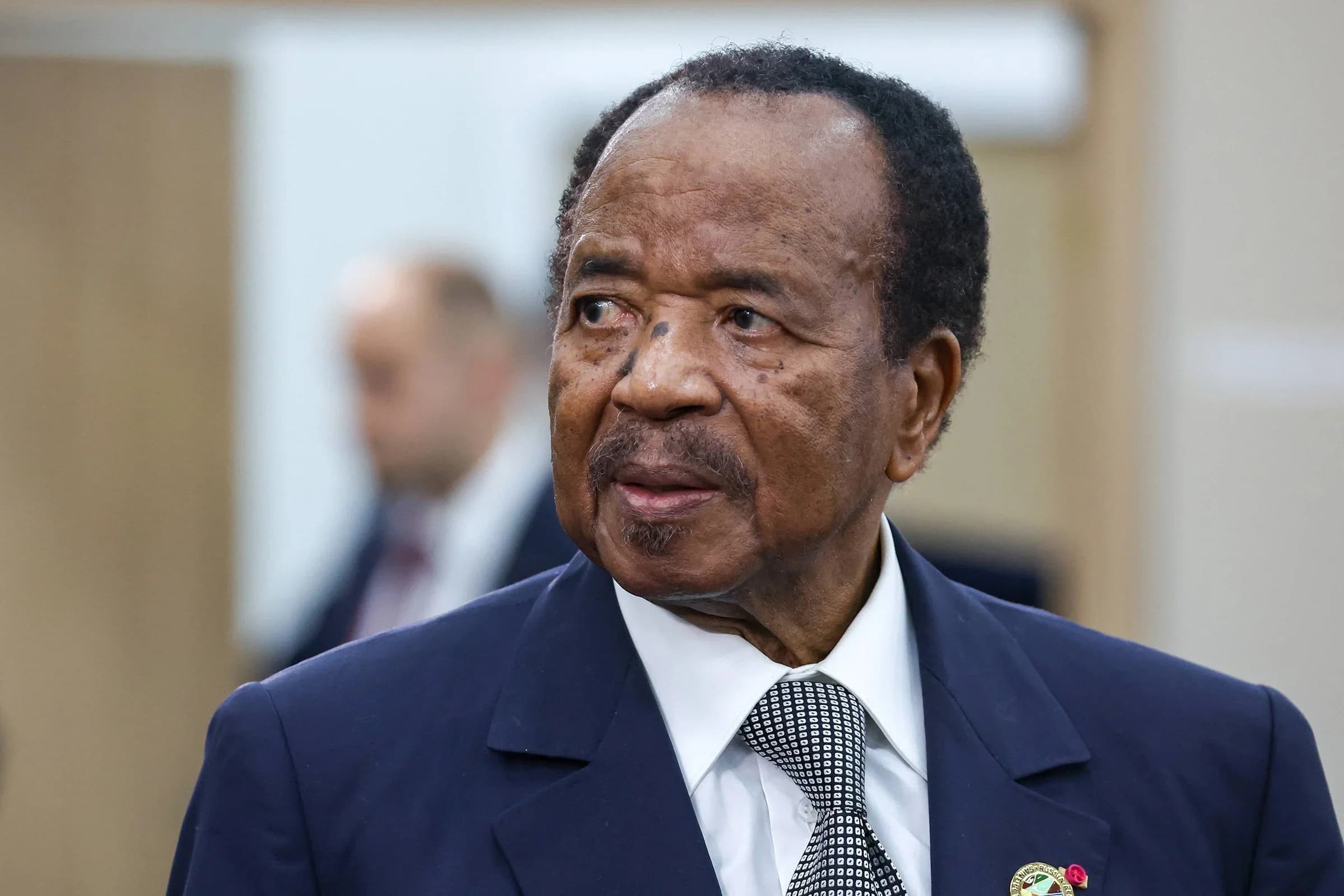
The official results are expected to be announced by Cameroon's Constitutional Council on Monday, October 27. President Paul Biya, 92, has been in power since 1982 and is the world's oldest ruling leader. A 2008 constitutional amendment removed presidential term limits, allowing him to run indefinitely. His bid for an eighth term has been a focal point of opposition anger, particularly among the youth.
The opposition landscape has been complex. Maurice Kamto of the Cameroon Renaissance Movement (MRC), who finished second in the 2018 election, was disqualified from running in this election by the electoral body, ELECAM. This decision was viewed by many as politically motivated, given that the leadership of both ELECAM and the Constitutional Council are appointed by the president. Another notable opposition figure is Cabral Libii of the Cameroonian Party for National Reconciliation (PCRN), who at 45, represents a younger generation of politicians and finished third in the 2018 race.
While Cameroon is not a member of the East African Community (EAC), the unfolding political instability is of significant concern for the region. Political crises and contested elections in one African nation can have ripple effects, influencing democratic norms, regional security, and investor confidence across the continent. Kenya, as a key diplomatic and economic hub in East Africa, maintains relations with nations across the continent, including Cameroon. In 2023, Kenyan exports to Cameroon were valued at $7.14M.
The African Union (AU), of which Kenya is a prominent member, deployed an election observation mission to Cameroon for the polls. The AU's response to the post-election developments will be closely watched. The situation in Cameroon serves as a critical test for continental and regional bodies' commitments to upholding democratic principles and ensuring peaceful political transitions. For Kenya and its EAC partners, the events in Cameroon underscore the persistent challenges to democratic consolidation and the potential for electoral disputes to escalate into broader crises, reinforcing the importance of strengthening electoral institutions and conflict resolution mechanisms within the East African region and beyond.
Keep the conversation in one place—threads here stay linked to the story and in the forums.
Sign in to start a discussion
Start a conversation about this story and keep it linked here.
Other hot threads
E-sports and Gaming Community in Kenya
Active 10 months ago
The Role of Technology in Modern Agriculture (AgriTech)
Active 10 months ago
Popular Recreational Activities Across Counties
Active 10 months ago
Investing in Youth Sports Development Programs
Active 10 months ago
Key figures and persons of interest featured in this article