We're loading the full news article for you. This includes the article content, images, author information, and related articles.
President Boakai has requested French intervention following reports of Guinean military and customs officials crossing into Liberian territory.

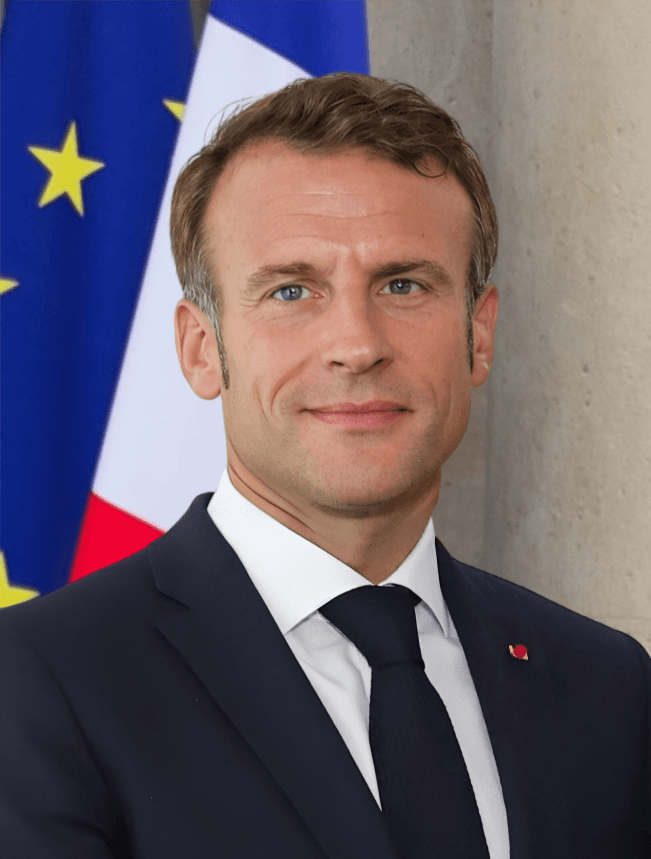
Tensions along the northern frontier of Liberia reached a breaking point this week, as credible reports emerged of Guinean military units and customs officials encroaching deep into Liberian territory. The incursion has triggered an immediate and high-stakes diplomatic maneuver, with Liberian President Joseph Nyuma Boakai reportedly reaching out directly to French President Emmanuel Macron to solicit urgent international intervention in the volatile border dispute.
This unprecedented appeal marks a significant shift in West African diplomatic strategy, signaling both the severity of the security breach and a lack of faith in immediate resolution through existing regional mechanisms. At the core of the crisis lies not just a territorial misunderstanding, but a complex entanglement of resource competition, failing border security, and the ongoing instability of the Guinean transitional government, which now threatens to destabilize one of the region’s most fragile peace agreements.
Residents in the northern counties of Liberia, particularly within Nimba County, have reported a consistent presence of uniformed Guinean personnel patrolling territory well beyond recognized international boundaries. Local accounts describe these officials not merely as border guards, but as administrative enforcers, attempting to levy taxes on local merchants and asserting jurisdiction over mining sites that are legally recognized as Liberian assets. The presence of foreign military equipment and personnel has created a climate of fear among local farming communities, who report that their daily activities are now being monitored by armed foreign entities.
The lack of a clearly demarcated boundary in these dense, mountainous regions has historically provided a vacuum for such disputes. However, the current deployment appears distinct in its organization and intent. Unlike historical skirmishes involving local militias or smugglers, the presence of official Guinean customs officers suggests a centralized state directive from Conakry. This raises fundamental questions about the motivation of the Guinean junta: is this a calculated land grab aimed at securing resource-rich territory, or a strategic provocation designed to distract from domestic political pressures?
President Boakai’s decision to bypass traditional regional channels and appeal directly to Paris is a calculated, if risky, maneuver. Traditionally, the Economic Community of West African States would be the primary forum for resolving such inter-state border disputes. By looking to France, Boakai is likely attempting to leverage the unique influence Paris maintains over its former Francophone colonies, including Guinea. France’s continued diplomatic and security presence in the region remains a powerful lever, provided that the Elysée Palace is willing to exert pressure on the military leadership in Conakry.
Political analysts note that this approach acknowledges the current limitations of the regional bloc, which has been preoccupied with its own internal divisions and the broader crisis in the Sahel. By involving France, Liberia is effectively elevating the dispute to a global stage, hoping to impose a cost on Guinean aggression that regional mediation has failed to produce. Yet, this strategy carries significant risks. Relying on an external, non-African power to mediate an internal continental dispute can be perceived as an erosion of regional sovereignty and may invite criticism from neighbors wary of neo-colonial interference.
The border region is not merely a line on a map it is an economic artery critical to the survival of the local population and, by extension, the national economies. The area is rich in iron ore and artisanal mining deposits, which are vital to both Liberia’s export revenue and the subsistence of rural communities. The disruption caused by this incursion extends beyond the military threat.
The situation highlights a broader malaise in West African security architecture. As governments grapple with rising inflation, post-election volatility, and the increasing influence of non-state armed groups, the sanctity of national borders is becoming increasingly fragile. The Guinean-Liberian border, once seen as a model for Mano River Union cooperation, now threatens to become a flashpoint. Experts warn that if left unchecked, the deployment of customs officers on foreign soil could lead to miscalculations, skirmishes, and a broader escalation that could draw in regional security actors.
For President Boakai, the coming weeks will define the international standing of his administration. He must navigate the delicate balance of protecting Liberian sovereignty while preventing an open military confrontation with a neighbor that is itself undergoing a turbulent political transition. The appeal to France is a symptom of a desperate search for order in an increasingly chaotic geopolitical environment. Whether Paris chooses to intervene, or whether they urge Monrovia back to the negotiating table, remains the pivotal question. For the residents of the northern border, however, the diplomatic maneuvering in distant capitals offers little comfort they remain in the shadow of foreign boots, waiting to see if their government can secure the territory they call home.
Keep the conversation in one place—threads here stay linked to the story and in the forums.
Sign in to start a discussion
Start a conversation about this story and keep it linked here.
Other hot threads
E-sports and Gaming Community in Kenya
Active 10 months ago
The Role of Technology in Modern Agriculture (AgriTech)
Active 10 months ago
Popular Recreational Activities Across Counties
Active 10 months ago
Investing in Youth Sports Development Programs
Active 10 months ago
Key figures and persons of interest featured in this article