We're loading the full news article for you. This includes the article content, images, author information, and related articles.
A horrific road accident on the Mombasa-Nairobi highway near Salama Town has claimed the lives of a female Belgian tourist and her Kenyan tour driver, once again highlighting the perilous nature of one of East Africa's busiest transport corridors.
A horrific road accident on the Mombasa-Nairobi highway near Salama Town has claimed the lives of a female Belgian tourist and her Kenyan tour driver, once again highlighting the perilous nature of one of East Africa's busiest transport corridors.
The tragic collision, which occurred at the notorious Mlima Kiu blackspot, involved a specialized tour vehicle and a heavy commercial trailer.
This devastating incident sends shockwaves through Kenya's vital tourism sector and reignites urgent conversations regarding the severe lack of stringent road safety enforcement along the critical Northern Corridor. The sudden loss of international visitors and domestic workers on this busy artery underscores a systemic failure to tame the escalating carnage on the nation's highways.
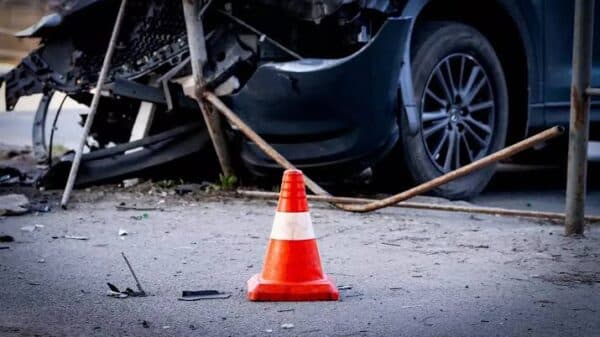
According to preliminary police reports, the catastrophic crash transpired when the tour van, ferrying European holidaymakers toward the coastal city of Mombasa, collided violently with a transport trailer. Emergency responders arrived at the chaotic scene to find the driver of the tour vehicle and a female Belgian national dead on impact, trapped within the mangled wreckage.
A second passenger, identified as a male tourist hailing from Portugal, sustained severe life-threatening injuries. He was swiftly extracted from the debris by good samaritans and local paramedics, and rushed to the Sultan Hamud Sub-County Hospital for emergency stabilization. The bodies of the deceased were subsequently moved to the same facility's morgue pending post-mortem examinations and consular repatriation procedures.
Authorities have confirmed that the international tourists had just arrived in Kenya on Sunday, eagerly embarking on a highly anticipated cross-country road safari to experience the rich heritage of the Kenyan coast. Their journey was abruptly cut short by the very infrastructure designed to facilitate their adventure.
The Mombasa-Nairobi highway is the absolute economic lifeline of East Africa, facilitating the movement of thousands of tons of cargo daily from the Port of Mombasa to landlocked nations across the region. However, this heavy industrial utilization directly conflicts with its role as a primary artery for domestic travel and international tourism.
The stretch traversing Makueni County, particularly around Salama Town and Mlima Kiu, has garnered a grim reputation as an unforgiving blackspot. Several factors persistently contribute to the high mortality rate on this specific route:
Despite numerous safety campaigns launched by the National Transport and Safety Authority (NTSA) and the deployment of highway patrol units, the frequency of fatal collisions remains unacceptably high. The intermingling of massive cargo trailers and lighter passenger vehicles continues to create a highly volatile driving environment.
For a nation that heavily relies on tourism as a primary pillar of foreign exchange earnings, incidents involving international guests have profound economic and diplomatic repercussions. Kenya positions itself globally as a premier, safe destination for luxury safaris and coastal retreats. High-profile accidents directly threaten this carefully curated image.
The Ministry of Tourism, in conjunction with tour operator associations, faces the immediate challenge of reassuring prospective visitors while demanding actionable safety improvements from the Ministry of Roads and Transport. Establishing designated, strictly monitored tourist transit protocols or accelerating the expansion of the highway infrastructure are viewed as non-negotiable steps moving forward.
As investigations into the precise mechanics of the Mlima Kiu crash continue, the focus remains on supporting the surviving victim and cooperating with the Belgian and Portuguese embassies. “Every life lost on our roads is a profound tragedy; we must rigorously enforce traffic laws to ensure our highways are safe corridors of commerce and leisure, not death traps,” a local traffic commandant stated sombrely.
Keep the conversation in one place—threads here stay linked to the story and in the forums.
Sign in to start a discussion
Start a conversation about this story and keep it linked here.
Other hot threads
E-sports and Gaming Community in Kenya
Active 9 months ago
The Role of Technology in Modern Agriculture (AgriTech)
Active 9 months ago
Popular Recreational Activities Across Counties
Active 9 months ago
Investing in Youth Sports Development Programs
Active 9 months ago