We're loading the full news article for you. This includes the article content, images, author information, and related articles.
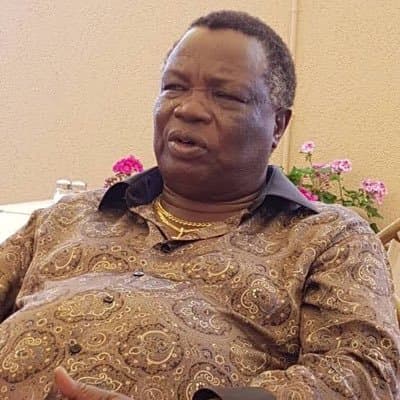
COTU-K Secretary General Francis Atwoli dismisses a new petition challenging union election results, citing the petitioner’s lack of membership standing.

The heavy mahogany table in the central boardroom of the Central Organization of Trade Unions (COTU-K) offices in Nairobi shook slightly under the weight of Francis Atwoli's palm on Thursday morning. The long-serving Secretary General, a figure who has dominated the landscape of Kenyan labor politics for over two decades, did not mince words. In a direct, combative response to a fresh legal petition challenging the validity of the latest internal election results, Atwoli dismissed the litigation as a desperate, illegitimate distraction, specifically pointing to the petitioner’s lack of verified membership status within the union.
For the millions of workers represented under the COTU-K umbrella, this latest skirmish is more than just an internal administrative squabble it represents a recurring fracture in the governance of one of East Africa’s most powerful labor organizations. At stake is not merely the title of Secretary General, but the stewardship of collective bargaining agreements that impact the livelihoods of millions, the distribution of union dues, and the direction of Kenya’s labor policy at a time of significant economic volatility.
The petition, filed earlier this week, seeks to nullify the results of the union’s recent internal elections, citing irregularities in the voting process, alleged violations of the union’s constitution, and a lack of transparency in the delegate selection process. It is a familiar script in the corridors of Kenyan labor law, where the struggle for the control of apex union bodies frequently transitions from the boardroom to the High Court.
However, Atwoli’s defense strategy appears to be targeting the technical foundation of the challenge. By questioning the *locus standi*—the legal right of the petitioner to bring the case—Atwoli is leveraging the strict constitutional requirements of the Labor Relations Act. Under the statutes governing registered trade unions in Kenya, only verified members who have fulfilled their financial obligations and are in good standing are entitled to challenge the results of internal elections.
Labor movements in Kenya have long served as powerful political vehicles. Since his ascendancy to the leadership of COTU-K, Atwoli has successfully navigated the intersection of trade unionism and national politics, often playing a decisive role in regional and national dialogues. Analysts observe that this is precisely why these elections are so fiercely contested. The office of the Secretary General provides a platform that commands the attention of the Ministry of Labour and the Federation of Kenya Employers, making the occupant a kingmaker in national wage policy debates.
Dr. Samuel Omondi, a lecturer in labour relations at the University of Nairobi, suggests that the cycle of petitions serves both a tactical and strategic purpose. By dragging the union into prolonged legal battles, challengers can force the incumbent to divert resources toward litigation rather than organizational development. Conversely, a victory in court for the petitioner could potentially halt major collective bargaining agreements, creating a vacuum that disrupts the delivery of services and wages for thousands of workers across sectors ranging from agriculture to manufacturing.
For the average worker in the textile industry or the agricultural sector, the complexities of union bylaws are secondary to the pragmatic reality of representation. Interviews with workers at industrial sites in the Industrial Area of Nairobi reveal a sentiment of exhaustion regarding these recurring legal dramas. Many feel that while leadership focuses on court appearances, the urgent issues—such as the rising cost of living, the KES 20,000 to KES 50,000 disparity in sector-specific minimum wages, and the protection of casual workers—are relegated to the background.
One shop steward, who requested anonymity for fear of reprisal, noted that the workers need a union that speaks with one, uninterrupted voice. He argued that every time the election results are challenged, the union’s ability to negotiate effectively with the Federation of Kenya Employers is compromised. Employers, sensing a leadership crisis, often adopt a wait-and-see approach, stalling negotiations on Collective Bargaining Agreements that have already been delayed by months.
The challenges facing COTU-K are not unique to the Kenyan context. Similar disputes over union leadership have been documented in nations with established labor movements, such as South Africa and Brazil. In these jurisdictions, however, the trend has moved toward more rigorous, independent oversight of internal union elections. International Labour Organization (ILO) standards emphasize that while unions must maintain autonomy, internal governance must also meet basic democratic thresholds to avoid the very types of petitions currently stalling the process in Nairobi.
The dilemma for the Kenyan judiciary is balancing the constitutional right of members to seek justice against the danger of judicial overreach. If the courts intervene too frequently, they risk undermining the independence of the labor movement. If they remain aloof, they may allow the entrenchment of leaders who stifle democratic turnover. The case currently targeting Atwoli serves as a critical test for how the Kenyan courts will define the boundaries of institutional autonomy in 2026.
As the legal teams prepare their submissions, the immediate future of COTU-K remains in a state of suspended animation. The petitioner has maintained that the irregularities in the electoral process undermine the integrity of the organization, while the leadership continues to project an image of stability and normalcy. Behind the scenes, however, the real cost of this friction will be tallied in the months to come—in stalled wage negotiations, delayed policy interventions, and the simmering frustration of a workforce that expects its leadership to spend more time at the bargaining table than at the defense table.
Whether this latest challenge successfully unseats the incumbent or merely adds another chapter to the lengthy saga of Kenyan labor litigation, the lesson remains clear: the legitimacy of any leadership is only as strong as the transparency of the process that installed it. Until the internal democratic mechanisms of Kenya’s major unions are fully insulated from the influence of external interests and legal maneuvering, the specter of the courtroom will continue to loom over the labor movement.
Keep the conversation in one place—threads here stay linked to the story and in the forums.
Sign in to start a discussion
Start a conversation about this story and keep it linked here.
Other hot threads
E-sports and Gaming Community in Kenya
Active 10 months ago
Popular Recreational Activities Across Counties
Active 10 months ago
The Role of Technology in Modern Agriculture (AgriTech)
Active 10 months ago
Investing in Youth Sports Development Programs
Active 10 months ago
Key figures and persons of interest featured in this article