We're loading the full news article for you. This includes the article content, images, author information, and related articles.
A traffic police officer whose brutal assault by an irate motorist sparked national outrage has been elevated to the rank of Sergeant.

A traffic police officer whose brutal assault by an irate motorist sparked national outrage has been elevated to the rank of Sergeant.
Justice, institutional vindication, and professional recognition have resoundingly prevailed for a dedicated officer who endured severe public humiliation while steadfastly executing his traffic management duties. The deeply disturbing, viral video of his unprovoked, daylight beating has culminated not just in the arrest of his arrogant attacker, but in a highly well-deserved and symbolic career milestone.
This rapid promotion to the rank of Sergeant is a powerful, highly intentional symbolic gesture by the National Police Service. It fundamentally reinforces the non-negotiable authority of law enforcement officers on Kenyan roads and sends an uncompromising, stern warning to rogue motorists that assaulting uniformed personnel will be met with severe, immediate legal and institutional consequences.
The shocking incident, which rapidly ignited a firestorm of national outrage across social media platforms, occurred during a routine traffic enforcement operation. The officer, whose remarkable composure under physical duress drew widespread public sympathy, was filmed being violently kicked, punched, and wrestled to the ground by an irate motorist who vehemently refused to comply with standard traffic regulations.
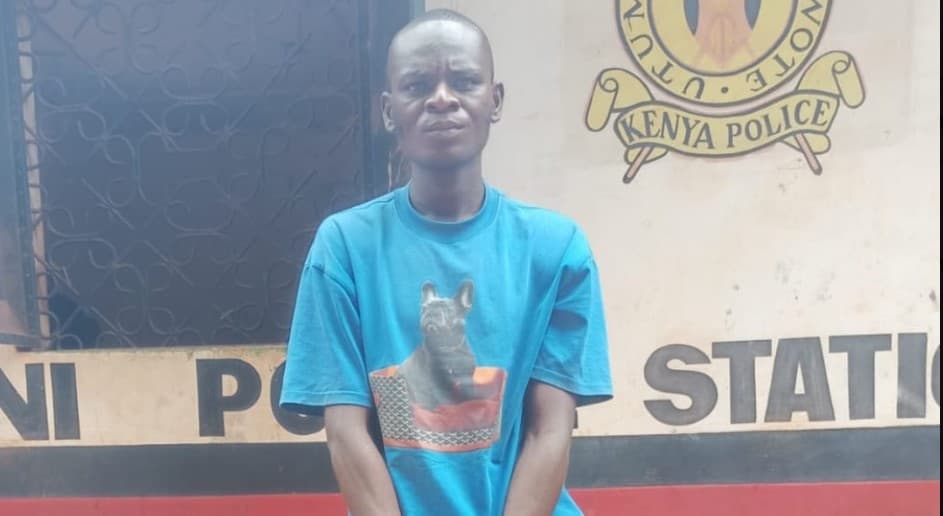
The sheer brazenness of the assault in broad daylight left the nation appalled. Law enforcement agencies quickly tracked down and identified the violent suspect as 32-year-old Dr. Emmanuel Njovu, a licensed medical doctor. In a bizarre twist during the altercation, Njovu falsely claimed to be a clinical officer, prompting the Association of Clinical Officers to issue a swift, public statement distancing their respectable profession from his deeply erratic and criminal behaviour.
Dr. Njovu was subsequently arrested and processed for court through the National Prosecution Authority. He faces a raft of serious charges that could severely derail his medical career. These include assault on a Police Officer contrary to Section 250(b) of the Penal Code, explicitly disobeying a traffic sign, and dangerous driving. He currently remains in police custody awaiting his formal court appearance.
The swift promotion of the assaulted officer to the rank of Sergeant is widely interpreted as a masterstroke in boosting the severely battered morale within the traffic police department. Traffic officers frequently face extreme hostility, verbal abuse, and physical danger while attempting to maintain order on Kenya's notoriously chaotic roadways. By rewarding his resilience, the police high command has effectively validated the sacrifices made by officers on the frontline.
Furthermore, the public reaction to the incident highlights a rare moment of overwhelming civilian solidarity with the police. While the police service often grapples with a massive public trust deficit, the visual evidence of an officer suffering violence simply for doing his job bridged the divide. Kenyans from all walks of life loudly demanded stronger legislative and physical protections for officers operating in hostile urban environments.
This incident touches upon a broader, darker undercurrent in Kenyan society: a growing culture of impunity and mob justice. Recently, Interior Cabinet Secretary Kithure Kindiki highlighted alarming statistics regarding civilians taking the law into their own hands, resulting in hundreds of fatalities nationwide. When highly educated professionals like a medical doctor resort to street brawling with armed officers, it signifies a dangerous breakdown in societal respect for the rule of law.
The state's robust response to Dr. Njovu's actions is a necessary corrective measure. It explicitly demonstrates that wealth, social status, or professional titles offer absolutely no immunity against the consequences of assaulting a state officer. Public safety must be upheld through lawful, structured processes, and the authority of the uniform must remain inviolable.
As Sergeant steps into his newly elevated role, his story transforms from one of victimhood into a compelling narrative of triumph and duty. It stands as a daily, visible reminder to the millions of motorists navigating Kenyan roads that the badge commands respect, and that the law, ultimately, will fiercely defend those sworn to uphold it.
Keep the conversation in one place—threads here stay linked to the story and in the forums.
Sign in to start a discussion
Start a conversation about this story and keep it linked here.
Other hot threads
E-sports and Gaming Community in Kenya
Active 9 months ago
The Role of Technology in Modern Agriculture (AgriTech)
Active 9 months ago
Popular Recreational Activities Across Counties
Active 9 months ago
Investing in Youth Sports Development Programs
Active 9 months ago