We're loading the full news article for you. This includes the article content, images, author information, and related articles.
As early electioneering gains volatile momentum, Anglican Archbishop Jackson ole Sapit has issued a stern ultimatum to the Independent Electoral and Boundaries Commission, demanding decisive action against politicians weaponizing unemployed youth to orchestrate violence.
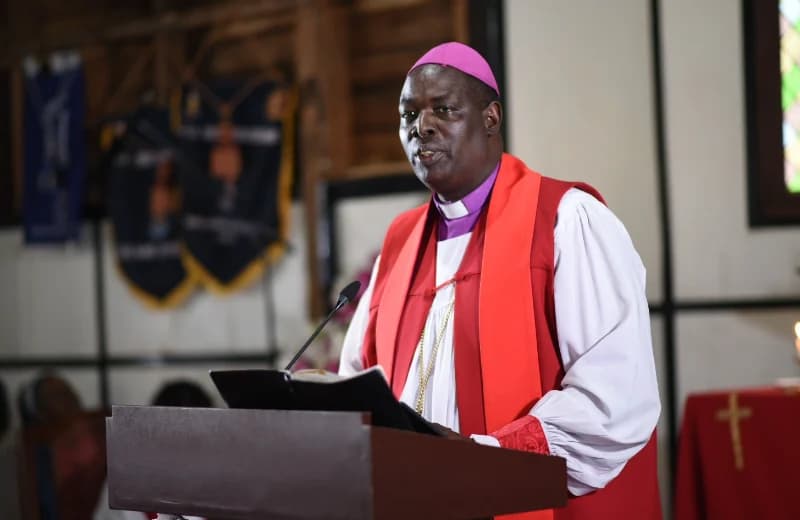
As early electioneering gains volatile momentum, Anglican Archbishop Jackson ole Sapit has issued a stern ultimatum to the Independent Electoral and Boundaries Commission, demanding decisive action against politicians weaponizing unemployed youth to orchestrate violence.
Addressing congregants at St. Chrispinus church in Bungoma, the outspoken cleric condemned the rising tide of political intolerance. He warned that the deployment of criminal elements fundamentally undermines the democratic fabric of the nation.
This ecclesiastical intervention arrives at a critical juncture for Kenya. The shadow of past electoral violence looms large, and failure by regulatory bodies to clamp down on early incitement threatens to plunge the country back into devastating socio-political instability, destabilizing the regional economy.
Archbishop Sapit articulated a profound concern regarding the cynical manipulation of Kenya's youth demographic. Desperate and economically marginalized, young men are increasingly being recruited by rogue politicians as private militias. These groups are deployed to disrupt opponent rallies, intimidate voters, and create an atmosphere of pervasive fear.
The cleric emphasized that leadership should be contested on the merit of policy frameworks and developmental agendas, rather than through physical coercion. He urged the political class to serve as exemplary role models, fostering constructive dialogue instead of financing chaos. The transformation of political contests into physical battlegrounds represents a severe regression in Kenya's democratic maturity.
Concurrently, the Ministry of Interior has echoed these sentiments. Principal Secretary Raymond Omollo recently warned leaders in Migori County that the state security apparatus will deal ruthlessly with instigators of violence. The government's stance is clear: the instigation of civil unrest under the guise of political campaigning will not be tolerated under any circumstances.
Political violence is not merely a democratic failure; it is an economic catastrophe. The uncertainty generated by rogue campaigning tactics paralyzes both domestic and foreign investment, leading to capital flight and economic stagnation across East Africa.
Elections, as Sapit noted, are transient events, but the resulting economic damage can endure for decades. The preservation of peace is paramount for ensuring that the nation remains on a trajectory of sustainable development. Investors require a predictable, secure environment, which is systematically dismantled by state-tolerated political violence.
The spotlight is now intensely focused on the Independent Electoral and Boundaries Commission (IEBC). The regulatory body holds the constitutional mandate to enforce the Electoral Code of Conduct. Archbishop Sapit's call to action is a direct challenge to the IEBC to bare its teeth and disqualify candidates found culpable of inciting violence.
Historically, the IEBC has been criticized for adopting a excessively lenient approach towards powerful political figures. To restore public confidence, the commission must transition from issuing mild reprimands to instituting severe punitive measures. Disqualifying rogue politicians would serve as a powerful deterrent and signal a new era of electoral accountability.
Furthermore, civil society organizations and the judiciary must support the IEBC in this endeavor. Expedited hearings for electoral offenses and transparent investigations are essential components of a robust enforcement strategy. The entire justice sector must collaborate to ensure that no individual, regardless of their political stature, is above the law.
As the nation edges closer to the ballot box, the collective responsibility of all citizens is to reject the politics of division. Voters must actively ostracize leaders who promote tribalism and violence, choosing instead to elevate those who articulate cohesive, inclusive visions for the country's future.
The church and other religious institutions must continue to utilize their immense moral authority to advocate for peace and civic responsibility. Their platforms are crucial in countering the toxic narratives peddled by desperate politicians seeking power at any cost.
"Elections are just a phase and should never be used to undermine the peace that is the absolute bedrock of our social and economic stability," declared Archbishop Jackson ole Sapit to his congregation.
Keep the conversation in one place—threads here stay linked to the story and in the forums.
Sign in to start a discussion
Start a conversation about this story and keep it linked here.
Other hot threads
E-sports and Gaming Community in Kenya
Active 9 months ago
The Role of Technology in Modern Agriculture (AgriTech)
Active 9 months ago
Popular Recreational Activities Across Counties
Active 9 months ago
Investing in Youth Sports Development Programs
Active 9 months ago
Key figures and persons of interest featured in this article