We're loading the full news article for you. This includes the article content, images, author information, and related articles.
Tim Cook's recent executive changes at Apple signal a strategic succession plan, not corporate turmoil. Discover how these departures are preparing Apple for its next leader and why it's a masterstroke.
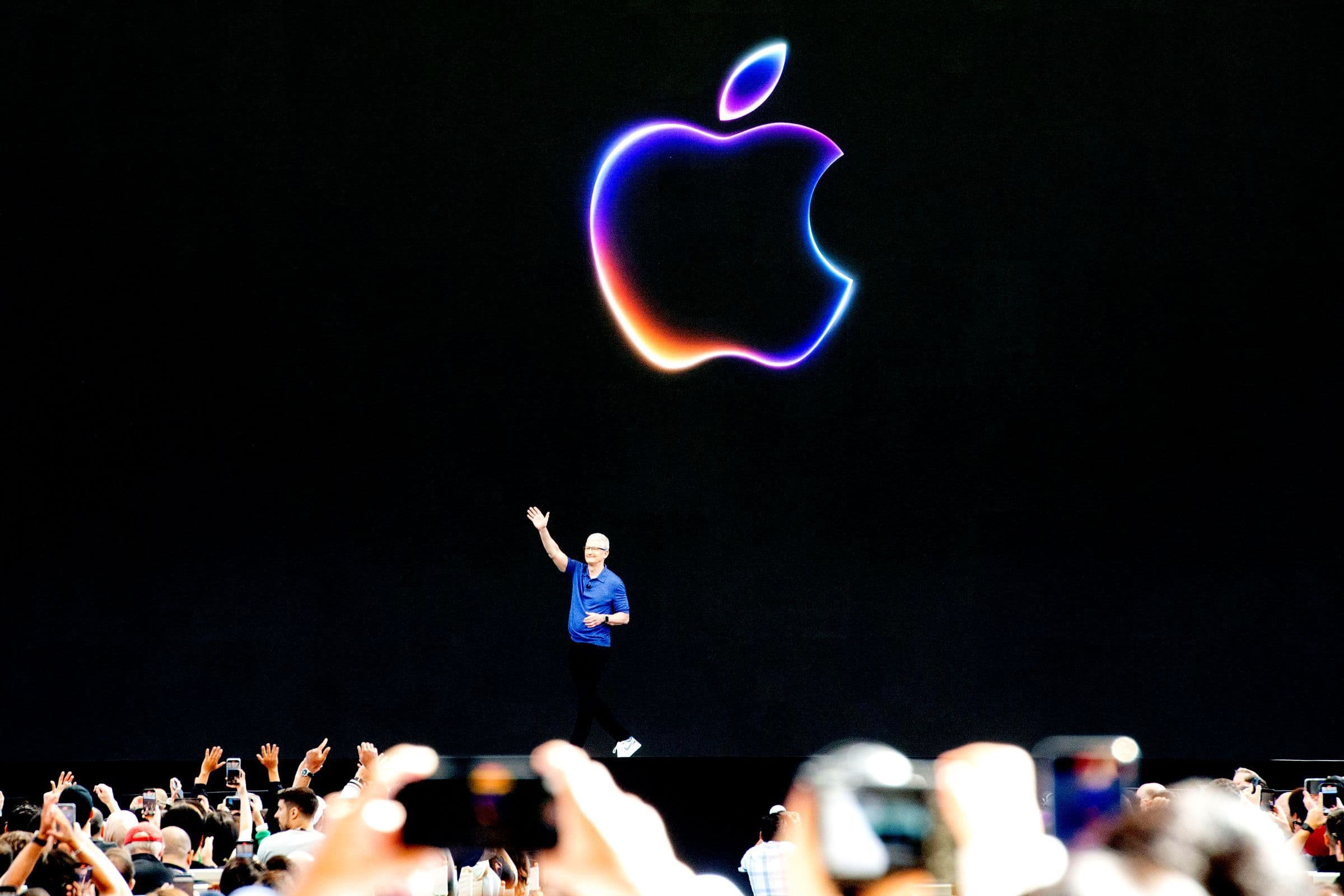
Apple has faced a wave of high‑level departures in recent months. The shock value of seeing multiple long‑tenured leaders exit within weeks has led some commentators to describe the situation as a crisis. A more careful reading of the facts suggests a very different story: Apple is orchestrating a long‑term succession plan. By proactively announcing retirements, eliminating underperforming roles and letting poached executives depart, CEO Tim Cook is positioning the company for a seamless transition to its next chapter.
Record‑breaking growth. Under Tim Cook, Apple became the first company to cross the $1 trillion, $2 trillionand $3 trillion market‑capitalization milestones . Net income margins have improved while the Mac returned to prominence thanks to Apple Silicon. Products like AirPods and Apple Watch dominate their respective markets . A leader with such a track record is unlikely to leave succession to chance.
Unprecedented stability. Apple’s senior leadership turnover has historically been low. When retirements do occur, they are typically preceded by overlapping handovers and internal promotions – a hallmark of deliberate planning.
The recent exodus can be grouped into retirements, performance‑related exits and poaching by rivals. Viewing the departures through this lens reveals a carefully managed process rather than chaos.
|
Executive |
Age/Tenure |
Role & Contribution |
Reason/Successor |
|---|---|---|---|
|
Kate Adams |
61; joined 2017 |
Senior Vice‑President & General Counsel |
Retiring in late‑2026 ; Jennifer Newstead (former Meta chief legal officer) will join as SVP on Jan 1 2026 and become general counsel on Mar 1 2026 . Adams will oversee government affairs until her retirement . |
|
Lisa Jackson |
63; joined 2013 |
Vice‑President of Environment, Policy & Social Initiatives |
Retiring in Jan 2026 . Her responsibilities will be merged into Legal and Government Affairs (to Newstead) and Chief Operating Officer Sabih Khan . |
|
Jeff Williams |
61; joined 1998 |
Chief Operating Officer |
Retiring (announced earlier in 2025). His long tenure mirrors other recent retirements . |
|
Luca Maestri |
61; joined 2013 |
Chief Financial Officer |
Retirement announced earlier in 2025 . |
These retirements align with Apple’s board policy that directors generally cannot stand for re‑election after turning 75. Board chair Arthur Levinson turns 75 in March 2025; Apple Insider notes that this normally signals retirement, potentially as early as February 2026 . The same policy already required other directors to step down . Cook may assume the chairmanship when Levinson retires .
Apple’s AI strategy has lagged competitors. John Giannandrea, hired from Google in 2018 to lead machine learning, oversaw Siri, Core ML and other AI groups. In December 2025 Apple removed him from its leadership page and announced his retirement for spring 2026 . MacRumors reports that his retirement followed the iOS 18 Siri failure: Apple promoted unreleased “Apple Intelligence” features during WWDC and used them to market the iPhone 16, but in spring 2025 admitted that the smarter Siri wasn’t ready and delayed the launch . Former employees told The Informationthat poor leadership, privacy restrictions and indecision hampered the Siri team . In March 2025 Apple stripped Giannandrea of Siri oversight and reorganised the AI teams . His exit therefore reflects accountability for underperformance rather than chaos.
In December 2025, Meta enticed Alan Dye, Apple’s vice‑president of human interface design, to lead a new creative studio. According to TechCrunch, Dye will focus on AI features for Meta’s devices and will report to CTO Andrew Bosworth . Apple replaced him with long‑time designer Stephen Lemay, who has “played a key role in the design of every major Apple interface since 1999” . Daring Fireball’s John Gruber notes that Lemay is a career interaction designer praised for his attention to detail; sources described him as well‑liked and “deeply respected” . Many Apple designers were “downright giddy” to see Dye leave , suggesting his departure removes friction within the design organisation rather than creating instability.
Reports briefly suggested that hardware chief Johny Srouji might depart. However, Srouji quickly dispelled the rumors in an internal memo obtained by AppleInsider. He told employees: “I love my team, and I love my job at Apple, and I don’t plan on leaving anytime soon” . The memo affirmed his commitment to leading Apple’s silicon, display, camera and battery engineering groups, and his continued presence is vital given Apple’s reliance on custom chips.
Apple’s succession effort isn’t just about departures. Behind the scenes, Tim Cook has been adding new leaders and merging responsibilities to ensure Apple can handle the next decade of regulatory, financial and technological challenges.
Consolidated legal and government affairs. In January 2026 Apple will welcome Jennifer Newstead—Meta’s chief legal officer—to oversee legal and global affairs and become general counsel on 1 March 2026 . She will take over from Kate Adams and fold government affairs into the legal function. Apple stated that Newstead’s experience working with regulators worldwide will help the company navigate antitrust scrutiny and privacy legislation . Adams will remain through late 2026 to manage the hand‑off .
Environment and social initiatives move to operations. With Lisa Jackson retiring in January 2026, Apple is dissolving her Environment, Policy and Social Initiatives group. These responsibilities—ranging from sustainability programmes to government lobbying—will transfer to operations chief Sabih Khan, who became chief operating officerin July 2025 after Jeff Williams retired . Bringing these functions under operations streamlines accountability and allows Khan to align environmental goals with manufacturing and supply‑chain decisions .
A new voice for AI. To recover from Siri’s missteps, Apple recruited Amar Subramanya, a veteran of Google’s machine‑learning research and Microsoft’s generative AI programmes, as vice‑president of AI . Starting in early 2026, Subramanya will oversee Apple’s foundation models, machine‑learning research and AI safety, reporting to software chief Craig Federighi . Fortune notes that Subramanya’s track record in semi‑supervised learning and generative models positions Apple to catch up in the AI race .
Fresh leadership in finance. On 1 January 2025 Kevan Parekh replaced Luca Maestri as chief financial officer . Parekh joined Apple in 2013 and previously led financial planning and analysis; he also held finance roles at Thomson Reuters and General Motors . Tim Cook lauded his “sharp intellect and impeccable judgment” and noted that Parekh is indispensable for managing Apple’s $200‑billion cash pile . Maestri remains to oversee corporate services and provide continuity during the transition .
Reinforced operations and customer trust. Some media interpreted the reshuffle as a routine correction after years of minimal turnover . AppleInsider points out that the company is consolidating roles to strengthen accountability—combining legal and government affairs, folding sustainability into operations and replacing underperforming leaders . Fortune calls this the largest leadership transformation since Steve Jobs’s passing and emphasises that 2026 will be pivotal for Apple’s push into generative AI .
After the Financial Times suggested that Tim Cook would announce his retirement and name John Ternus as his successor before WWDC 2026, multiple reports disputed the timeline. AppleInsider’s Wesley Hilliard, citing Mark Gurman’s Power On newsletter, wrote that the report is “outright incorrect” and that Cook is likely to remain CEO through January 2029, when the current U.S. presidential term ends . Hilliard notes that Cook, who turned 65 in November 2025, appears healthy and continues to serve as the public face of Apple’s engagement with regulators . Therefore, while succession plans are underway, the handover may be more gradual than initial speculation suggested. In this scenario Cook could become board chair in 2026 but stay on as CEO for several more years .
Research by Stanford economists Paul Oyer, Rachel Hayes and Scott Schaefer underscores the importance of preparing the leadership team before a CEO transition. Analysing Fortune 500 data, they found that when a departing CEO is replaced by an internal candidate, the probability a top manager will leave is ≈15 %; when the new CEO comes from outside the firm, that probability doubles to 30 % . The risk of departure increases when executives have long‑established working relationships with the outgoing CEO . Cleansing unresolved personnel issues before naming a successor therefore reduces the churn that often follows a leadership change.
The same research highlights the concept of complementarity—long‑tenured CEOs and their direct reports build shared language and decision‑making shortcuts that amplify each other’s productivity . When one leaves, the other’s value declines, making departure more likely. Outgoing CEOs are therefore uniquely positioned to “clear the deck” by removing or retiring direct reports who might otherwise depart after the transition, sparing the incoming CEO from early attrition and allowing them to build their own team.
General Electric’s succession plan under Jack Welch demonstrates the dangers of mishandled transitions. Welch pitted several internal candidates against one another in a “horse race” for the CEO role. When Jeffrey Immelt was chosen in 2001, the rejected candidates left in a mass exodus of bitter executive talent . This loss of institutional knowledge coincided with a sharp decline in GE’s revenue and stock price . The lesson is clear: public competitions for the top job can fracture leadership teams and destabilise a company for years .
Amazon shows how to manage a leadership handover smoothly. When Jeff Wilke, head of the consumer business and widely seen as Jeff Bezos’ heir apparent, announced his retirement in August 2020, it was a quiet signal that a succession was underway. Yale School of Management’s analysis notes that Amazon’s top leaders (“S‑team”) have remarkable loyalty and rarely leave . Wilke’s retirement cleared the path for Andy Jassy, head of AWS, to be named CEO in February 2021 . There was no public drama or power struggle; the company’s performance remained strong and Bezos transitioned to executive chairman . Allowing Wilke to exit gracefully before naming Jassy prevented a “humiliating loser” narrative and ensured investor confidence.
Disney’s recent leadership turmoil illustrates the dangers of a departing CEO who never truly leaves. Bob Iger stepped down as CEO in 2020 but remained as executive chairman, retaining influence over creative decisions . His chosen successor, Bob Chapek, quickly drew criticism from employees and fans for price hikes and a perceived lack of creativity . Iger himself complained that Chapek was “killing the soul of the company,” fielding calls from creative executives and lamenting Chapek’s lack of empathy . Instead of giving Chapek space to lead, Iger continued to weigh in on decisions and publicly criticised him . The resulting “Battle of the Bobs” culminated in the board ousting Chapek and reinstalling Iger in 2022. Disney’s misstep shows how a lingering predecessor can undermine a successor and destabilise a brand.
Apple’s board leadership is bound to change in the next eighteen months. Chairman Arthur Levinson turns 75 in March 2025, and Apple generally requires directors to retire at that age . Bloomberg reports that Levinson’s departure could be announced at the 2026 shareholder meeting . With a leadership vacuum looming, many analysts expect Tim Cook to take on the chairmanship while continuing as CEO for a transitional period. This would mirror structures at Meta and Microsoft, where the CEOs also serve as board chairs
Cook, now 65, has acknowledged that he won’t helm Apple forever but has been careful not to specify a date. Early speculation suggested that he might signal his retirement once Apple names a new board chair in 2026. However, reporting by Bloomberg’s Mark Gurman—cited by AppleInsider—argues that Cook is likely to remain CEO through January 2029, at least through the current U.S. presidential term . Analysts therefore expect a phased transition: Cook could assume the chairmanship in 2026 yet continue as CEO for several more years, giving his successor time to prepare .
Industry observers point to John Ternus, head of hardware engineering, as the leading candidate. Ternus has overseen the transition to Apple Silicon and has a strong working relationship with silicon chief Johny Srouji—an asset given Srouji’s decision to stay . Ternus also presents well on stage, a quality that matters for an Apple CEO. Other contenders include operations chief Sabih Khan and software engineering head Craig Federighi, but Ternus’s hardware background aligns closely with Apple’s product‑driven culture.
Two other long‑serving executives—retail chief Deirdre O’Brien (age 63) and marketing head Greg Joswiak (age 62)—could announce retirement plans by 2026. Both joined Apple in the late 1990s and have deep ties to Cook. Clearing the deck before Cook steps down would prevent a wave of departures from destabilising the next CEO’s first year.
Although a leadership handover is significant, Apple’s culture and processes are deeply institutionalised. Stanford research shows that internally promoted CEOs retain more of their executive teams ; Apple’s likely internal succession means that the first few years under a new CEO will feel like “Cook’s Apple.” Major strategic shifts—such as new product categories or organisational structures—are unlikely to materialise until 2029–2030, when the new leader has established their own team and vision.
The departure of several high‑profile Apple executives is not evidence of a company unraveling but rather a meticulously orchestrated succession plan. By encouraging retirements, reshuffling underperforming divisions and allowing poached talent to depart, Tim Cook is ensuring that the next CEO inherits a clean slate. Research on leadership transitions shows that this approach minimises turnover and sets up the successor for success . Historical case studies—from GE’s disastrous horse race to Amazon’s quiet hand‑off and Disney’s succession debacle—highlight what can happen when companies neglect or mishandle this process . Apple appears to be learning from those examples. Rather than chaos, the company is preparing for its next era with the same discipline and attention to detail that has made it the most valuable technology company in the world.
Keep the conversation in one place—threads here stay linked to the story and in the forums.
Sign in to start a discussion
Start a conversation about this story and keep it linked here.
Other hot threads
E-sports and Gaming Community in Kenya
Active 9 months ago
The Role of Technology in Modern Agriculture (AgriTech)
Active 9 months ago
Popular Recreational Activities Across Counties
Active 9 months ago
Investing in Youth Sports Development Programs
Active 9 months ago
Key figures and persons of interest featured in this article