We're loading the full news article for you. This includes the article content, images, author information, and related articles.
Embu Governor Cecily Mbarire's public confrontation with President Ruto over the gender rule has ignited debate over shifting political tolerances.

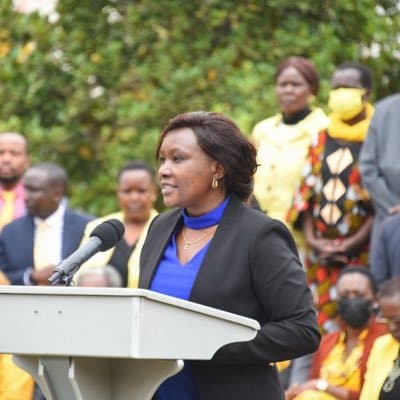
The silence at the Kenyatta International Convention Centre was absolute, broken only by the sharp, determined voice of Embu Governor Cecily Mbarire. In a move that defied the orchestrated choreography of a joint parliamentary group meeting on March 10, 2026, Mbarire stood up while President William Ruto was still at the podium, demanding an immediate public declaration on the implementation of the two-thirds gender rule. It was a moment of unfiltered political friction that has since sent shockwaves through the United Democratic Alliance (UDA) and forced a nationwide conversation about the boundaries of presidential authority in the new Kenya.
This confrontation, now widely referred to as the "Mbarire Moment," has sparked intense speculation about whether the President has genuinely embraced a more tolerant, consultative leadership style or if the perceived "mellowing" of his administration is a tactical facade. For the ruling coalition, the stakes are existential: the party is navigating a complex broad-based government arrangement with the Orange Democratic Movement (ODM) while simultaneously managing internal unrest within the Mt. Kenya region. Mbarire’s intervention, which effectively halted the President’s address, serves as a litmus test for a party grappling with shifting power dynamics ahead of the 2027 electoral cycle.
The meeting at the KICC was intended to ratify strategic cooperation between UDA and ODM lawmakers. However, the agenda was derailed when Governor Mbarire, serving as the UDA National Chairperson, demanded that the 10-point agenda report presented to the floor explicitly address the two-thirds gender rule—a constitutional requirement that has eluded legislative enactment for over 15 years. Mbarire’s refusal to wait for the conclusion of the President’s speech underscored a deepening frustration among elected leaders who feel that constitutional mandates are being relegated to the periphery of political deal-making.
President Ruto’s reaction was measured, defending the inclusion of the rule as a top item under the constitutional amendment bill. Yet, the exchange did not end there. Mbarire pressed further, arguing that ambiguity on such a pivotal issue could no longer be tolerated. This public defiance by a high-ranking party official suggests that the fear of retribution—often a hallmark of party politics in previous administrations—may be diminishing, or that the cost of silence has simply become too high for leaders with deep ties to the electorate.
Political analysts at the University of Nairobi have been divided over the President’s reaction to the outburst. Some argue that Ruto’s refusal to immediately silence or reprimand Mbarire reflects a deliberate shift toward "soft power," acknowledging that he needs a broad coalition of support to stabilize the economy and secure his 2027 prospects. Others, however, see the President’s restraint as a strategic calculation. By allowing the confrontation to play out, the administration may be trying to project an image of democratic maturity to domestic and international audiences, particularly following recent economic instability and youth-led protests.
Yet, the quiet grumbling among the President’s inner circle—where some allies labeled the intervention as "disrespectful"—reveals the fragility of this newfound tolerance. The tension is compounded by the historical weight of UDA’s internal power struggles. Mbarire has previously faced isolation and challenges from powerful figures within the party, including Deputy President Kithure Kindiki, who famously questioned her leadership earlier in 2025 following heckling incidents during presidential visits to Embu. In this light, Mbarire’s bold move at KICC can be viewed as an act of political survival by anchoring her dissent in a popular constitutional cause, she has effectively immunized herself against the "use and dump" political strategies that have sidelined other regional leaders.
The Mbarire Moment highlights a recurring theme in Kenyan politics: the friction between grassroots expectations and high-level executive maneuvering. As the country moves toward 2027, the challenge for both UDA and the broad-based coalition is to balance political consolidation with actual policy delivery. The gender rule, while symbolic, represents a broader frustration with the pace of governance. Voters in counties like Embu are increasingly looking for concrete dividends—health, agriculture, and urban infrastructure—rather than just the theater of party politics.
International observers monitoring Kenya’s democratic health are also watching these developments closely. The ability of a political party to accommodate internal dissent without fracturing is often seen as a sign of institutional strength. However, if the "Mbarire Moment" leads to a crackdown rather than a debate, the perception of a retreating democratic space will only solidify. The government faces the daunting task of reconciling the divergent interests of its Mt. Kenya base and its new partners in the ODM faction, all while managing a KES 2.5 trillion (estimated) budget that remains under immense strain from debt servicing and inflation.
Governor Mbarire has essentially staked her claim as a leader who prioritizes public demands over party protocol. Her colleagues in the Mt. Kenya region, many of whom have been hesitant to confront the executive, may see in her defiance a new template for engagement. Whether this leads to a more robust, deliberative governance style or a hardening of lines within the ruling coalition remains the central question of the month.
As the party gears up for grassroots elections across 19 counties, the challenge will be to ensure that these internal dynamics do not stifle the party’s national appeal. If the "Mbarire Moment" is truly a sign of a mellowed executive, the next few months should see more room for dissent in the Cabinet and Parliament. If it is an outlier, then the political storms that have characterized the last two years in Kenya are far from over. The real impact will not be measured by the drama at the KICC, but by whether the policy commitments, including the long-delayed gender rule, finally find their way into the statute books before the next election season consumes the legislative agenda.
Keep the conversation in one place—threads here stay linked to the story and in the forums.
Sign in to start a discussion
Start a conversation about this story and keep it linked here.
Other hot threads
E-sports and Gaming Community in Kenya
Active 10 months ago
Popular Recreational Activities Across Counties
Active 10 months ago
The Role of Technology in Modern Agriculture (AgriTech)
Active 10 months ago
Investing in Youth Sports Development Programs
Active 10 months ago
Key figures and persons of interest featured in this article