We're loading the full news article for you. This includes the article content, images, author information, and related articles.
Atwoli’s sixth term as COTU boss begins amidst worker discontent, raising questions about political alignment and the real economic cost to the workforce.

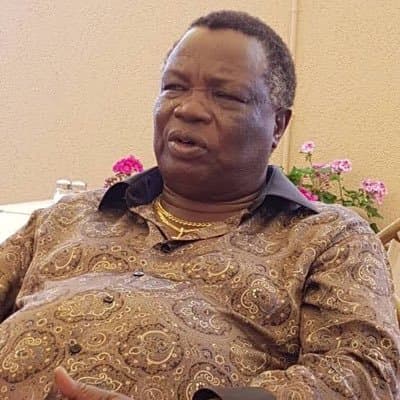
Inside the Tom Mboya Labour College in Kisumu this past Saturday, the mood was one of quiet, unopposed triumph. Francis Atwoli, the veteran titan of the Kenyan labour movement, secured his sixth term as Secretary General of the Central Organization of Trade Unions (COTU). Yet, beyond the walls of the conference hall, the atmosphere on the streets of Nairobi and in county headquarters across the nation suggests a profound disconnect between the union’s leadership and the workers who form its backbone.
For millions of Kenyan workers, Atwoli’s re-election arrives at a moment of acute economic fragility. As the Secretary General celebrates over two decades of institutional dominance, rank-and-file employees are grappling with shrinking disposable incomes, an relentless inflation cycle, and a wave of industrial unrest. The central question now facing the labour movement is whether the man who once fought for the worker has become an arm of the state, leaving his base to weather the economic storm alone.
Atwoli’s journey to his sixth term is a study in political endurance. First elected in 2001, taking the mantle from Joseph Mugalla, he has transformed COTU from a modest federation into a massive bureaucratic powerhouse. Under his stewardship, COTU membership has ballooned from approximately 300,000 to over four million members nationwide. He has cemented the union’s presence within the National Social Security Fund (NSSF), the Salaries and Remuneration Commission (SRC), and the National Industrial Training Authority (NITA).
The institutional achievements are undeniable. Supporters point to a vastly expanded labour court system, with judges increasing from a mere three in the early 2000s to over 25 today, providing a critical, if overwhelmed, avenue for industrial justice. To his supporters, Atwoli remains the only figure capable of navigating the complex machinery of the Kenyan state to secure gains for his members. However, critics argue that this expansion of influence has come at a cost to the union’s primary directive: protecting the worker’s livelihood in the face of government policy.
The core of the current backlash against Atwoli lies in his public and fervent alignment with President William Ruto. Once a fierce critic who famously predicted political ruin for the then-deputy president, Atwoli has performed a startling pivot, now positioning himself as one of the president’s most vocal defenders. This cozy relationship with the executive branch has alienated many who believe the union should stand in direct opposition to policies that erode worker purchasing power.
The political optics are difficult to ignore. While the cost of living has driven household budgets to a breaking point, Atwoli has consistently urged patience and support for the government’s long-term economic vision. This stance has been interpreted by many workers not as pragmatic statesmanship, but as a betrayal. In a 2026 economic environment where households report a 4% decline in real wage earnings per employee compared to 2022, the perception of a union leader in lockstep with the state is a liability that many workers no longer wish to tolerate.
The disconnect between the boardroom and the shop floor is best illustrated by the data defining the current Kenyan economic reality. While union leadership focuses on long-term institutional stability, the immediate pressures on workers are mounting:
The frustration is most palpable in the counties, where public service delivery is buckling under fiscal pressure. County government workers have frequently threatened nationwide industrial action, citing the non-implementation of salary adjustments promised in the Third Remuneration and Benefits Review Cycle. These workers feel sidelined by the national government and abandoned by a union umbrella that seems more interested in high-level political posturing than the day-to-day survival of a clinical officer or an administrative clerk in a rural sub-county.
When asked about the dissent, Atwoli maintains that the criticism is merely the byproduct of political opponents aiming to diminish the union’s influence. Yet, the persistent threats of strikes across the public sector—from county government staff to healthcare workers—suggest that the anger is genuine and deeply rooted in financial hardship. The union leader’s assertion that "workers still need Francis Atwoli" is increasingly challenged by a generation of employees who feel that the current union model has failed to deliver meaningful relief.
As Atwoli embarks on his sixth term, with a mandate extending to 2031, he faces a daunting reality. The history of his tenure will likely be defined by how he reconciles his role as a state-aligned power broker with the desperate, immediate needs of the four million workers he claims to represent. If the silence in the Tom Mboya Labour College halls was a sign of unity, the noise on the streets is a warning that time may be running out for the traditional politics of the labour movement.
Keep the conversation in one place—threads here stay linked to the story and in the forums.
Sign in to start a discussion
Start a conversation about this story and keep it linked here.
Other hot threads
E-sports and Gaming Community in Kenya
Active 10 months ago
Popular Recreational Activities Across Counties
Active 10 months ago
The Role of Technology in Modern Agriculture (AgriTech)
Active 10 months ago
Investing in Youth Sports Development Programs
Active 10 months ago
Key figures and persons of interest featured in this article