We're loading the full news article for you. This includes the article content, images, author information, and related articles.
Former ICT CS Eliud Owalo identifies corruption as the primary driver of stalled government projects, promising a digital overhaul if he becomes president.
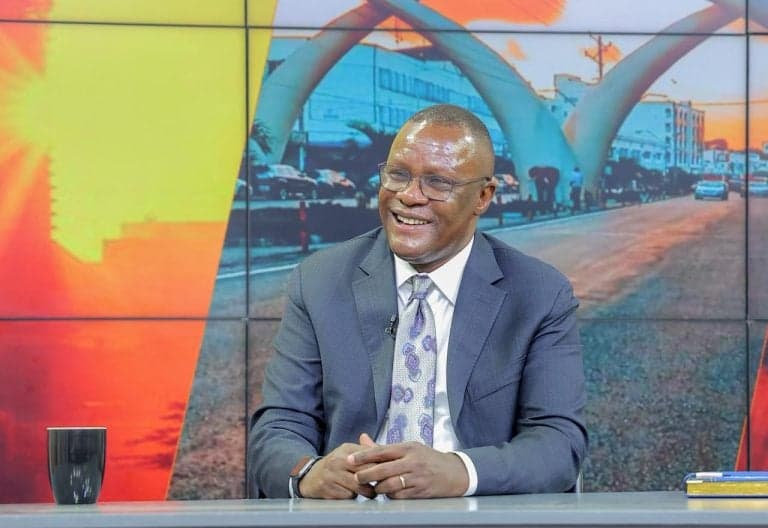
Former Cabinet Secretary for Information, Communication and the Digital Economy Eliud Owalo has thrust the issue of stalled government infrastructure to the center of his nascent presidential campaign. In a sharp departure from traditional political rhetoric, Owalo asserted that the chronic paralysis of public development projects is not merely a consequence of budgetary constraints but a direct result of institutionalized corruption within the procurement and project management cycles.
This intervention marks a significant pivot for the former minister, who is now signaling that his path to the presidency will be paved with a promise of a total digital overhaul of government services. As the nation grapples with a backlog of incomplete roads, unfinished healthcare facilities, and abandoned agricultural schemes, the stakes could not be higher. Economists estimate that the failure to complete these capital projects is costing the Kenyan economy tens of billions of shillings annually in lost productivity and wasted sunk capital.
The diagnosis provided by Owalo finds significant support in recurring reports from the Office of the Auditor General. For years, the state of the nation’s project portfolio has been characterized by stalled works, often referred to as white elephant projects, which continue to drain the exchequer despite delivering zero public value. The issue of pending bills, which has surged past the KES 600 billion mark according to recent Treasury data, serves as a primary indicator of this dysfunction.
Corruption, in this context, often manifests through the manipulation of procurement processes. Contractors, frequently linked to political figures, win tenders with unrealistically low bids, only to demand massive contract variations once construction commences. When those demands are met, they often lead to cost overruns that outstrip the original budget, leading to project abandonment when the money runs out or when fiscal space tightens. According to policy analysts, this creates a vicious cycle where the government is perpetually servicing debt for infrastructure that remains unusable.
Owalo’s proposed remedy relies heavily on his record as the head of the ICT docket, where he spearheaded initiatives such as the digitization of government services through the E-Citizen platform. He argues that by mandating end-to-end digital procurement tracking, the government can render corrupt middlemen obsolete. The vision is a fully transparent project management system where every shilling allocated to a road or a dam is tracked in real-time by the public, effectively creating a digital deterrent against graft.
However, industry experts urge caution. While digitization can improve efficiency, technology alone is rarely a panacea for deep-seated political patronage. Professor Joseph Karanja, a public policy expert at the University of Nairobi, argues that the problem is not a lack of data, but a lack of political willpower to enforce accountability. Even with a sophisticated digital tracking system, if the oversight institutions—such as the Ethics and Anti-Corruption Commission and the Directorate of Criminal Investigations—are hampered by political interference, the system will continue to be bypassed.
The economic impact of this stagnation is felt most acutely at the county level. In rural Kenya, a stalled road project is not just a statistical failure it is a barrier to market access for farmers and a bottleneck for logistics. When infrastructure projects stall, the secondary effects are often devastating: increased transportation costs, spoilage of perishable goods, and a decline in regional trade competitiveness.
For a reader in Nairobi or Mombasa, these stalled projects translate to higher taxes and lower public service delivery. The cost of financing these stalled assets is often borne by taxpayers, who are paying interest on loans taken for projects that have provided no return on investment. If Owalo’s proposed digital overhaul is to be effective, it must address not just the visibility of the funds, but the legal architecture that protects corrupt contractors from prosecution.
As the campaign season approaches, the promise of a digital government will likely become a recurring theme. The electorate is increasingly sophisticated, demanding concrete evidence of impact rather than broad promises of reform. Whether Owalo can convince the voting public that his digital strategy can survive the harsh realities of Kenyan political financing remains to be seen. The challenge is immense, requiring not just a software update to government procurement, but a fundamental restructuring of how power and money interact within the Kenyan bureaucracy.
Ultimately, the test of any reform agenda will lie in the willingness to name and hold accountable the architects of the current system. Until then, the skeletons of unfinished public projects will stand as a testament to a broken process, regardless of how many digital tools are deployed to track their decay.
Keep the conversation in one place—threads here stay linked to the story and in the forums.
Sign in to start a discussion
Start a conversation about this story and keep it linked here.
Other hot threads
E-sports and Gaming Community in Kenya
Active 10 months ago
Popular Recreational Activities Across Counties
Active 10 months ago
The Role of Technology in Modern Agriculture (AgriTech)
Active 10 months ago
Investing in Youth Sports Development Programs
Active 10 months ago



