We're loading the complete profile of this person of interest including their biography, achievements, and contributions.
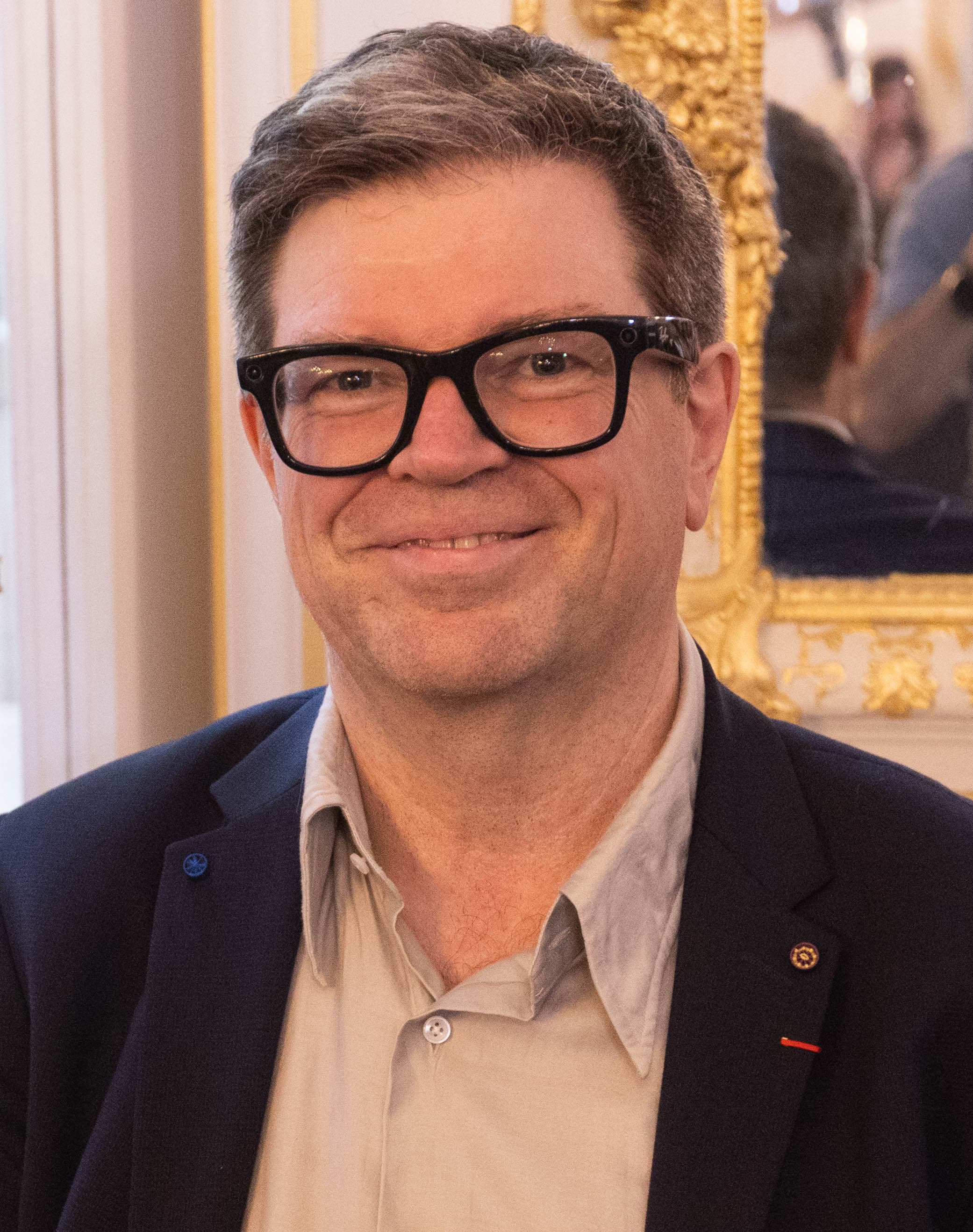
Chief AI Scientist, Meta Platforms
Public Views
Experience
Documented career positions
Yann André LeCun (born 8 July 1960) is a prominent French-American computer scientist recognized as one of the pioneers of deep learning and artificial intelligence. He is widely known for his groundbreaking work in computer vision, robotics, and image compression. Throughout his distinguished career, LeCun has held leadership positions in both academia and industry, most notably at New York University (NYU) and Meta Platforms (formerly Facebook). In 2018, he was co-awarded the Turing Award, the highest distinction in computer science, alongside Geoffrey Hinton and Yoshua Bengio, for their conceptual and engineering breakthroughs that established deep neural networks as a fundamental component of modern computing. Born in Soisy-sous-Montmorency, in the suburbs of Paris, France, LeCun developed an early interest in science and electronics, which he often attributes to his father, an engineer. He pursued his higher education in France, earning a Diplôme d'Ingénieur from the École Supérieure d'Ingénieurs en Électrotechnique et Électronique (ESIEE) in Paris in 1983. He subsequently obtained a PhD in computer science from the Université Pierre et Marie Curie (now Sorbonne University) in 1987. During his doctoral studies, he developed an early form of the back-propagation learning algorithm, a foundational technique for training neural networks. LeCun's professional career began in earnest after he completed a postdoctoral research position under Geoffrey Hinton at the University of Toronto in 1987. In 1988, he joined the Adaptive Systems Research Department at AT&T Bell Laboratories in Holmdel, New Jersey. During his tenure at Bell Labs, which lasted until 1996, LeCun made significant contributions to machine learning, including the development of convolutional neural networks (CNNs), which he utilized for handwriting and optical character recognition (OCR) systems used in bank checks. These networks became a cornerstone of modern computer vision. He also contributed to the "Optimal Brain Damage" regularization methods and the creation of the DjVu image compression technology. In 2003, LeCun joined the faculty of New York University, where he became a Silver Professor of Computer Science and Neural Science at the Courant Institute of Mathematical Sciences. At NYU, he continued his research into energy-based models for supervised and unsupervised learning, feature learning for object recognition, and mobile robotics. He served as the founding director of the NYU Center for Data Science from 2012 to 2014. In December 2013, LeCun joined Facebook (later Meta Platforms) as the first director of its newly formed AI Research (FAIR) division in New York City. As Chief AI Scientist at Meta, he led long-term research efforts, advocating for open-source AI and developing self-supervised learning architectures. In late 2025, reports confirmed that LeCun was transitioning from his long-term role at Meta to focus on his own venture, Advanced Machine Intelligence Labs (AMI Labs), which aims to pursue research into world-model architectures and human-like artificial intelligence. LeCun’s scientific legacy is defined by his persistence in championing neural network research during periods when the field was largely unfashionable. His contributions have been recognized with numerous honors, including the 2018 Turing Award, membership in the U.S. National Academy of Sciences, the U.S. National Academy of Engineering, and the French Académie des Sciences. He has also received the Chevalier of the French Legion of Honour, the Princess of Asturias Award, and several honorary doctorates. As a public figure, LeCun is a frequent commentator on the trajectory of artificial intelligence, often emphasizing the potential of "world models" to advance machine intelligence beyond current large language model capabilities.
AI-powered civic intelligence rating
Awarded the 2018 Turing Award (the 'Nobel Prize of Computing') alongside Geoffrey Hinton and Yoshua Bengio for conceptual and engineering breakthroughs that made deep neural networks a critical component of computing
Invented Convolutional Neural Networks (CNNs) in the late 1980s and 1990s at AT&T Bell Labs, creating the foundational technology for optical character recognition and modern computer vision
Engages in continuous, highly aggressive, and frequently insulting public feuds on social media with AI 'doomers' (like Eliezer Yudkowsky) and former colleagues (like Geoffrey Hinton), dismissing their fears of AI-driven human extinction as 'preposterous' and 'unscientific nonsense'
Fiercely criticized by Sam Altman and Dario Amodei, who argue that LeCun's insistence on open-sourcing advanced AI models is dangerously reckless and hands highly capable technology directly to hostile nation-states and terrorists
Sparked major controversy in 2020 following a heated Twitter debate regarding bias in AI datasets (specifically the PULSE model), which critics argued demonstrated a lack of sensitivity to racial bias in machine learning systems
Chief architect of Meta's open-source AI strategy, leading the FAIR laboratory to develop and release the highly capable LLaMA foundation models to the global public
Founding Director of the NYU Center for Data Science
Received an Electrical Engineer Diploma from ESIEE Paris in 1983.
Earned a PhD in Computer Science from Université Pierre et Marie Curie in 1987.
Conducted postdoctoral research with Geoffrey Hinton at the University of Toronto starting in 1987.
Joined AT&T Bell Labs in 1988, where he began developing neural network architectures and learning algorithms.
Published foundational research proposing Convolutional Neural Networks (CNNs) in 1989.
Developed the LeNet-5 architecture in the early 1990s, which became a widely used system for automated handwritten digit recognition in bank check processing.
Appointed as the Head of the Image Processing Research Department at AT&T Labs-Research in 1996.
Joined New York University as a professor in 2003.
Awarded the Silver Professorship at New York University in 2008.
Founded the NYU Center for Data Science in 2011 and served as its director until 2014.
Appointed as the first director of Facebook AI Research (FAIR) in 2013.
Co-founded the International Conference on Learning Representations (ICLR) in 2013.
Received the IEEE Neural Network Pioneer Award in 2014.
Received the IEEE PAMI Distinguished Researcher Award in 2015.
Awarded an honorary doctorate from the Instituto Politécnico Nacional of Mexico in 2016.
Received the Lovie Lifetime Achievement Award from the International Academy of Digital Arts and Science in 2016.
Elected as a member of the US National Academy of Engineering in 2017.
Awarded the ACM A.M. Turing Award in 2018 for conceptual and engineering breakthroughs in deep neural networks.
Received the Harold Pender Award from the University of Pennsylvania in 2018.
Received an honorary doctorate from the École Polytechnique Fédérale de Lausanne in 2018.
Transitioned to the role of Chief AI Scientist at Meta in 2018.
Received the Golden Plate Award of the American Academy of Achievement in 2019.
Elected as a fellow of the Association for the Advancement of Artificial Intelligence (AAAI) in 2019.
Elected as a member of the US National Academy of Sciences in 2021.
Received an honorary doctorate from Université Côte d'Azur in 2021.
Awarded the Princess of Asturias Award in Scientific Research in 2022.
Appointed Chevalier (Knight) of the French Legion of Honour in 2023.
Received an honorary doctorate from the Università di Siena in 2023.
Received an honorary doctorate from the Hong Kong University of Science and Technology in 2023.
Received the VinFuture Grand Prize in 2024.
Received the Queen Elizabeth Prize for Engineering in 2025.
Received the Inaugural Trailblazer Award from the New York Academy of Sciences in 2025.
In 2020, LeCun engaged in a public and acrimonious dispute on social media regarding racial bias in AI systems, during which he clashed with researchers like Timnit Gebru. The controversy, which centered on his remarks about the responsibilities of researchers versus engineers in addressing algorithmic bias, ultimately led to his temporary departure from Twitter.
In October 2024, AI researcher Jürgen Schmidhuber published a report accusing LeCun, along with Geoffrey Hinton and Yoshua Bengio, of repeatedly failing to properly cite his work on foundational deep learning concepts, prompting a broader debate within the academic community regarding citation practices and priority in AI research.
In late 2025, following his departure from Meta, LeCun publicly criticized the company's internal culture, alleging that leadership prioritized commercial interests over scientific integrity. He specifically claimed that performance benchmarks for the Llama 4 model were manipulated to exaggerate its capabilities, a move that reportedly exacerbated internal tensions.
Throughout 2025, LeCun was involved in a prominent public disagreement with Google DeepMind CEO Demis Hassabis regarding the definition and achievability of Artificial General Intelligence (AGI). LeCun criticized the mainstream focus on large language models as a path to AGI, describing the concept as an 'illusion,' while Hassabis publicly labeled these views as 'plain incorrect.'
For over a decade, LeCun has been involved in persistent public intellectual rivalries, most notably with Gary Marcus, regarding the limitations of deep learning and large language models. These exchanges, frequently hosted on public forums, often involve intense debate over the necessity of symbolic reasoning versus connectionist approaches in achieving human-level intelligence.
