We're loading the complete profile of this person of interest including their biography, achievements, and contributions.
Theologian & Pro-Democracy Activist
Public Views
Experience
Documented career positions
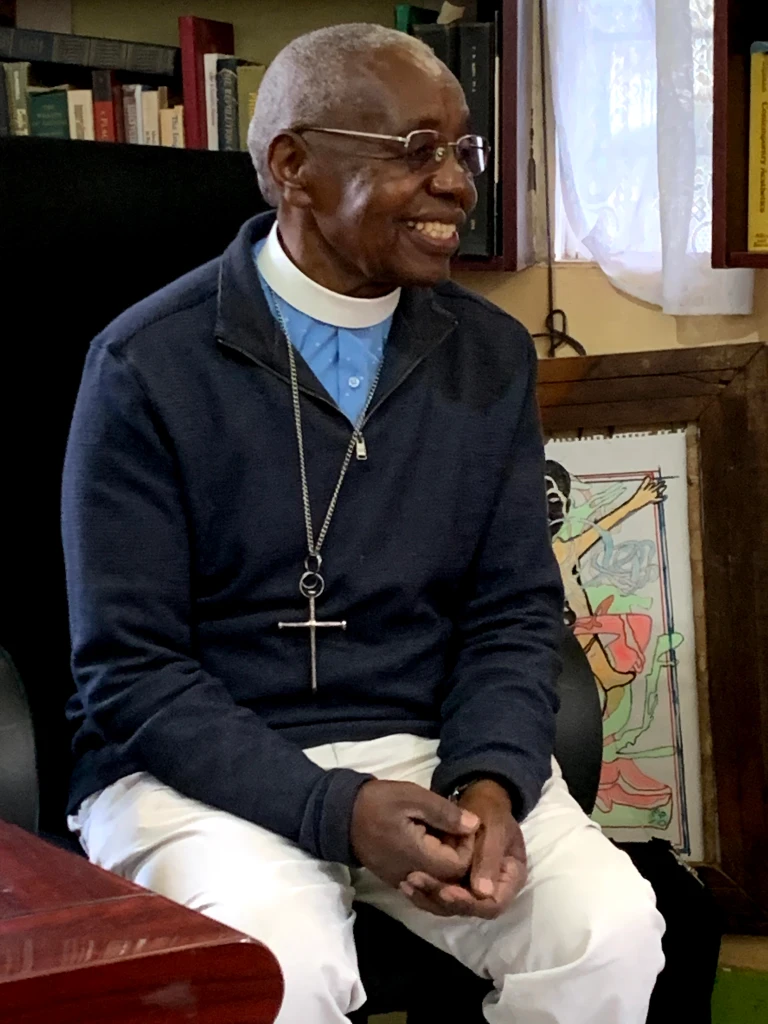
Reverend Dr. Timothy Murere Njoya (born 7 April 1941) is a Kenyan theologian and one of the most prominent church voices behind the country’s Second Liberation. Ordained in 1967 in the Presbyterian Church of East Africa, he served parishes including Chuka, Tumutumu, Mathari, St. Andrews Nairobi, Dagoretti, and Kinoo before retiring in 2011. He holds a PhD from Princeton Theological Seminary and later received a Doctor of Divinity from Knox College, University of Toronto. His pulpit advocacy for multiparty democracy and human rights brought repeated clashes with President Daniel arap Moi’s regime; he was suspended and transferred by PCEA leadership in 1987 but later reinstated. He was badly beaten by police during Saba Saba–related protests in 1997, an incident widely reported at the time. Njoya’s intellectual and public work continued after the return of plural politics. He contributed essays and commentary on church–state ethics, women’s rights, and constitutional reform, and in 2017 published his memoir, We the People: Thinking Heavenly, Acting Kenyanly. Profiles and interviews describe his continued engagement in civic activism and scholarship into the 2020s.
AI-powered civic intelligence rating
Key figure in Kenya's 'Second Liberation' (pro-democracy movement)
Used the pulpit for political activism against the one-party state
Famously beaten by police at Uhuru Park while protesting (1997)
His activist sermons were highly controversial and condemned by the KANU government.
He was temporarily defrocked by the PCEA leadership in 1s990 due to his political stance, before being reinstated.
In 1987, Rev. Njoya faced disciplinary action within the Presbyterian Church of East Africa (PCEA) for using his pulpit to engage in political activism; as a result, he was transferred from St. Andrews Parish in Nairobi to Nyeri.
Recipient of multiple human rights awards
Author and theologian
Ordained as a minister in the Presbyterian Church of East Africa (PCEA) on March 20, 1967.
Earned a Doctor of Philosophy (PhD) degree from Princeton Theological Seminary in 1971.
Delivered the influential 'God's Will for Kenya' sermon at St. Andrew's PCEA Church on October 5, 1986, which advocated for social justice and challenged the one-party political status quo.
Published the book 'Out of Silence' in 1987.
Served as a leading figure in the 'Saba Saba' multiparty democracy demonstrations on July 7, 1990, which were instrumental in forcing the repeal of Section 2A of the Kenyan Constitution.
Received the E.H. Johnson Award from the E.H. Johnson Memorial Trust (Presbyterian Church of Canada) in 1995 for his commitment to human rights.
Conferred an honorary Doctor of Divinity degree by Knox College, University of Toronto, in 1998.
Recipient of the John Humphrey Freedom Award from the International Centre for Human Rights and Democratic Development in 2000 for his advocacy for democratic reform.
Published the book 'The Divine Tag on Democracy' in 2003.
Retired from his position as a minister in the Presbyterian Church of East Africa in 2011 after decades of service in various parishes.
Received the Father John Anthony Kaiser Human Rights Award from the Law Society of Kenya for his lifelong commitment to social justice and human rights.
Published his memoirs, 'We the People: Thinking Heavenly, Acting Kenyanly', in 2017.
Served as the Executive Director of the organization 'Men for the Equality of Men and Women' (MEW), campaigning against female genital mutilation and promoting gender equality.
Authored the book 'The Divinity of the Clitoris', focusing on gender equality and advocacy against female circumcision, published in 2019.
In 1988, he was briefly arrested by state authorities following a sermon in which he proposed holding a public meeting (kamukunji) to discuss political reforms.
On July 7, 1990, he was arrested and physically assaulted by police during the 'Saba Saba' pro-democracy demonstrations, which were part of a wider push for multiparty democracy in Kenya.
In June 1999, he was severely beaten by a group of men identified as 'Jeshi la Mzee' (a political hireling gang) while participating in demonstrations, an incident that drew national attention and public condemnation.
In 2014, he filed a petition (Timothy Njoya v Attorney General) challenging the constitutionality of Section 125 of the Income Tax Act regarding the taxation of Members of Parliament; the petition was dismissed by the court.
In 2017, the publication of his book, 'The Divinity of the Clitoris,' which addressed female genital mutilation, sparked controversy and public debate due to its title and his background as a conservative clergyman.
In 2018, he was involved in a legal dispute in a Nyeri court, filing evidence to evict a woman who claimed to be his stepmother from a four-acre piece of land he asserted was his.