We're loading the complete profile of this person of interest including their biography, achievements, and contributions.
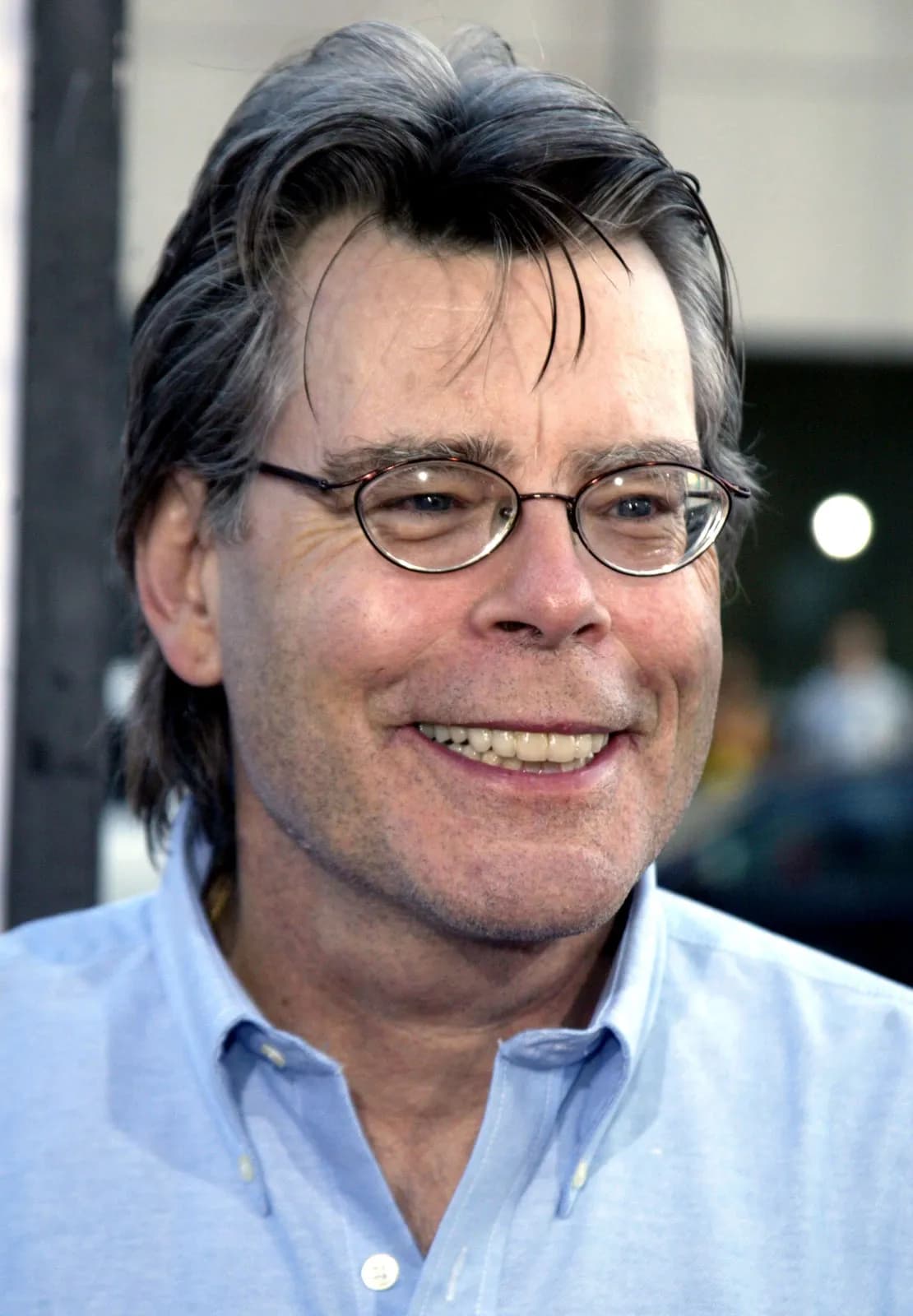
Novelist & Master of Horror
Public Views
Experience
Documented career positions
Stephen Edwin King, born on September 21, 1947, in Portland, Maine, is a prolific American novelist, short story writer, and essayist, widely recognized as one of the most influential authors of the late 20th and early 21st centuries. Often referred to as the "King of Horror," his extensive body of work spans multiple genres, including horror, supernatural fiction, suspense, crime, science fiction, and fantasy. Throughout a career spanning over five decades, King has published more than 60 novels and over 200 short stories, with hundreds of millions of copies sold worldwide, establishing him as a dominant force in popular culture and modern literature. King’s early life was marked by instability and economic hardship. He was the second son of Donald Edwin King, a merchant seaman, and Nellie Ruth Pillsbury King. When King was approximately two years old, his father left the family, leaving his mother to raise Stephen and his older brother, David, on her own. During his childhood, the family moved frequently, living in places such as Fort Wayne, Indiana, and Stratford, Connecticut, before returning to Maine when King was eleven. He attended Durham Elementary School and later Lisbon Falls High School, graduating in 1966. During his youth, King developed an early fascination with writing, often creating his own stories and contributing to school publications. In 1966, King entered the University of Maine at Orono, where he pursued a degree in English. During his undergraduate years, he was active in student politics and wrote a weekly column titled "King's Garbage Truck" for the student newspaper, *The Maine Campus*. He also met his future wife, Tabitha Spruce, while working in the university’s library. King graduated in 1970 with a Bachelor of Arts in English and a teaching certificate. Unable to secure a teaching position immediately, he worked in an industrial laundry, a period he later credited as a source of inspiration for several of his darker narratives. In 1971, he began teaching English at Hampden Academy in Maine, a position he held while continuing to write in his spare time. King’s career breakthrough occurred with the 1974 publication of *Carrie*, a novel about a tormented, telekinetic teenager. The success of the book, which was later adapted into an iconic film, allowed King to transition to full-time writing. His subsequent novels solidified his reputation as a master of the horror genre. Works such as *'Salem's Lot* (1975), *The Shining* (1977), *The Stand* (1978), and *Cujo* (1981) demonstrated his ability to blend supernatural elements with deep psychological insight and social commentary. Throughout the 1980s and 1990s, King’s output remained prodigious, producing classics such as *IT* (1986), *Misery* (1987), and the expansive *The Dark Tower* series, an epic fantasy cycle that spanned many years. He also experimented with literary pseudonyms, most notably writing five novels—including *The Running Man* and *Thinner*—under the name Richard Bachman to test his own commercial viability and stylistic range. King’s personal life has been closely intertwined with his professional journey. He married Tabitha Spruce in 1971, and they have three children: Naomi, Joe (who writes under the name Joe Hill), and Owen, all of whom have pursued careers in writing or ministry. King has been open about his struggles with substance abuse during the 1980s, a period he has described as affecting his memory of writing certain works. His recovery and subsequent sobriety became a notable aspect of his later life and perspective. In 1999, King survived a life-threatening car accident, an experience that influenced his writing and his public narrative regarding health and resilience. The legacy of Stephen King is defined not only by his literary output but also by his massive impact on film and television. His works have been adapted into numerous award-winning motion pictures and miniseries, including *The Shawshank Redemption*, *The Green Mile*, and *Stand by Me*, which are widely regarded as classics independent of their source material. His contributions to literature have earned him numerous accolades, including the 2003 National Book Foundation Medal for Distinguished Contribution to American Letters, the 2007 Grand Master Award from the Mystery Writers of America, and the 2014 National Medal of Arts. Beyond his novels, King is also known for his non-fiction work, particularly *On Writing: A Memoir of the Craft* (2000), which is considered a seminal guide for aspiring authors. Today, King remains a vital and active presence in literature, continuing to produce best-selling works and maintaining a significant influence on the horror and speculative fiction genres.
Authored over 65 novels predominantly in the horror and supernatural fiction genres selling over 400 million copies worldwide
Created foundational American cultural touchstones including The Shining It Carrie and The Stand which have been adapted into massive Hollywood film and television franchises
Awarded the National Medal of Arts in 2015 by President Barack Obama for his monumental contributions to American literature
Frequently targeted by conservative media and the MAGA political base for his highly combative relentless and profane criticism of Donald Trump and Elon Musk on X (formerly Twitter)
His 2020 public statement that he considers quality over diversity when voting for the Academy Awards sparked intense backlash from Hollywood progressives forcing him to subsequently clarify his stance on systemic industry bias
Faced historical criticism from literary purists (like Harold Bloom) who dismissed his early work as low-brow pulp fiction a narrative King aggressively dismantled over his 50-year career
News articles featuring Stephen King
Remains one of the most prolific and consistently best-selling authors of the 21st century continuing to publish multiple hits annually into his late 70s
Sold his first professional short story, 'The Glass Floor', to Startling Mystery Stories in 1967
Graduated from the University of Maine with a Bachelor of Arts in English in 1970
Published his first novel, Carrie, in 1974, which established him as a major author in the horror genre
Received the British Fantasy Society's Outstanding Contribution Award in 1981
Won both a Hugo Award and a Locus Award for Best Nonfiction for his book Danse Macabre in 1982
Received the World Horror Convention Grandmaster Award in 1992
Won the O. Henry Award for his short story 'The Man in the Black Suit' in 1996
Received the Horror Writers Association's Bram Stoker Award for Lifetime Achievement in 2002
Awarded the National Book Foundation's Medal for Distinguished Contribution to American Letters in 2003
Received the World Fantasy Award for Life Achievement in 2004
Named a Grand Master by the Mystery Writers of America in 2007
Received the Canadian Booksellers Association Lifetime Achievement Award in 2007
Won the Los Angeles Times Book Prize for Mystery/Thriller for 11/22/63 in 2011
Awarded the National Medal of Arts by President Barack Obama in 2014
Received the Library of Congress Prize for the Lifetime of Work Promoting Literacy in 2016
Presented with the PEN America Literary Service Award in 2018
Honored with the Lifetime Achievement Award at the 2020 Audie Awards by the Audio Publishers Association
In 1999, Stephen King requested that his novel 'Rage,' published under the pseudonym Richard Bachman, be allowed to go out of print. This decision followed the discovery that the book had been found in the possession of several students involved in real-life school shootings, including the 1997 Heath High School shooting in Kentucky, leading King to express concern that the novel might be acting as a 'possible accelerant' for violence.
In 2020, King faced significant public pushback from some readers and a falling out with author J.K. Rowling after he tweeted, 'Trans women are women.' The dispute, which began over differing views on transgender rights, resulted in Rowling blocking King on social media and became a widely reported instance of ideological conflict between the two prominent writers.
King has been a vocal and long-standing critic of Stanley Kubrick’s 1980 film adaptation of 'The Shining,' famously describing it as 'a great big beautiful Cadillac with no motor inside.' This public criticism, which has persisted for decades, has created a notable divide between King and fans of the film regarding his artistic differences with Kubrick's interpretation of his work.
King is frequently involved in contentious public disputes on social media platforms, particularly regarding American politics. His aggressive criticism of prominent conservative figures, such as Donald Trump and Elon Musk, frequently generates intense online backlash, including controversies over his sometimes inflammatory or factually inaccurate remarks.