We're loading the complete profile of this person of interest including their biography, achievements, and contributions.
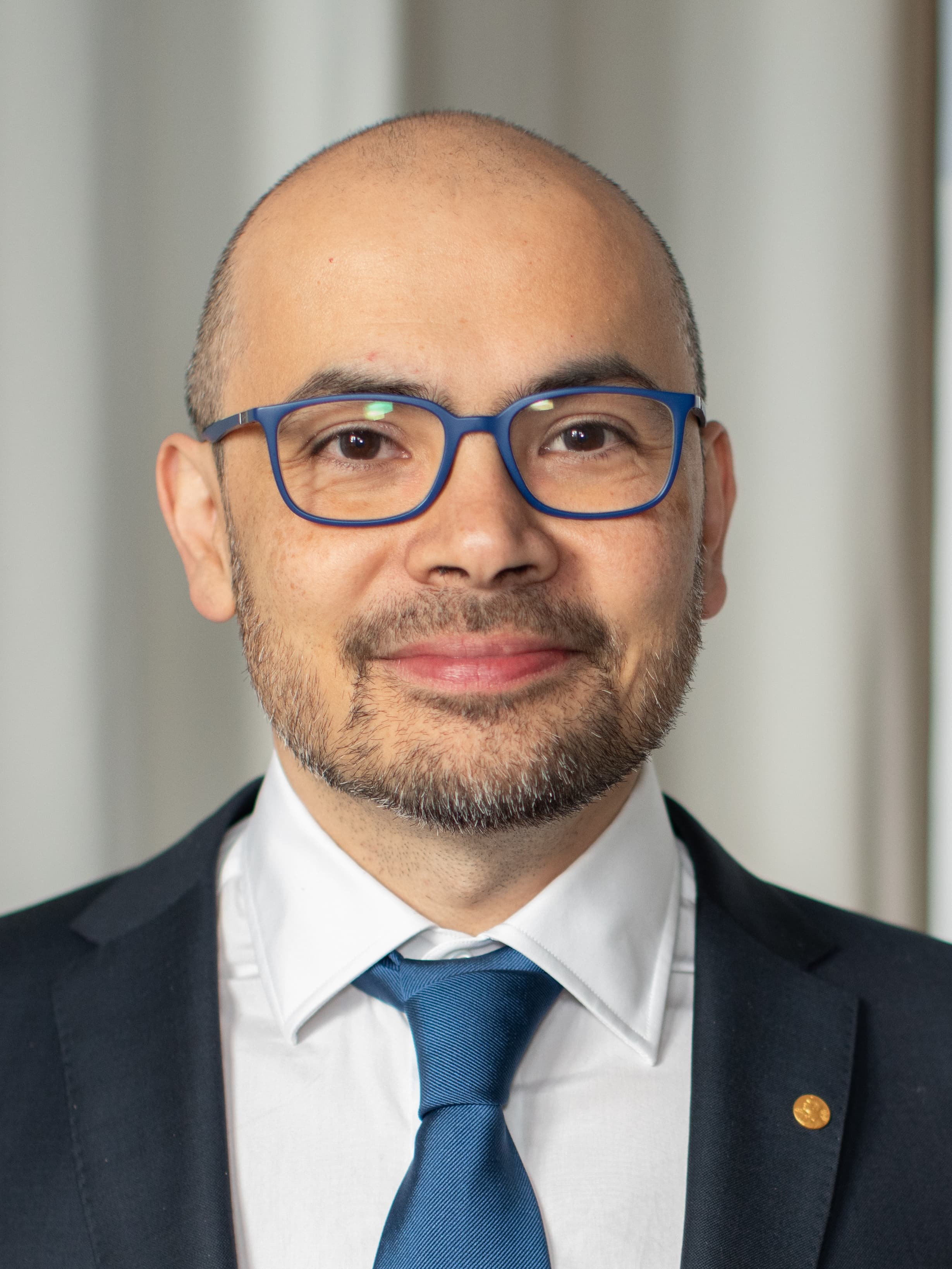
Co-Founder & CEO, Google DeepMind
Public Views
Experience
Documented career positions
Sir Demis Hassabis is a British computer scientist, artificial intelligence researcher, chess prodigy, and the co-founder and CEO of Google DeepMind. He is widely regarded as one of the most brilliant minds of his generation. Hassabis shot to global fame in 2016 when DeepMind's AlphaGo defeated the world champion in the ancient game of Go, a feat previously thought to be decades away. In October 2024, his immense contributions to science were cemented when he was awarded the Nobel Prize in Chemistry for AlphaFold, an AI system that solved the 50-year-old grand challenge of protein folding. In 2026, Hassabis carries the entire weight of Google’s future on his shoulders. Following Google’s panic regarding the rise of OpenAI, Alphabet CEO Sundar Pichai merged DeepMind with the Google Brain team to create a single, unified AI research powerhouse under Hassabis's command. He is currently spearheading the development and deployment of the 'Gemini' multimodal models, fighting a desperate, high-stakes war against OpenAI to achieve AGI while maintaining a fierce commitment to utilizing AI to solve fundamental problems in physics, biology, and clean energy.
AI-powered civic intelligence rating
Awarded the 2024 Nobel Prize in Chemistry (jointly) for the creation of AlphaFold, an AI system that accurately predicted the 3D structures of hundreds of millions of proteins, fundamentally revolutionizing modern biology and drug discovery
Co-founded DeepMind (acquired by Google in 2014 for $500 million), building it into the world's premier artificial intelligence research laboratory
Faced significant internal corporate friction during the messy 2023 merger of Google Brain and DeepMind, clashing over differing research cultures and the intense pressure to rapidly commercialize products to combat OpenAI
Criticized by early DeepMind employees and privacy advocates for ultimately failing to maintain DeepMind's independence from Google's commercial advertising interests, particularly regarding controversial access to UK National Health Service (NHS) patient data in the 2010s
Navigating intense scrutiny regarding the highly publicized political bias and historical inaccuracies generated by the early versions of the Gemini image generation models in 2024
Led the creation of AlphaGo, the first computer program to defeat a human professional Go player, achieving a landmark moment in AI history
Knighted by King Charles III in 2024 for his services to artificial intelligence
Reached chess master standard at age 13 with an Elo rating of 2300.
Served as lead developer for the video game Theme Park while at Bullfrog Productions (1994).
Graduated with a Double First in Computer Science from the University of Cambridge (1997).
Founded the video game development company Elixir Studios (1998).
Won the World Pentamind Championship five times (1998, 1999, 2000, 2001, 2003).
Served as lead AI programmer for the video game Black & White at Lionhead Studios (2001).
Published award-winning AI-based video games Republic: The Revolution (2003) and Evil Genius (2004).
Earned a PhD in cognitive neuroscience from University College London for research on memory and imagination (2009).
Co-founded the artificial intelligence company DeepMind (2010).
Received the Royal Society’s Mullard Award for contributions to science and engineering (2014).
Successfully led the sale of DeepMind to Google in one of the largest European tech acquisitions to date (2014).
Oversaw the development of AlphaGo, the first AI program to defeat a professional human player at the game of Go (2016).
Appointed a Commander of the Order of the British Empire (CBE) for services to science and technology (2017).
Elected as a Fellow of the Royal Academy of Engineering (2017).
Named in the Time 100 list of the most influential people in the world (2017).
Elected as a Fellow of the Royal Society (2018).
Led the team that won the 13th Critical Assessment of Techniques for Protein Structure Prediction (CASP) with AlphaFold (2018).
Announced world-beating performance in protein structure prediction with the release of AlphaFold 2 (2020).
Awarded the Breakthrough Prize in Life Sciences for the development of AlphaFold (2023).
Awarded the Albert Lasker Basic Medical Research Award for the invention of AlphaFold (2023).
Awarded the Canada Gairdner International Award for contributions to protein structure prediction (2023).
Awarded the Nobel Prize in Chemistry for protein structure prediction (2024).
Received a Knighthood for services to artificial intelligence (2024).
In 2017, following an investigation into a 2015 data-sharing agreement between Google DeepMind and the Royal Free NHS Foundation Trust, the UK's Information Commissioner's Office ruled that the NHS trust failed to comply with the Data Protection Act when it provided patient data for the development of the 'Streams' health app. While the ruling primarily concerned the hospital trust's handling of data, DeepMind faced significant public and regulatory scrutiny over the partnership's lack of transparency and patient consent. A subsequent representative legal action brought against the companies in 2021 was dismissed by the UK High Court in 2023.