We're loading the complete profile of this person of interest including their biography, achievements, and contributions.
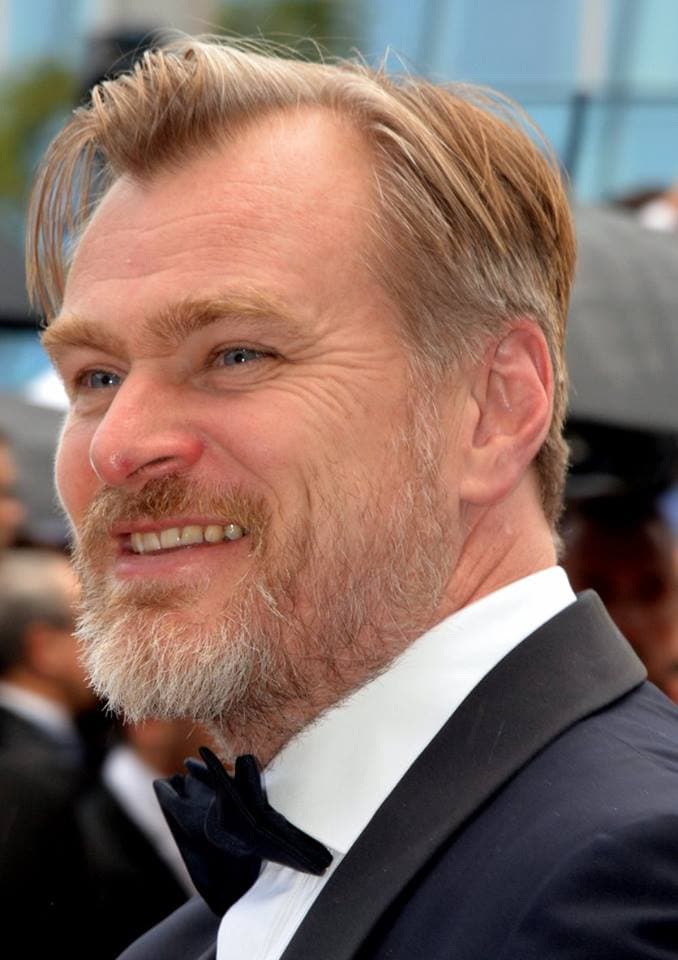
Film Director, Producer & Screenwriter
Public Views
Experience
Documented career positions
Sir Christopher Edward Nolan (born 30 July 1970) is a renowned British-American film director, producer, and screenwriter, widely considered one of the most influential and significant auteurs of the 21st century. Known for his technical mastery, complex non-linear storytelling, and dedication to practical effects, his films have consistently achieved both critical acclaim and massive commercial success, grossing over $6 billion globally. Born in Westminster, London, to an English father and an American mother, Nolan spent his formative years traveling between the United Kingdom and the United States. He developed an early fascination with filmmaking, utilizing his father's Super 8 camera to create short films from the age of seven. He was educated at Haileybury and Imperial Service College in Hertfordshire before enrolling at University College London (UCL) to study English literature. At UCL, Nolan met his future wife and long-term producing partner, Emma Thomas, with whom he established the production company Syncopy Inc. in 2001. Their creative partnership, beginning with their time in the university’s Film Society, has remained the cornerstone of his career. Nolan’s professional trajectory began with his feature debut, the low-budget neo-noir thriller *Following* (1998). He achieved international breakthrough with his sophomore feature, *Memento* (2000), a psychological thriller lauded for its unique reverse-chronological structure. This success led to his transition into studio filmmaking with the psychological thriller *Insomnia* (2002), starring Al Pacino and Robin Williams. Nolan attained significant global prominence with the *Dark Knight* trilogy, consisting of *Batman Begins* (2005), *The Dark Knight* (2008), and *The Dark Knight Rises* (2012). These films were instrumental in redefining the superhero genre, grounding comic book narratives in realistic, gritty, and ethically complex frameworks. Between these installments, he continued to pursue original high-concept projects, including the illusionist drama *The Prestige* (2006) and the mind-bending sci-fi thriller *Inception* (2010). His later work expanded into broader cinematic territory, often exploring themes of time, memory, and scientific theory. This period includes the epic science fiction film *Interstellar* (2014), the visceral war drama *Dunkirk* (2017), and the espionage thriller *Tenet* (2020). In 2023, Nolan released the historical biographical thriller *Oppenheimer*, which chronicles the life of J. Robert Oppenheimer and the development of the atomic bomb. The film became a major critical and cultural phenomenon, earning Nolan his first Academy Awards for Best Director and Best Picture. Nolan’s filmmaking style is distinguished by his frequent use of large-format film stocks, such as IMAX, and a preference for in-camera practical effects over digital manipulation. He is known for recurring collaborations, including his brother Jonathan Nolan (screenwriter) and composers Hans Zimmer and Ludwig Göransson. In recognition of his contributions to the arts, he was appointed a Commander of the Order of the British Empire (CBE) in 2019 and was knighted in 2024. In September 2025, he assumed the role of President of the Directors Guild of America. Outside of his professional life, Nolan maintains a notably private existence. He and Emma Thomas, who has produced all of his feature films, have four children and reside in Los Angeles. His body of work, characterized by its intellectual rigor and technical ambition, continues to shape modern cinema, ensuring his legacy as a filmmaker who successfully bridges the gap between challenging, cerebral themes and wide-reaching blockbuster entertainment.
Won the Academy Awards for Best Director and Best Picture for the 2023 historical epic Oppenheimer cementing his legacy in the cinematic pantheon
Revitalized the superhero genre with The Dark Knight Trilogy bringing unprecedented psychological realism and critical acclaim to comic book adaptations
Fiercely championed and preserved the 70mm IMAX film format forcing global theater chains to maintain and upgrade physical projection infrastructure
Infamously engaged in a bitter highly public divorce with Warner Bros in 2020 accusing the studio of dismantling the theatrical experience by dumping their entire 2021 slate onto HBO Max without consulting filmmakers
Frequently criticized by film critics and audiences for his notoriously loud aggressive sound mixing which often makes dialogue difficult to decipher a stylistic choice he fiercely defends
Occasionally criticized for the underdeveloped or one-dimensional nature of the female characters in his incredibly complex male-driven narratives
News articles featuring Christopher Nolan
Directed massive original global blockbusters including Inception Interstellar and Dunkirk grossing over 6 billion dollars worldwide
Graduated from University College London with a bachelor's degree in English literature in 1993
Released debut feature film Following in 1998
Gained international recognition with the release of Memento in 2000
Co-founded the production company Syncopy Inc. with Emma Thomas in 2001
Released the psychological thriller Insomnia in 2002
Launched The Dark Knight trilogy with the release of Batman Begins in 2005
Named an Honorary Fellow of University College London in 2006
Directed The Dark Knight (2008), which became a massive critical and commercial success
Received the Board of the Governors Award from the American Society of Cinematographers in 2009
Released the blockbuster Inception in 2010
Received the Britannia Award for Artistic Excellence in Directing from BAFTA in 2011
Concluded The Dark Knight trilogy with The Dark Knight Rises in 2012
Became the youngest director to be honoured with a hand-and-footprint ceremony at Grauman's Chinese Theatre in 2012
Directed and produced the science-fiction film Interstellar in 2014
Received the Empire Inspiration Award at the 20th Empire Awards in 2015
Selected as the Class Day speaker at Princeton University in 2015
Directed and produced the war film Dunkirk in 2017
Conferred an honorary doctorate in literature (DLit) from University College London in 2017
Appointed Commander of the Order of the British Empire (CBE) in the 2019 New Year Honours
Released the science-fiction action thriller Tenet in 2020
Released the biographical thriller Oppenheimer in 2023
Awarded the Federation of American Scientists' Public Service Award in 2023
Won Academy Awards for Best Director and Best Picture for Oppenheimer in 2024
Received the Golden Globe Award for Best Director for Oppenheimer in 2024
Received the British Film Institute (BFI) Fellowship in 2024
Knighted by the British Government for services to film in 2024
Assumed office as the President of the Directors Guild of America on September 20, 2025
In 2020 and 2021, Christopher Nolan publicly criticized Warner Bros. for its decision to release its entire 2021 film slate simultaneously in theaters and on the HBO Max streaming service without prior consultation. He famously described HBO Max as 'the worst streaming service' and stated that the studio's move was a 'disruptive' decision that disregarded the filmmakers' interests, ultimately leading to the end of his long-standing partnership with the studio.
Since at least 2014, Nolan has faced recurring criticism regarding the sound mixing in his films, particularly in 'Interstellar', 'Dunkirk', and 'Tenet', where audience members and critics have frequently complained that dialogue is often drowned out by music and sound effects. Nolan has consistently defended these choices as deliberate artistic decisions, acknowledging that he is aware of the controversy and confirming that the mixes are intentional.
Upon the release of the 2023 film 'Oppenheimer', Nolan faced criticism from some viewers and commentators for not directly depicting the atomic bombings of Hiroshima and Nagasaki on screen. Nolan responded to the backlash by explaining that the choice was an intentional narrative decision to maintain a subjective perspective, focusing on Oppenheimer's personal experience and knowledge of the events rather than an objective depiction of the destruction.