We're loading the full news article for you. This includes the article content, images, author information, and related articles.
President Zelenskyy warns that US security guarantees for Ukraine are now conditional on ceding the Donbas region, as global conflicts reshape alliances.

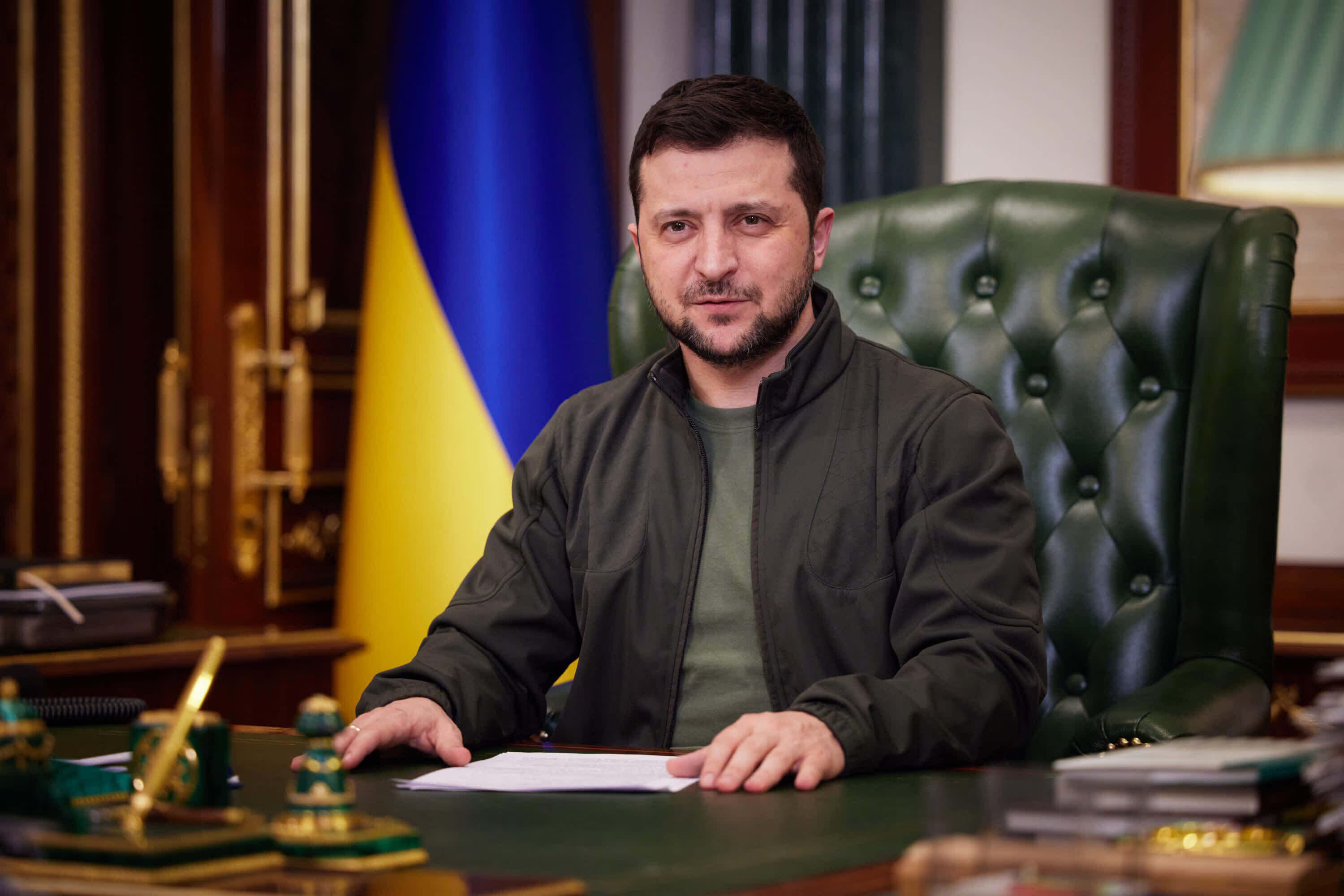
President Volodymyr Zelenskyy has starkly outlined the growing rift between Kyiv and Washington, revealing that American security guarantees are now contingent upon Ukraine surrendering its entire eastern region of Donbas to Russia. This ultimatum, delivered during a period of escalating global tensions, marks a pivotal shift in the trajectory of a conflict now entering its 1,492nd day. The assertion arrives as the administration in Washington navigates a complex multi-front geopolitical strategy, pivoting its primary focus toward the burgeoning crisis in the Middle East.
For the Ukrainian administration, the requirement to relinquish territory in exchange for security guarantees is viewed not as a diplomatic compromise, but as a fundamental erosion of sovereign integrity. President Zelenskyy argued that the eastern provinces are not merely geographic markers but are essential components of the nation's overall defense architecture. The pressure applied by the United States reflects a clear strategic preference for a rapid cessation of hostilities, even at the cost of long-term territorial integrity. This realpolitik approach, dictated by the White House, prioritizes the containment of the Iranian conflict while seeking to extract the United States from what many policymakers in Washington now view as a protracted, resource-heavy European engagement.
The complexity of this geopolitical maneuvering extends far beyond the battlefield in Donbas. President Zelenskyy has disclosed what he characterizes as a sophisticated scheme of international blackmail involving Moscow, Washington, and Tehran. According to intelligence briefings provided to the Ukrainian leadership, Russia is actively leveraging its military cooperation with Iran to influence American foreign policy. Moscow is reportedly offering to withhold critical military intelligence from Iranian forces, provided that Washington agrees to cut off the flow of intelligence data to Kyiv.
This triangular power dynamic illustrates the extent to which the war in Ukraine has become inextricably linked to global security architectures. The following points summarize the current state of these interlocking threats:
The human toll of this conflict has long since transcended the borders of Eastern Europe, affecting nations as distant as Zimbabwe. Officials in Harare confirmed that at least 15 Zimbabwean citizens have been killed while fighting for Russian forces in Ukraine. The Zimbabwean information minister, Zhemu Soda, has characterized these incidents as a consequence of sophisticated human trafficking networks. These recruiters frequently utilize social media platforms to promise lucrative employment, only to funnel vulnerable individuals into front-line combat roles.
This phenomenon underscores the globalized nature of the war, where desperate economic conditions in the Global South are being exploited to fuel the attrition tactics favored by the Kremlin. While the Russian embassy in Harare has declined to comment on the allegations, the loss of life among African nationals serving in the conflict is forcing a re-evaluation of how these recruitment pipelines operate within the continent.
As the conflict stagnates, peripheral players are repositioning their alliances to leverage the prevailing instability. The Belarusian president, Alexander Lukashenko, has undertaken a high-profile visit to North Korea, cementing ties with the regime of Kim Jong-un. This diplomatic overture, symbolized by the laying of wreaths at the Kumsusan Palace of the Sun, signals a coordinated effort to strengthen the bloc of nations opposing the Western-led order. Simultaneously, the British government has escalated its intervention against the Russian shadow fleet, with Prime Minister Keir Starmer authorizing the detention of vessels suspected of circumventing oil sanctions to fund the Russian war machine.
For readers in Nairobi and across East Africa, these developments are not merely distant headlines they represent a significant threat to regional economic stability. The fluctuating global oil prices, exacerbated by the ongoing conflict and the parallel war involving Iran, pose a direct inflationary risk to the Kenyan economy. An increase in global energy costs immediately translates to higher operational expenses for logistics, transport, and manufacturing sectors in Nairobi. Furthermore, the potential restructuring of security guarantees and territorial cessions sets a dangerous precedent for international law, a matter of significant concern for African nations committed to the sanctity of borders.
The convergence of crises—from the Ukrainian plains to the Danube ports, and now involving clandestine recruitment in Southern Africa—demonstrates that the global order is undergoing a profound and potentially destabilizing transformation. As the United States pivots to address threats in the Middle East, the void left in European security policy is being filled by a mix of desperation, tactical opportunism, and, increasingly, the grim reality of a war that shows no immediate sign of resolution.
If territorial sovereignty becomes negotiable under the weight of external geopolitical pressure, the international community must consider what such a shift implies for the future of global stability. The world is watching to see whether the promise of security can be sustained when the cost of maintaining it is measured in land, lives, and the integrity of long-standing alliances.
Keep the conversation in one place—threads here stay linked to the story and in the forums.
Sign in to start a discussion
Start a conversation about this story and keep it linked here.
Other hot threads
E-sports and Gaming Community in Kenya
Active 10 months ago
The Role of Technology in Modern Agriculture (AgriTech)
Active 10 months ago
Popular Recreational Activities Across Counties
Active 10 months ago
Investing in Youth Sports Development Programs
Active 10 months ago
Key figures and persons of interest featured in this article