We're loading the full news article for you. This includes the article content, images, author information, and related articles.
Zanzibar is in the final stages of ratifying a definitive Kiswahili Policy, an initiative designed to cement the language's growing geopolitical and cultural influence on the global stage.
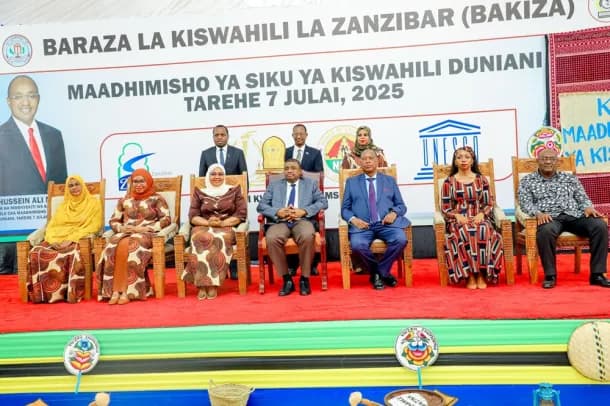
Zanzibar is in the final stages of ratifying a definitive Kiswahili Policy, an initiative designed to cement the language's growing geopolitical and cultural influence on the global stage.
As Kiswahili continues its rapid ascent as a vital lingua franca across the African continent and beyond, the revolutionary government of Zanzibar has moved to formalize its institutional framework.
This policy finalization represents a strategic cultural export that resonates deeply in Kenya. While Kenya has officially recognized Kiswahili, its practical application often competes with English in corporate and governmental spheres. Zanzibar's aggressive institutionalization offers Kenya a compelling model for leveraging linguistic heritage as a potent tool for regional integration, diplomacy, and soft power within the East African Community.
Deputy Minister for Information, Culture, Arts and Sports, Ali Abdulghulam Hussein, confirmed to the House of Representatives that the exhaustive drafting phase of the Kiswahili Policy is nearing its conclusion. Responding to parliamentary inquiries, Hussein outlined that the impending implementation will be accompanied by significant infrastructural and operational investments. Foremost among these is the planned construction of dedicated, modern office premises for the Zanzibar Kiswahili Council, a project already navigating the implementation pipeline.
This physical infrastructure is mirrored by an operational overhaul. The government is actively upgrading staff welfare, restructuring institutional hierarchies, and streamlining operational efficiency. This comprehensive approach is not merely bureaucratic housekeeping; it is a calculated response to Kiswahili's unprecedented international recognition, including its adoption by major international bodies and its designation as an official working language of the African Union.
A critical component of this linguistic renaissance is the continuous standardization of new terminology. The last formal, sweeping standardization occurred in 1934. In the modern era, characterized by rapid technological advancement and digital communication, language must evolve dynamically to remain relevant. Hussein confirmed that the Zanzibar Kiswahili Council is continuously developing new lexicons to accommodate scientific, technological, and modern political concepts.
For Kenya, a nation heavily invested in digital innovation, this standardized vocabulary is essential. Discrepancies in technical terminology between Nairobi and Dar es Salaam can hinder seamless cross-border business and technological collaboration. By establishing a centralized, authoritative source for modern Kiswahili terminology, Zanzibar is effectively dictating the linguistic parameters for the entire East African tech and business ecosystem.
The policy extends significantly beyond domestic borders, transforming the language into a viable export commodity. The Deputy Minister revealed that at least 200 Tanzanian youths are currently deployed abroad, capitalizing on Kiswahili-related professional opportunities in nations as diverse as the United States, Germany, Egypt, and the Comoros. These linguistic ambassadors are teaching foreign learners, collaborating with international academic institutions, and actively promoting East African culture.
This represents a lucrative economic frontier. The global demand for Kiswahili instruction is surging, driven by increased foreign investment in East Africa and the geopolitical importance of the region. By formalizing the teaching qualifications and establishing bilateral institutional collaborations, Zanzibar is capturing a significant share of this emerging market. The economic return, measured in remittances and diplomatic leverage, is highly substantial, potentially generating millions of Kenyan Shillings (KES) equivalent in foreign exchange.
Far more than a medium of communication, Zanzibar is proving that a well-managed indigenous language is a powerful engine for global diplomatic influence and economic expansion.
Keep the conversation in one place—threads here stay linked to the story and in the forums.
Sign in to start a discussion
Start a conversation about this story and keep it linked here.
Other hot threads
E-sports and Gaming Community in Kenya
Active 9 months ago
The Role of Technology in Modern Agriculture (AgriTech)
Active 9 months ago
Popular Recreational Activities Across Counties
Active 9 months ago
Investing in Youth Sports Development Programs
Active 9 months ago



