We're loading the full news article for you. This includes the article content, images, author information, and related articles.
For millions of Kenyans, the annual SACCO payout is a critical financial event. But how is that final figure calculated? Streamline News breaks down the essential difference between dividends and interest rebates, and what drives your total earnings.
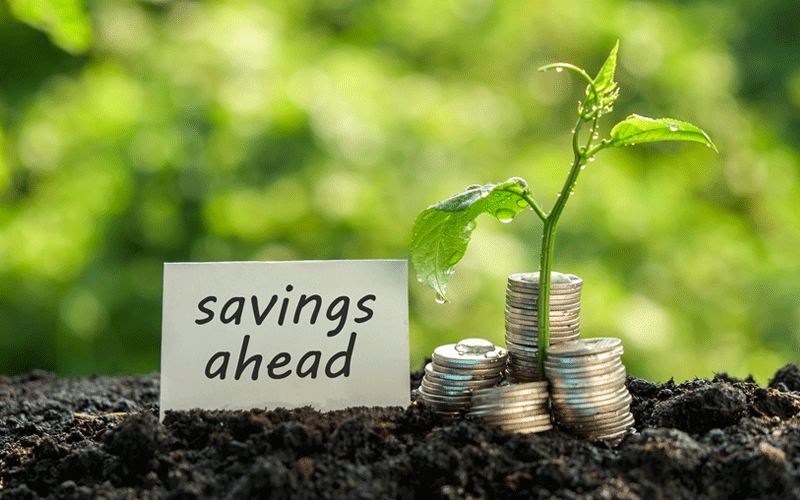
At the close of every financial year, a palpable sense of anticipation builds among members of Kenya's Savings and Credit Co-operative Organisations (SACCOs). The annual payout is not just a welcome bonus; for many, it's a crucial injection of funds for school fees, investments, or shoring up household budgets. Understanding how this sum is derived is key to financial planning and gauging your SACCO's health.
The most important thing to know is that your total payout is typically a combination of two distinct returns: dividends on share capital and interest rebates on your deposits. Confusing the two is a common mistake, yet knowing the difference is fundamental to maximizing your earnings.
Think of it this way: your share capital is your ownership stake in the SACCO, while your deposits are your savings that the SACCO lends to other members. Both generate returns, but they are calculated differently.
The journey to your payout begins with the SACCO's financial performance. At the end of the year, the SACCO calculates its total income (from loan interest, investments, etc.) and subtracts all its operational expenses. The remaining amount is the net surplus.
This surplus does not all go to members. The Sacco Societies Regulatory Authority (SASRA), the sector's watchdog, mandates that a portion be set aside as reserves to ensure the SACCO's financial stability. The board of directors then proposes how the remaining distributable surplus will be split, recommending a dividend rate and an interest rebate rate. These rates are then presented to members for approval at the AGM.
The formula for your individual payout is then straightforward:
For example, if you have KES 50,000 in share capital and the approved dividend rate is 12%, your dividend earning is KES 6,000. If you also have KES 200,000 in deposits and the interest rebate is 10%, you earn an additional KES 20,000, for a total payout of KES 26,000 before taxes.
The rates are not arbitrary. A SACCO's ability to offer attractive returns is directly tied to its performance and efficiency. Key factors include the profitability from its loan book, income from other investments, and how well it manages its operational costs. Regulatory compliance is also crucial; SASRA can prevent a SACCO from paying dividends if it hasn't met minimum capital or liquidity requirements.
It is also important to note that dividends are subject to a 5% withholding tax for residents, as stipulated by the Kenya Revenue Authority (KRA). Once approved, the net amount is typically credited directly to members' accounts.
Ultimately, a healthy annual payout is a sign of a well-managed and profitable SACCO. By understanding the mechanics behind the numbers, members are better equipped to hold their leadership accountable and make strategic decisions about where to grow their savings and ownership stake.
Keep the conversation in one place—threads here stay linked to the story and in the forums.
Sign in to start a discussion
Start a conversation about this story and keep it linked here.
Other hot threads
E-sports and Gaming Community in Kenya
Active 9 months ago
The Role of Technology in Modern Agriculture (AgriTech)
Active 9 months ago
Popular Recreational Activities Across Counties
Active 9 months ago
Investing in Youth Sports Development Programs
Active 9 months ago



