We're loading the full news article for you. This includes the article content, images, author information, and related articles.
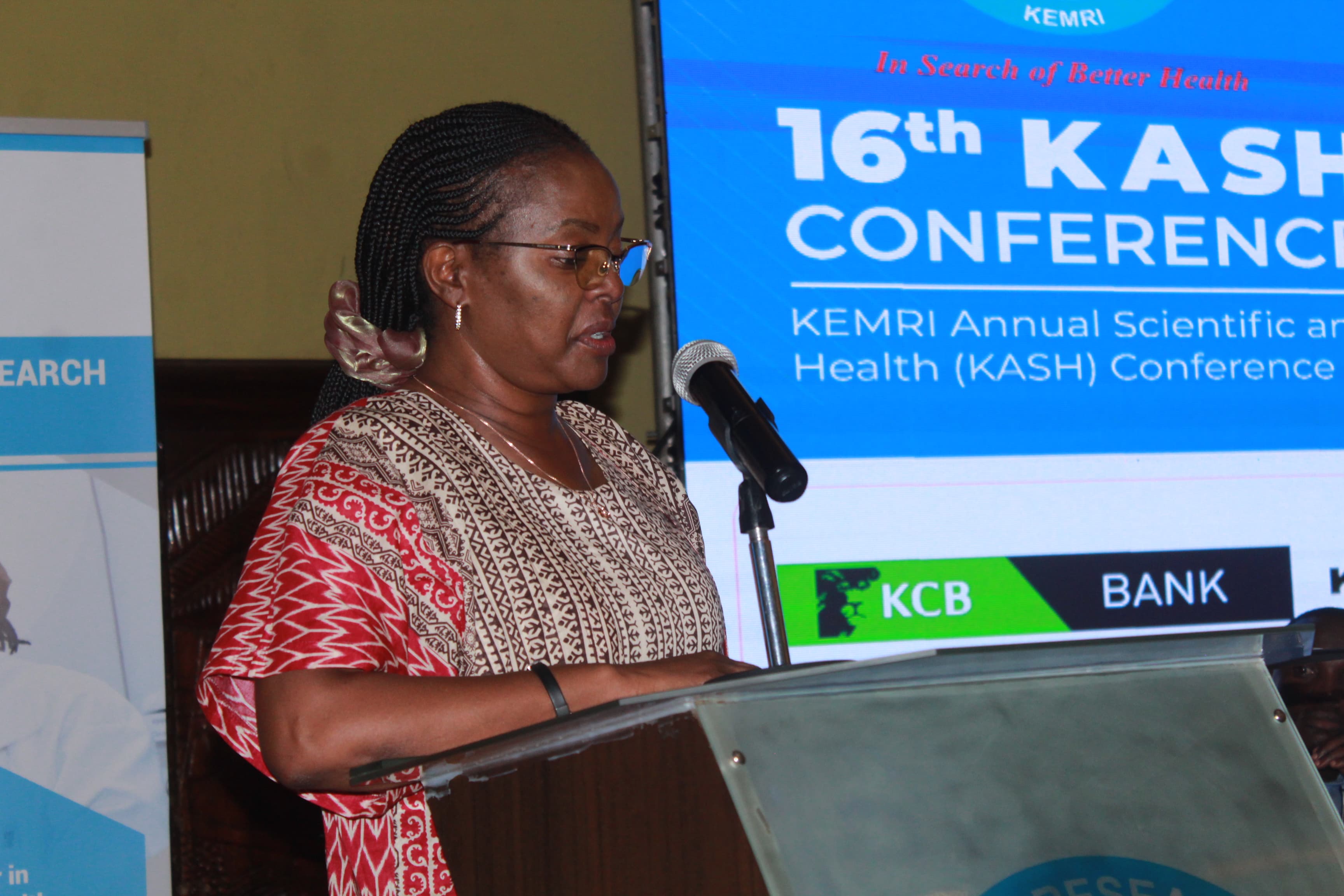
The 16th KASH Conference closed with a call to include more women in science. Principal Secretary Anne Wangombe said a strong health system needs women scientists. She praised KEMRI's new women's health program and urged support for women researchers, especially in vaccine manufacturing
By John Toris
The 16th KEMRI Annual Scientific and Health (KASH) Conference closed today with a powerful message: the future of Kenya's health depends on including more women in science.
The four-day conference, which began on Tuesday at the Safari Park Hotel, brought together researchers and health experts under the theme "The Future of Health: Scientific Research, Innovations, Technologies, and Manufacturing for a Resilient Universal Health Coverage."
Speaking at the closing ceremony, Ms. Anne Wangombe, Principal Secretary for the State Department for Gender and Affirmative Action, told the gathering that science and gender equality must go hand in hand.
"Over the past three days, you have explored the theme... Your discussions have confirmed that the future of health depends not only on scientific excellence but critically on who participates in science and whose needs are prioritized," Ms. Wangombe said.
She stressed that a health system cannot be strong if women are left out of the laboratories and research centers where solutions are created.
"A resilient health system cannot be built without the full participation of women as scientists. When women are excluded from scientific spaces, we lose diverse ideas and weaken innovation," she stated.
The Principal Secretary called for deliberate action to support women and girls at every stage of their scientific journey, from school all the way to leadership positions in research and manufacturing.
Ms. Wangombe pointed to barriers that still hold women back, including unequal access to funding, the heavy load of unpaid care work at home, and bias in the workplace. She said fixing these problems is not optional but necessary for scientific excellence.
She praised KEMRI for recently starting a new program focused on women's health research. "This is a giant step forward," she said, adding that women scientists must be supported, especially in new and growing fields like local vaccine manufacturing.
The PS also reminded the conference that children have special health needs that must not be forgotten.
"Our pursuit of universal health coverage must be responsive to the specific needs of our children. They are not small adults. They require specific nutritional and therapeutic considerations that must be integrated into research and policy," she explained.
She shared evidence showing that when women lead research, studies pay more attention to the social factors that affect health, leading to better results for mothers, children, and entire families.
Ms. Wangombe concluded by challenging the scientists to turn their discussions into real action. "As this conference ends, the challenge is to translate knowledge into action."
The KASH Conference, launched in 2011, aims to share scientific findings, strengthen partnerships, and improve health and quality of life for Kenyans through research.
Keep the conversation in one place—threads here stay linked to the story and in the forums.
Sign in to start a discussion
Start a conversation about this story and keep it linked here.
Other hot threads
E-sports and Gaming Community in Kenya
Active 9 months ago
The Role of Technology in Modern Agriculture (AgriTech)
Active 9 months ago
Popular Recreational Activities Across Counties
Active 9 months ago
Investing in Youth Sports Development Programs
Active 9 months ago