We're loading the full news article for you. This includes the article content, images, author information, and related articles.
As Dar es Salaam descends into post-election chaos, the shockwaves are already hitting Nairobi—from stalled cargo at Namanga to a sudden diplomatic pivot by the White House.
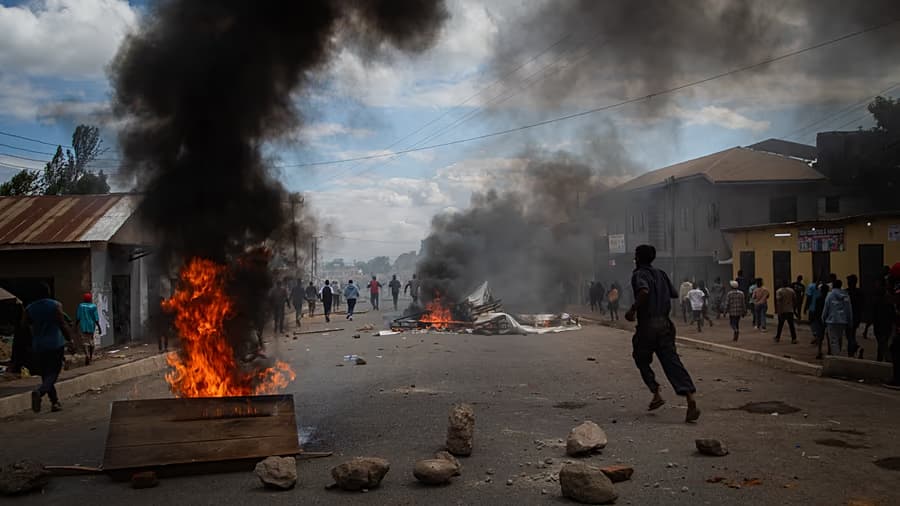
When our neighbors’ house catches fire, we do not just watch the smoke; we wet our own roof. The unfolding crisis in Tanzania, following the contentious October elections, has ceased to be a foreign news item. It is now a domestic emergency for Kenya. With hundreds reported dead in crackdowns and trade routes paralyzed, the instability south of the border is bleeding directly into the Kenyan economy and reshaping our diplomatic standing on the global stage.
For weeks, Nairobi has watched with bated breath as President Samia Suluhu Hassan’s administration grapples with a legitimacy crisis that has spilled onto the streets. But as Daily Nation columnist Kwamchetsi Makokha warned in a stinging critique this Sunday, "Tanzania is everybody’s business." The silence of regional leaders is deafening, but the noise at the Namanga border—where engines are idling and goods are rotting—is impossible to ignore.
For the Kenyan trader, this political turmoil is not abstract; it is a ledger of losses. December is traditionally the harvest season for cross-border commerce, a time when the flow of goods between Kenya and Tanzania peaks. Instead, the Namanga and Lunga Lunga borders have become bottlenecks. Reports indicate that cargo movement has been severely disrupted by the unrest and subsequent internet shutdowns, leaving Kenyan exporters stranded.
While trade suffers, the geopolitical map is being redrawn in Nairobi’s favor. The United States, under the Trump administration, has signaled a sharp review of its ties with Dodoma, citing "grave concerns" over the violence and repression of civil liberties. In a move that analysts interpret as a direct snub to Tanzania, the U.S. International Finance Corporation has fast-tracked a massive debt-for-food security swap with Kenya.
This deal, valued at $1.6 billion (approx. KES 207 billion), is a lifeline for President William Ruto’s administration, allowing Kenya to replace costly commercial debt with cheaper financing. "The United States cannot overlook actions that jeopardize the safety of our citizens or the stability of the region," the U.S. State Department noted, effectively placing Kenya as the preferred anchor for stability in East Africa while Tanzania faces diplomatic isolation.
Beyond the shillings and cents, there is a darker lesson for Kenya. The rapid descent of Tanzania—often lauded as a haven of peace—into authoritarianism is a "cautionary tale" for the region. Kwamchetsi Makokha’s analysis underscores that the weaponization of security forces and the silencing of dissent are not unique to one nation; they are contagions that can cross borders as easily as uninspected goods.
As Tanzanian police declare the upcoming December 9 protests "unlawful" and warn of further crackdowns, the human toll continues to mount. For Kenyans, the situation is a stark reminder that economic prosperity cannot be decoupled from political freedom. As we count our diplomatic wins, we must also count the cost of having a neighbor in flames. Stability in East Africa is indivisible; if Tanzania burns, Kenya eventually chokes on the smoke.
Keep the conversation in one place—threads here stay linked to the story and in the forums.
Sign in to start a discussion
Start a conversation about this story and keep it linked here.
Other hot threads
E-sports and Gaming Community in Kenya
Active 9 months ago
The Role of Technology in Modern Agriculture (AgriTech)
Active 9 months ago
Popular Recreational Activities Across Counties
Active 9 months ago
Investing in Youth Sports Development Programs
Active 9 months ago
Key figures and persons of interest featured in this article