We're loading the full news article for you. This includes the article content, images, author information, and related articles.
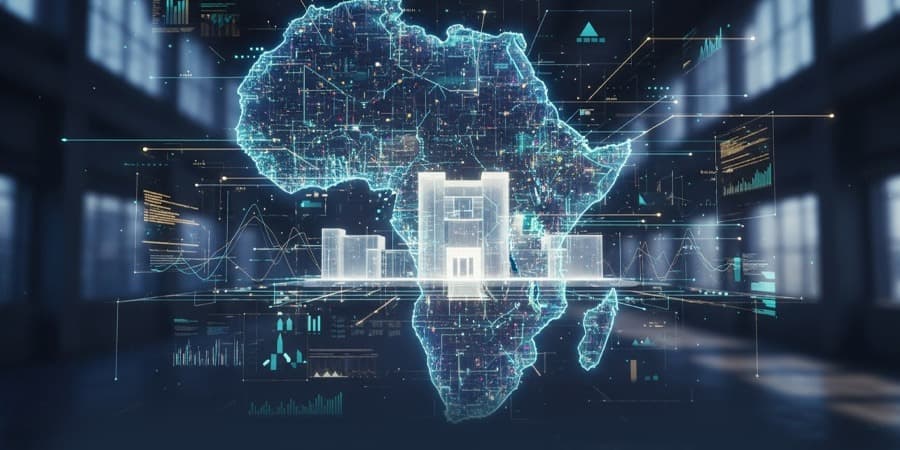
Digital identity is no longer just a smart card; it is the invisible railway of the 21st-century African economy, connecting millions to banking, healthcare, and the global marketplace.
Digital identity is no longer just a smart card; it is the invisible railway of the 21st-century African economy, connecting millions to banking, healthcare, and the global marketplace.
Across the continent, a silent infrastructure revolution is taking place. It is not built of concrete and rebar, but of biometrics and databases. Digital identity (Digital ID) is rapidly emerging as the single most critical enabler of economic development in Africa. From the "Maisha Namba" debates in Kenya to the National Identity Management Commission (NIMC) drives in Nigeria, governments are realising that in a digital-first world, you cannot govern—or serve—people you cannot verify.
Dr. Olajide Olasiyan-Ola, a leading voice in the sector, argues that Digital ID has transcended its bureaucratic roots. "Governments use it to deliver services, banks rely on it to open accounts, and digital platforms depend on it to verify users." It is the trust layer of the internet. Without it, the "Africa Rising" narrative hits a glass ceiling. The World Bank's ID4D program highlights a stark reality: Sub-Saharan Africa is the only region where ID ownership is not near-universal. This "identity gap" effectively locks millions out of the formal economy, rendering them invisible to credit bureaus, social safety nets, and healthcare providers.
The integration of Digital ID with payment systems is where the real magic happens. In Kenya, the symbiosis between mobile money (M-Pesa) and identity verification has already created a blueprint for financial inclusion. When a farmer in Kitale can digitally prove who they are, they can access credit to buy fertiliser, receive government subsidies directly to their mobile wallet, and sell their produce to international buyers without an intermediary. The Digital ID reduces the "cost of trust," making micro-transactions viable.
However, this digitisation of humanity is not without its perils. The push for Digital ID has sparked fierce debates about data privacy and state surveillance. In Kenya, civil society groups have repeatedly challenged the rollout of new ID systems, demanding robust data protection laws before the data is harvested. The fear is that without strong legal guardrails, these centralized databases could become tools for political repression or targets for massive cyber breaches. The challenge for African policymakers is to build systems that are "privacy-by-design," ensuring that a citizen's data unlocks services without locking them into a surveillance state.
Looking ahead, the ultimate goal is cross-border interoperability. The African Continental Free Trade Area (AfCFTA) dreams of a continent where goods and people move potentialy. A harmonised Digital ID system would allow a Kenyan entrepreneur to register a business in Ghana or open a bank account in Rwanda instantly. This is the "soft infrastructure" that will determine whether Africa becomes a single digital market of 1.4 billion people or remains a fragmented collection of digital silos.
As the tech infrastructure is laid, the message is clear: In the digital age, existence is proof. And for Africa to thrive, every citizen must be able to prove they exist, securely and digitally.
Keep the conversation in one place—threads here stay linked to the story and in the forums.
Sign in to start a discussion
Start a conversation about this story and keep it linked here.
Other hot threads
E-sports and Gaming Community in Kenya
Active 9 months ago
The Role of Technology in Modern Agriculture (AgriTech)
Active 9 months ago
Popular Recreational Activities Across Counties
Active 9 months ago
Investing in Youth Sports Development Programs
Active 9 months ago