We're loading the full news article for you. This includes the article content, images, author information, and related articles.
Kenya’s SHA Primary Healthcare Impact Report 2026 shows rising registration, stronger facility financing and wider outpatient access, but also exposes county inequality, weak public Level 2 performance and a major prescription completion gap.
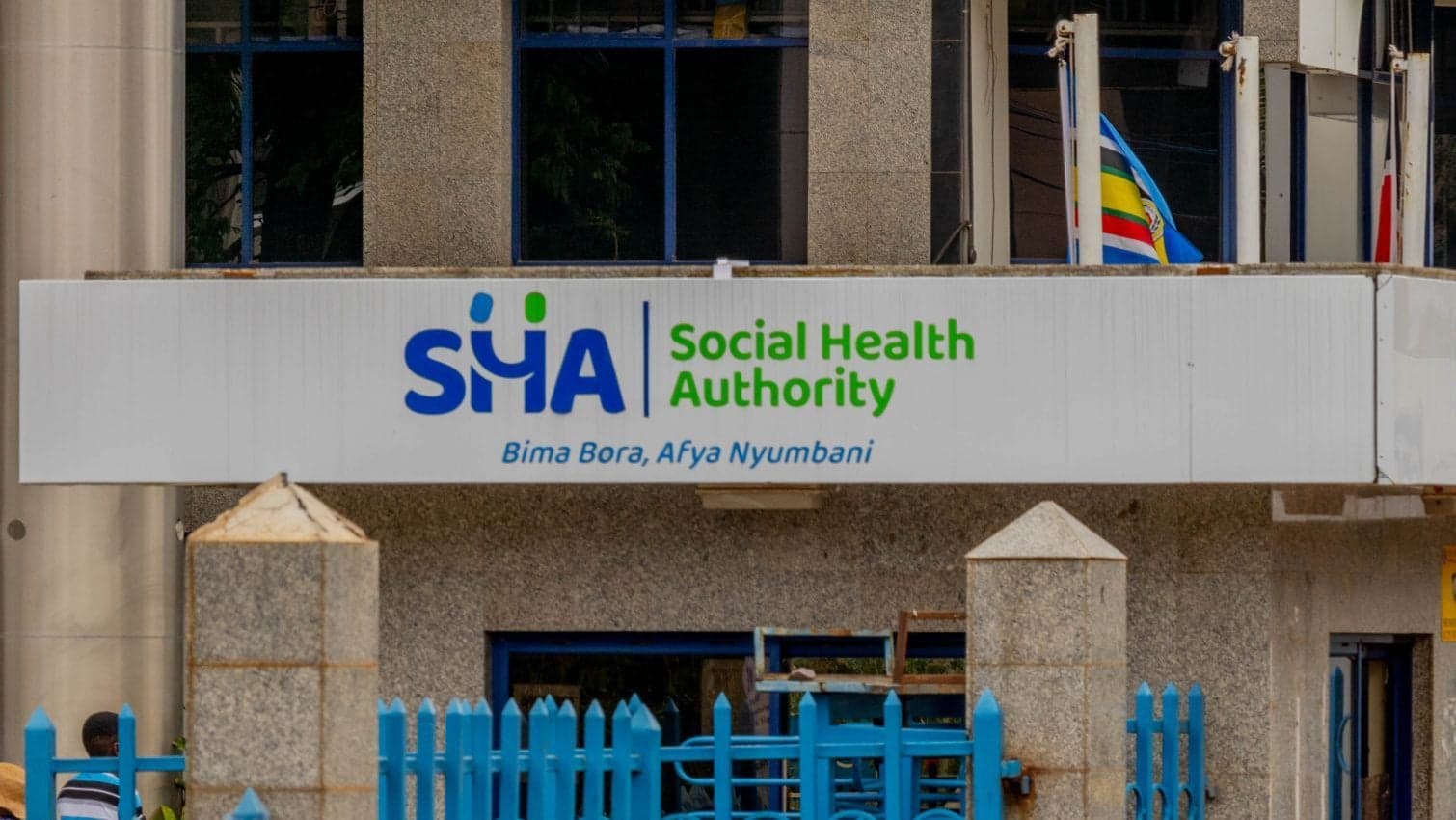
Nairobi | March 23, 2026
Kenya’s latest Primary Healthcare Impact Report 2026 offers the clearest picture yet of what the Social Health Authority is achieving, where it is falling short, and why the next phase of reform will be defined less by registration drives and more by whether patients actually leave facilities with completed care.
The broad story is this: SHA has expanded the size of Kenya’s primary healthcare system, pushed more money to more facilities, and brought millions more people into the formal health financing net. But the same report also reveals three hard truths. Access remains unequal across counties. Lower-level public facilities are still struggling operationally. And one of the most important promises of health reform, getting patients diagnosed, treated, and supplied with medicine efficiently, is still breaking down too often at the last mile. Those findings now sit alongside a March High Court ruling that upheld SHIF’s legal framework while faulting the rollout, and a new Ministry of Health push to tighten referral pathways across the system.
|
Indicator |
What the report says |
|---|---|
|
Period under review |
Oct. 1, 2024 to Feb. 28, 2026 |
|
Registered under SHA |
29.8 million |
|
Total outpatient visits financed |
19 million |
|
Unique patients |
7.87 million+ |
|
PHC exchequer funding |
KSh 20.57 billion |
|
Total claims received |
KSh 21.17 billion |
|
Total claims settled |
KSh 18.97 billion |
|
Facilities paid |
10,708 |
|
Prescription completion rate |
58.6% |
These figures, drawn from the report itself and echoed in recent coverage, suggest that the PHC arm of SHA is no longer operating at pilot scale. It is already moving large volumes of patients, claims, and public money through the health system.
The Social Health Insurance Act, 2023 created the new health financing architecture by replacing NHIF with a structure built around three main funds, including the Primary Healthcare Fund, whose purpose is to purchase primary healthcare services from health facilities. That means the PHC report is not a side document. It is one of the best indicators available of whether Kenya’s new health financing model is beginning to work where it matters most: frontline care.
And that frontline matters. Primary healthcare is where the system is supposed to catch illness early, manage routine disease, stabilize chronic care, protect households from needless expense, and reduce pressure on referral hospitals. If PHC works, the whole system gets more efficient. If PHC underperforms, patients end up seeking basic care at the wrong level, too late, and often at greater personal and fiscal cost.
For all the controversy around the transition from NHIF, the report shows a substantial increase in the amount of money and the number of facilities now active in the PHC financing ecosystem. In 17 months under review, KSh 18.97 billionwas paid to 10,708 facilities, compared with KSh 12.95 billion paid to 8,886 facilities under the former NHIF model over a longer period cited in the report. That is one of the strongest pieces of evidence that the reform has materially widened financial reach at the facility level.
Why it matters: More facilities in the financing system means more points of care can potentially remain functional, stock supplies, process claims, and keep services running.
The report says 29.8 million Kenyans had registered under SHA by the end of February 2026. That is significant, but it still represents only about half the population. Registration growth is therefore a milestone, not an endpoint. Recent reporting based on the report shows counties could unlock billions more in health funding if registration expanded further.
|
What’s improving |
What remains unresolved |
|---|---|
|
National registration base is now massive |
Registration still leaves a large share of Kenyans outside the system |
|
Some counties have strong coverage momentum |
ASAL and frontier counties remain far behind |
|
Registration is becoming fiscally meaningful |
Low-registration counties also lose financing power |
What this means in practice: Under the current architecture, registration is no longer just a citizen enrollment exercise. It is also a financing lever.
The strongest-performing counties are mostly urban or peri-urban counties with denser facility networks and stronger utilization patterns. Nairobi, Mombasa, Kisumu, Nakuru and Kiambu stand out on service volumes and payouts. By contrast, counties such as Isiolo, Marsabit, Samburu, Tana River, Wajir, and West Pokot remain constrained by weaker access, lower registration, and thinner health infrastructure.
|
Counties gaining faster |
Counties lagging |
|---|---|
|
Nairobi |
Isiolo |
|
Mombasa |
Marsabit |
|
Kisumu |
Samburu |
|
Nakuru |
Tana River |
|
Kiambu |
Wajir |
|
Kakamega |
West Pokot |
This matters because low coverage does not only mean fewer people registered. It also means those counties are forgoing financing that could support local facilities, staffing, medicines, and outreach.
One of the most revealing patterns in the report is that Nairobi does not need the highest registration percentage to dominate payouts. The capital’s sheer population, facility density, patient volume, and service demand make it the single largest PHC funding center in the country. The report cites Nairobi’s claims payout at KSh 1.34 billion, well ahead of other counties.
That tells us something important about the emerging shape of SHA: service demand and facility concentration matter just as much as registration percentages. A county can post strong coverage rates yet still not match Nairobi’s pull on the system.
The disease profile in the report shows a PHC system dealing primarily with the kinds of conditions it should be handling: respiratory illness, health factors, digestive disease, and infectious disease dominate claims. Respiratory conditions alone account for the largest share. That supports the argument that PHC financing is helping absorb common and early-stage illnesses at the lower levels of care instead of leaving them to escalate.
Why this is important: When the dominant disease burden is concentrated in treatable outpatient and preventive categories, a primary care-led financing model makes clinical and economic sense.
The national prescription dispensing completion rate is 58.6%. That means a very large share of prescriptions are not ending in completed dispensing. The report attributes this to prescriptions stuck in draft, awaiting approval, or cancelled. In human terms, many patients are getting part of the process, but not the full care chain.
|
Stage |
Patient expectation |
Reported weakness |
|---|---|---|
|
Consultation |
Be seen and diagnosed |
Happening at scale |
|
Prescription |
Receive treatment plan |
Happening |
|
Dispensing |
Get the medicines or completed medication workflow |
Too often failing |
|
Outcome |
Recover, stabilize, or manage disease |
Put at risk by incomplete last-mile care |
This is where health reform can feel successful in a dashboard and frustrating in real life.
The report identifies county government Level 2 facilities as the weakest cell in the system on prescription completion. That is deeply consequential because Level 2 facilities are supposed to be the foundation of primary healthcare, especially for first contact care. When those facilities underperform operationally, the entire system becomes less efficient and less credible.
Private and faith-based facilities are reported to perform materially better on dispensing completion. That strongly suggests that the problem is not only resource scarcity. It also points to workflow discipline, digital processes, staffing structures, and accountability differences across ownership types.
Translation: Kenya’s PHC challenge is no longer just about getting facilities into the system. It is about making sure the lowest and most widely used public facilities can reliably function inside it.
The report notes that Level 4 hospitals are still drawing substantial PHC payouts. That may reflect proper referral in some cases. But it may also signal something less healthy: patients bypassing lower-level facilities for basic services, or lower tiers failing to fully absorb demand.
That concern aligns with the Ministry of Health’s current push for a Kenya Healthcare Referral Policy, which is explicitly aimed at clearer referral pathways, better communication between facilities, and lower congestion at specialized hospitals.
Patients begin at the appropriate lower level where possible.
More complex cases move upward in a structured way.
Feedback and follow-up move back down efficiently.
Hospitals are reserved for care that genuinely requires higher complexity.
If Level 4 hospitals keep absorbing basic care at scale, then the efficiency promise of PHC remains incomplete.
On March 19, 2026, the High Court upheld the constitutionality of SHIF’s legal framework, but faulted the 2024 rollout for operational and procedural failures. That was not a technical footnote. It was a warning from the judiciary that legal validity does not excuse weak implementation.
The PHC report now reinforces that same message from another angle. The reform is not imaginary. But neither is it settled. It is large, real, and still operationally uneven.
The combined message from the court and the report is clear: Kenya does not only need the reform to continue. It needs it to work better.
The easiest headline in health reform is registration. The harder question is whether registration translates into:
shorter waits,
completed treatment,
consistent medicine access,
stronger lower-level facilities,
cleaner referral pathways,
and fairer access across counties.
That is where the real contest now lies. The report shows that SHA has established national scale. The unresolved question is whether it can now convert that scale into equity, reliability, and trust.
The report deserves credit for doing more than celebrating headline growth. It also surfaces uncomfortable findings about geographic disparity, dispensing inefficiency, workflow gaps, and public facility underperformance. That gives policymakers, counties, providers, and the public something more useful than a polished success narrative. It gives them a live map of where the reform is succeeding and where it is at risk of stalling.
Even with its breadth, the report raises questions that deserve further public reporting and official clarification:
|
Key question |
Why it matters |
|---|---|
|
Why are public Level 2 facilities so far behind on dispensing completion? |
They are the front door of PHC |
|
How much of the incomplete prescription problem is staffing, software, stock, or approvals? |
Solutions depend on the true bottleneck |
|
Are low-payout rural facilities underused, under-connected, or under-supported? |
Each implies a different policy response |
|
Is referral functioning as intended, or are patients bypassing weak lower tiers? |
Efficiency and quality depend on this |
|
How fast can low-registration counties close the financing gap? |
Equity depends on it |
These are not side questions. They are the questions that will determine whether SHA becomes a durable public system or a permanently contested reform.
The fairest reading of Kenya’s Primary Healthcare Impact Report 2026 is neither celebratory nor dismissive.
SHA has clearly widened the financial and operational footprint of primary healthcare. More people are registered. More outpatient visits are being financed. More facilities are receiving reimbursements. That is real progress.
But the report also shows a system with serious structural unevenness. Some counties are racing ahead while others remain on the margins. Public lower-level facilities, especially county Level 2 sites, are still struggling to convert clinical encounters into completed dispensing. And referral discipline remains important enough for the Ministry of Health to be actively redesigning it.
The next chapter of SHA will not be judged by how many people are counted in the system.
It will be judged by whether care is completed, medicines are dispensed, counties catch up, and patients leave the health facility not just registered, but actually helped.
Keep the conversation in one place—threads here stay linked to the story and in the forums.
Sign in to start a discussion
Start a conversation about this story and keep it linked here.
Other hot threads
E-sports and Gaming Community in Kenya
Active 10 months ago
Popular Recreational Activities Across Counties
Active 10 months ago
The Role of Technology in Modern Agriculture (AgriTech)
Active 10 months ago
Investing in Youth Sports Development Programs
Active 10 months ago



